Your Nest Thermostat and Dashcam Are Worth More Than Convenience, Insurers Will Pay You to Use Them
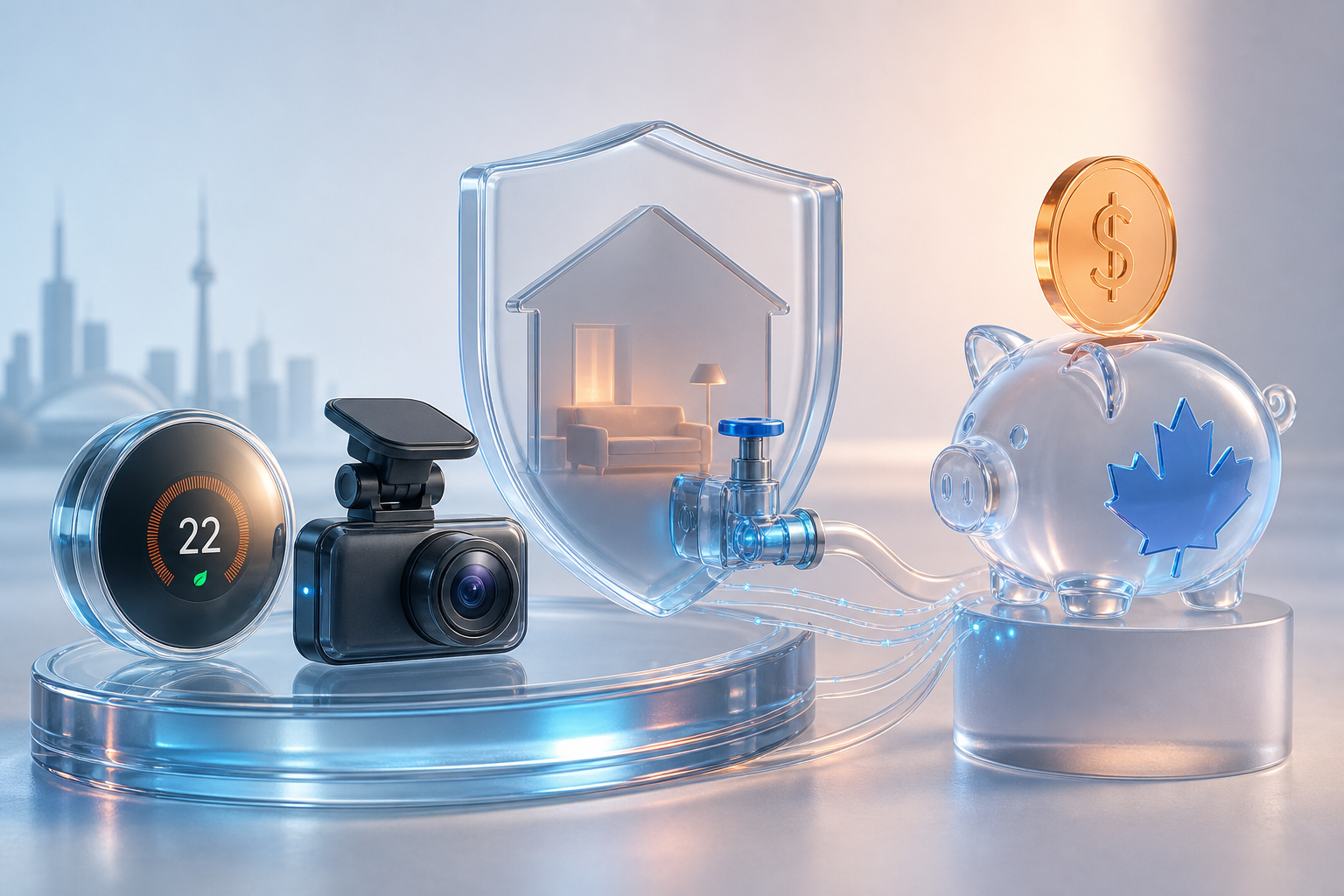
A professionally installed smart water valve runs about $500. It will save you roughly $8 on your monthly home insurance premium in Ontario. At that rate, it takes five years to break even, which makes the device look like a terrible investment until you remember that the average basement flood claim in Canada pays out $7,000. The valve's real value isn't the discount. It's that you never file the claim.
This is the economic shift happening quietly in Canadian insurance. Carriers have discovered it's cheaper to subsidize prevention than to keep writing five-figure cheques for water damage, collision repairs, and fire restoration. The mechanism they're using is the connected device discount, and it works because the insurer's incentive and yours finally point in the same direction.
Why insurers are suddenly interested in your devices
Water damage drives more home insurance claims than fire, theft, and vandalism combined. A burst pipe in a Toronto condo during a February cold snap can run $20,000 by the time you factor in drywall, flooring, and mold remediation. Insurers in Ontario and Alberta have been raising premiums 8-12% annually to keep pace with these payouts, but rate hikes have a ceiling. At some point, homeowners just drop coverage or switch carriers.
The alternative model is to prevent the loss. A $300 smart leak detector with an automatic shutoff sends a phone alert the moment moisture appears near the water heater, and if you don't respond within 90 seconds, it closes the valve. The Insurance Bureau of Canada has been pushing this technology hard since 2023, and by 2026, several major carriers won't even underwrite a basement rental property unless a monitored shutoff system is installed. The discount is the carrot. The underwriting requirement is the stick.
What the numbers actually look like
Telematics programs for auto insurance offer the steepest discounts. Safe drivers using apps from Onlia, CAA, or Desjardins can cut their premiums by 25-30% in provinces like Ontario and Alberta. The app tracks braking, acceleration, speed, and phone use, then scores each trip. High scores mean lower rates. Low scores mean you pay the standard premium, though most Canadian insurers won't raise your rate based on telematics data, they just won't discount it.
Home insurance discounts are smaller but easier to earn. A monitored security system or smart smoke detector typically saves 5-10%. A professional-grade water monitoring system with shutoff capability can push the total discount to 15%. These are approved by the Financial Services Regulatory Authority of Ontario before insurers can offer them, so the savings are baked into the rate filing, not a promotional giveaway.
The catch is that the discount only applies if the device stays connected. A smart valve that loses Wi-Fi reverts to being a dumb valve, and your premium goes back up.
The trade you're actually making
The discount isn't free money. You are trading data. Telematics apps log where you drive, when you drive, and how you drive. That data stays with the insurer, and while the Office of the Privacy Commissioner of Canada requires transparency about its use, the requirement to share it is the cost of entry. If that makes you uncomfortable, you don't get the discount.
Smart home devices report less personal information, water flow, temperature changes, motion near entry points, but the same principle applies. The device only has value to the insurer if it's sending data they can verify. An unmonitored leak detector is just a $60 beeper.
For young drivers, this trade is usually worth it. A 22-year-old in the GTA pays $4,000 annually for auto insurance. Telematics can cut that to $2,800. That's real money, and the privacy cost is abstract. For a 50-year-old driver paying $1,400, the $200 annual savings might not justify the surveillance.
The actual decision isn't whether smart devices save money. They do. The decision is whether the dollar value of the discount exceeds the dollar value you place on not being monitored.