Trump's Forced Labor Tariffs Aren't About Ethics, They're About Leverage

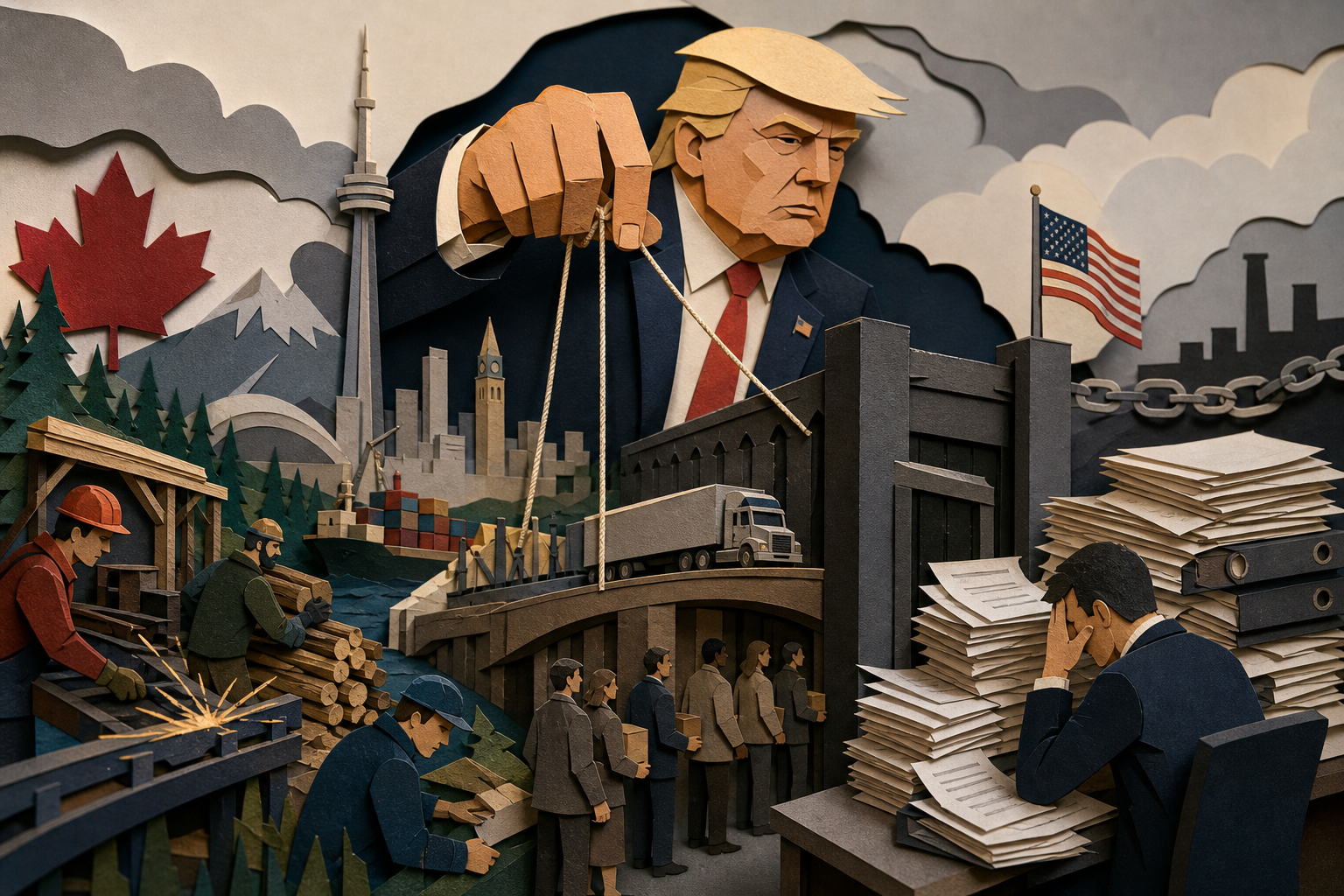
Canada ships roughly $2.5 billion worth of goods to the United States every single day. On Friday, the Trump administration announced targeted tariffs on dozens of nations, Canada included, citing failures to curb forced labour in their supply chains. The 10 per cent global baseline duty that was set to expire that same day? Gone. In its place: a punitive regime aimed at specific countries, wrapped in the language of human rights.
The timing isn't coincidental. These tariffs arrive just months before the scheduled 2026 USMCA review, when Canada, Mexico, and the U.S. will renegotiate the terms of their trade agreement. Framing protectionism as a moral crusade against forced labour gives the administration political cover that a straightforward "we want better terms" tariff never could. It's harder to argue against stopping slavery than it is to argue against a 15 per cent duty on steel.
The Burden-of-Proof Problem
Under this new regime, the onus shifts to the exporter. U.S. Customs and Border Protection can issue a Withhold Release Order on any shipment suspected of containing forced-labour inputs, and it's up to the Canadian company to prove otherwise. That's not a small ask. Documenting every tier of a supply chain, raw material extraction, processing, component manufacturing, is expensive and often impossible for mid-sized exporters who don't control their Tier 3 suppliers in Southeast Asia or sub-Saharan Africa.
For a Vancouver apparel company sourcing cotton from a supplier who sources from a processor who sources from farms they've never visited, the cost of compliance becomes a tariff in itself. You either spend tens of thousands proving your supply chain is clean, or you eat the duty. Either way, the U.S. wins leverage.
The UFLPA Playbook
This strategy isn't new. The Uyghur Forced Labor Prevention Act, passed in 2021, created a "rebuttable presumption" that goods from Xinjiang contain forced labour unless proven otherwise. The result wasn't just fewer imports from that region, it was a chilling effect across every supply chain that touched it. Companies pulled out of entire categories rather than risk seizure at the border.
Canada's own Fighting Against Forced Labour and Child Labour in Supply Chains Act, effective since 2024, requires thousands of entities to file annual reports on their supply chains. But filing a report isn't the same as enforcement. U.S. officials have made it clear they view Canada's transparency law as insufficient compared to their seizure-and-prove-it approach, giving them a plausible justification for the tariffs even if the real goal is renegotiation leverage.
What Gets Lost in the Framing
Canadian and U.S. manufacturing are tightly integrated, especially in automotive and aerospace. A tariff on Canadian auto parts doesn't just hurt Windsor, it raises costs for Detroit assembly plants that depend on those components. The political logic of "punishing" forced labour runs headlong into the economic reality that punishing your supplier often punishes yourself.
The counterargument, that these tariffs will force Canada to clean up its supply chains, assumes that Canada has meaningful control over what happens three or four tiers deep in a global sourcing network. No government does. Verification at that level is nearly impossible without on-the-ground audits in jurisdictions that don't welcome them.
The real tell is the timing and scope. If this were genuinely about forced labour, the administration would target the highest-risk sectors with the most egregious violations and work multilaterally to build enforcement mechanisms. Instead, it's a broad tool applied to allies months before a trade review, designed to extract concessions. The ethical framing gives it moral weight. The structural effect is a negotiating cudgel.