Your Bike Probably Doesn't Need Its Own Insurance Policy
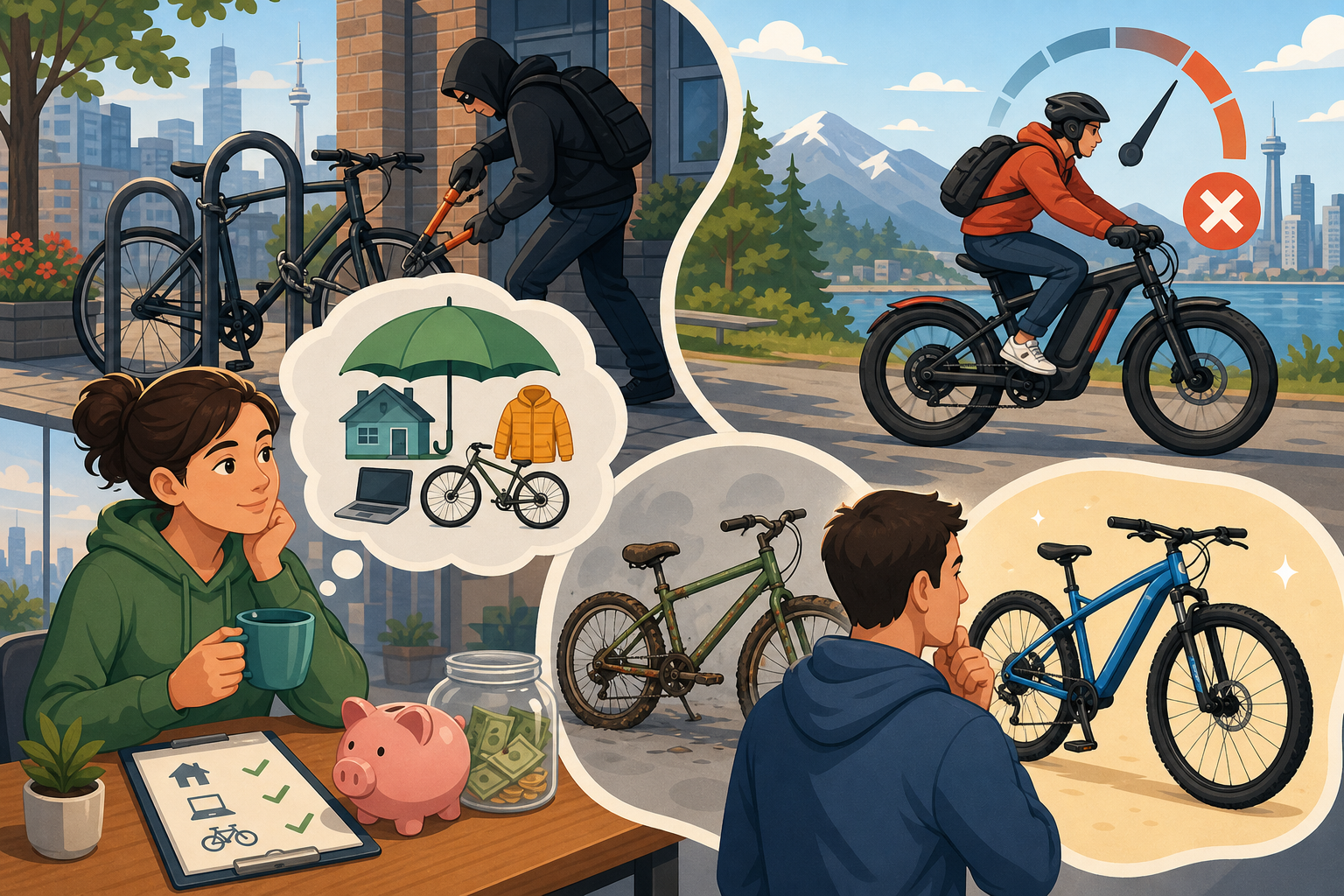
Most tenant insurance policies in Canada already cover your bicycle up to $2,000 for theft or damage, even if you lock it up at the office or chain it outside a coffee shop downtown. That coverage is sitting in a policy you're probably already paying $25 to $40 a month for. The question isn't whether your bike needs protection, it's whether buying a separate policy makes financial sense once you account for deductibles, premium hikes, and the actual replacement cost of what you're riding.
When Your Existing Coverage Is Enough
Standard tenant or homeowner insurance treats bicycles as personal property, which means they're covered under the same "all-perils" clause that protects your laptop or winter coat. If someone cuts your lock and takes your bike from a rack on Queen Street, you file a claim through your existing insurer. The sub-limit on most policies caps bicycle payouts between $1,000 and $2,000 unless you've specifically scheduled the bike as a high-value item.
Here's the math that matters: if your bike cost $1,400 and your deductible is $500, you'll recover $900. But filing that claim often costs you your "claims-free discount," which typically saves 10 to 20 percent annually on premiums. On a $400 annual policy, losing that discount for three years costs you $120 to $240 in higher premiums. The net value of your payout shrinks fast.
For bikes under $2,000, self-insuring, setting aside $50 a month in a separate account marked "bike replacement fund", often beats the insurance math. You avoid the deductible, you don't lose the discount, and after two years of no theft, you've banked enough to replace the bike outright.
When You Actually Need a Separate Policy
If your bike costs more than the $2,000 sub-limit on your home policy, you need to schedule it specifically or buy standalone coverage. Carbon-fiber road bikes, high-end mountain bikes, and most e-bikes retail above that threshold. A scheduled item on your tenant policy typically costs $50 to $150 annually per $1,000 of additional coverage, depending on your postal code and the bike's make.
Standalone policies from providers like Pedal Power or NFP cover things standard home insurance excludes: race damage, crash repairs, and liability if your bike causes injury during organized events. If you're racing, touring internationally, or riding a $10,000 machine, that gap matters.
The other scenario where separate coverage makes sense: e-bikes that exceed 500 watts or 32 km/h assisted speed. Most provinces classify those as motor vehicles, which means your home policy won't touch them and you'll need motorcycle-style insurance. If you've modified your e-bike or bought a grey-market model that goes faster than the legal cap, confirm what you actually own before assuming you're covered.
What Insurers Actually Require to Pay
"Forcible entry" is the clause that kills most bike theft claims. If you left the bike unlocked on your porch, even for five minutes, insurers deny the claim under "mysterious disappearance." You need proof of a cut lock, pry marks, or, if it was stolen from inside your apartment, signs of forced entry to the building.
Register your bike's serial number with Project 529 before it's stolen, not after. Police across Canada use the database to match recovered bikes to owners, and insurers process claims faster when you can provide a registration record and purchase receipt. That's free and takes less than ten minutes.
One last thing: if you use your bike for UberEats, DoorDash, or any paid delivery work, your personal tenant policy excludes coverage during commercial use. You need a commercial rider. Most people delivering food are riding uninsured bikes and don't know it.