Your Airline Points Are Worth Less Than You Think They Are

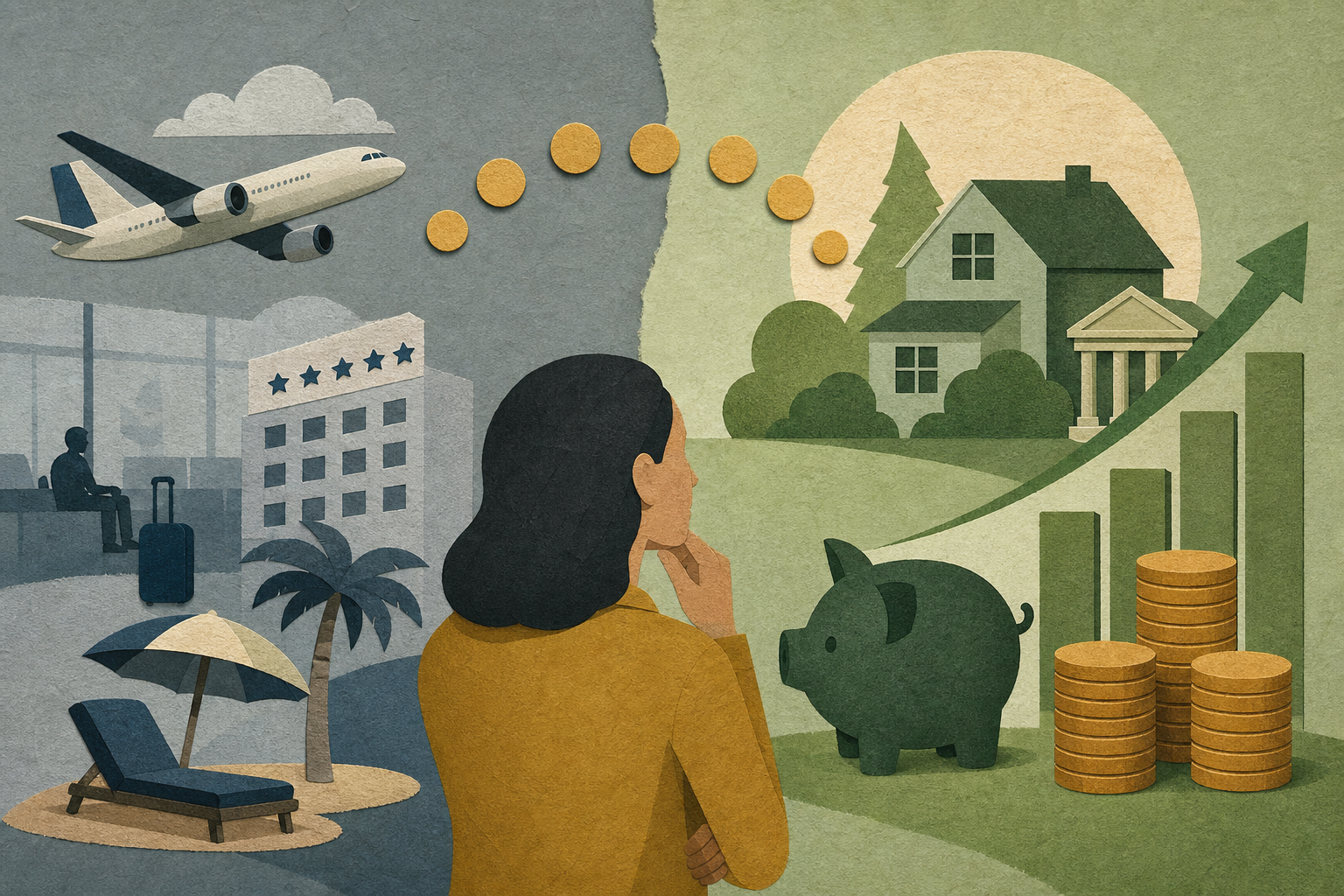
A business class flight to Europe, booked with points, feels like you just turned loyalty rewards into a $4,000 windfall. You probably paid $200 in fees. The airline tells you the seat would have cost $4,200 in cash. The math looks clean. It isn't. That $4,000 figure is what the airline wishes someone would pay. On that exact route, a discounted economy fare probably runs $700. The actual value you extracted is the difference between what you paid ($200) and what you would have paid for a seat that gets you to the same place ($700). You saved $500. The rest is marketing. Most travel rewards operate on aspirational pricing. The "value" you see is benchmarked against the rack rate for premium cabins—fares almost nobody pays. A first-class seat on Air Canada might price at $9,000, but if you wouldn't have bought it with cash, the redemption didn't save you $9,000. It saved you the cost of the seat you would have actually purchased, or nothing at all if the trip wasn't happening otherwise. Financial redemptions don't have that problem. A dollar applied to your mortgage principal is worth exactly a dollar, plus every dollar of interest that won't now compound against you over the next two decades. In a 5% rate environment—where most mortgages sat in 2024 and into 2026—that dollar saves you roughly $2.65 over a 25-year amortization. Put $1,000 of points toward a lump-sum payment and you've just eliminated $2,650 in future interest. The return is guaranteed and the value is actual, not notional. RRSP contributions using points create an even sharper outcome. If you're in a 30% marginal tax bracket in British Columbia, a $1,000 RRSP contribution generates a $300 tax refund. You turned loyalty points into $1,300 in net assets: the original $1,000 inside the RRSP, growing tax-free, plus the $300 refund. That refund can go back into the TFSA, onto the mortgage, or into next year's RRSP. For someone in Victoria carrying a $900,000 mortgage at 5.2%, that $1,000 becomes leverage against decades of compounding debt. The cascading value is difficult to replicate with a weekend in Montreal. The obvious counter is that financial optimization misses the entire point of rewards. If you would never pay cash for the vacation, the points create an experience that wouldn't have existed otherwise. Fair. But most people using points for travel are substituting them for trips they were planning to take anyway. That's not creating new value. That's choosing between two ways to fund the same outcome, and one of those ways compounds while the other depreciates the moment the plane lands. The less obvious issue is devaluation. Airlines change award charts without warning. Air Canada adjusted its Aeroplan pricing structure twice between 2020 and 2024. What cost 25,000 points in 2021 cost 35,000 by early 2025. Your points didn't lose value on paper—they lost purchasing power in practice. A dollar in your RRSP is still a dollar. A point is worth what the program says it's worth, when they decide to tell you. Transfer bonuses and partner redemptions can beat this math. If you move points to a specific airline partner at a 1.5x bonus and book a long-haul first-class seat that legitimately costs $8,000 in cash, you might extract 8 to 10 cents per point. That's real. It's also the exception, not the baseline, and it requires enough flexibility to hunt for availability windows that most people don't have. For the typical cardholder in a high-cost city like Victoria, where benchmark home prices exceed $1.2 million and mortgage interest is the largest monthly outflow, the thirteenth mortgage payment funded by points shaves years off the amortization. It's boring. It doesn't photograph well. And it will almost certainly be worth more than the upgraded seat you posted on Instagram.