War Inflation Pushed US Savings to a Four-Year Low While Spending Stalled

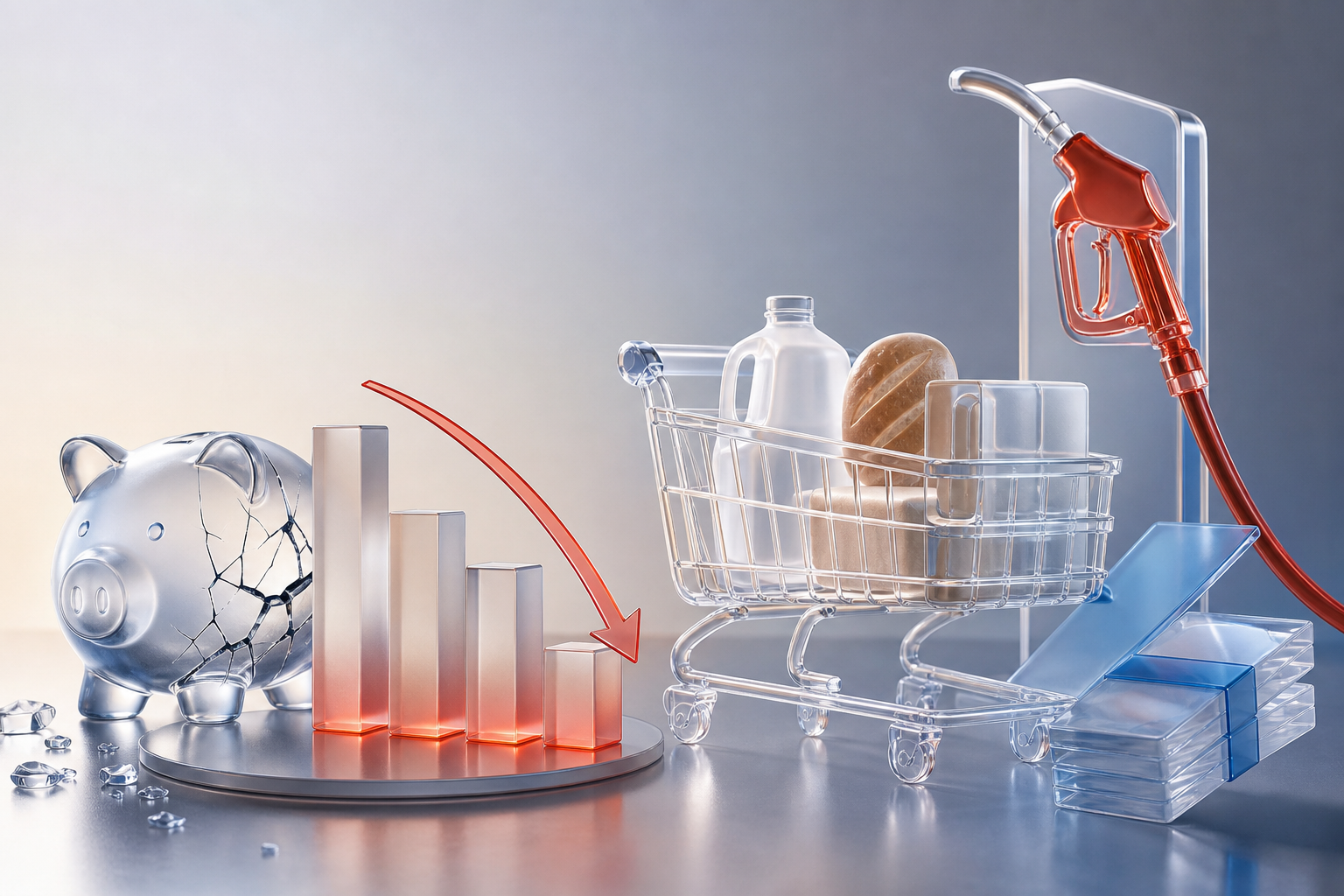
The savings buffer American households built during the pandemic is gone. The personal saving rate fell to 3.2% in April 2026, its lowest mark since mid-2022, as households dipped into reserves to absorb the gap between what they earn and what basic goods now cost. Consumer spending rose, but only barely—a 0.2% increase that looks like growth until you adjust for what those dollars actually bought. This is what inflation looks like when it stops being an abstract number and starts showing up in bank balances. War-driven energy shocks drove gasoline prices above $4.50 per gallon in most of the country through the spring, while food costs climbed on fertilizer and wheat disruptions tied to Eastern European supply routes. Wages grew, but not enough. Real disposable personal income—the money left after taxes and adjusted for inflation—declined for three consecutive months leading into April. Households responded by saving less, not by spending less, which means the erosion is happening below the surface. The composition of what people bought is more revealing than the headline spending figure. Spending on services—dining out, entertainment, travel—contracted slightly. Spending on goods stayed flat. What changed was the mix within goods: more private-label groceries, fewer name brands. More fuel-efficient used cars being considered, fewer new SUVs being purchased. The shift doesn't appear in aggregate data as a collapse. It appears as substitution, which is a slower kind of financial stress. The saving rate comparison to 2008 is not incidental. The last time the rate sat this low, the economy was months away from the deepest part of the Global Financial Crisis. The difference is that in 2008, households were over-leveraged on housing debt. In 2026, they are underleveraged on everything except credit cards. Revolving credit balances hit an all-time nominal high in the first quarter of this year, which suggests that some portion of April's "spending" was financed, not funded. When households use credit to buy groceries and gas, they are not maintaining their standard of living. They are deferring its collapse. The Federal Reserve's response has been to hold rates steady after the aggressive tightening cycle that ran through 2024. Core PCE inflation—the measure that excludes food and energy and serves as the Fed's preferred gauge—is hovering near 2.8%, above the 2% target but no longer accelerating. The argument inside the Fed appears to be whether this level of inflation, combined with this level of consumer fragility, justifies a pivot to rate cuts or whether cutting now would re-ignite demand before supply constraints have cleared. What is missing from that debate is the recognition that the typical monetary policy lag has already played out. The rate hikes implemented 18 months ago are fully transmitted into the economy now. The weakness in April's spending data is not a leading indicator. It is the thing the tightening was designed to produce: reduced demand. The question is whether demand can stay reduced long enough for inflation to settle without pushing the saving rate so low that households enter the next shock—whatever it is—with no cushion at all. A 3.2% saving rate in an economy where rent, healthcare, and education costs are structurally higher than they were in 2008 is not the same as a 3.2% saving rate was then. The margin for error is thinner.