Vancouver's June Sales Jump Hides the Real Story: Prices Still Lock Out Most Buyers

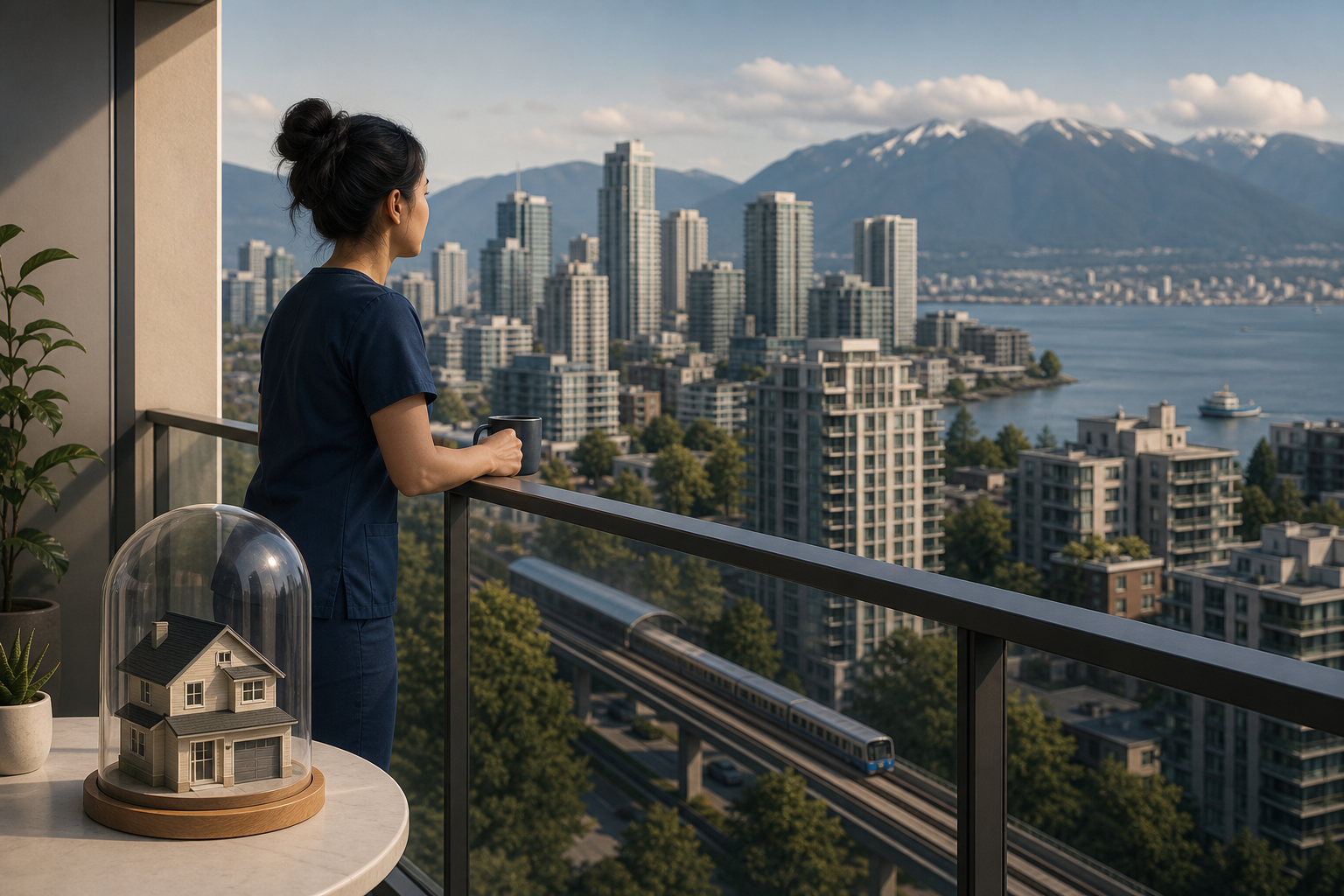
A 47-year-old dental hygienist in Burnaby, pulling down $72,000 a year, just watched the market she spent two years waiting on start moving without her. June brought a 10% jump in sales across Greater Vancouver, the kind of number that gets quoted in boardrooms as proof the market is "back." It isn't back for her. The benchmark single-family home still sits north of $1.8 million. Her maximum pre-approval, even with rates moderating, clears maybe $550,000. The gap didn't shrink. It just got louder.
The Greater Vancouver REALTORS® data for June shows demand rising across detached, attached, and apartment segments simultaneously, something the region hasn't seen since early 2022. Inventory climbed too, up roughly 12% from the prior year, which should theoretically cool the pace. It hasn't. Absorption rates are keeping up with listings, creating what the industry loves to call "balanced conditions." Balanced for whom is the question no one answers in the press release.
The Rate Pause Changed Buyer Psychology, Not Buyer Capacity
The Bank of Canada's decision to hold rates steady through the first half of 2026, with soft language about potential easing later in the year, flipped a psychological switch. Sidelined buyers who spent 2024 and 2025 convinced they were waiting for the bottom now believe they're about to miss the rebound. That shift in sentiment drives volume. It does not drive affordability.
A household income of $150,000, well above the Metro Vancouver median, qualifies for a mortgage around $750,000 under current stress-test rules. In June 2026, that buys a two-bedroom apartment in New Westminster or a townhouse in Surrey if you're lucky. It does not buy a detached home in Vancouver, Burnaby, or the North Shore. The sales jump reflects people who already had access deciding to pull the trigger, not a broadening of the buyer base.
All Segments Rose, but Not All Segments Matter Equally
The board's language about "broad demand" deserves scrutiny. Yes, all housing types saw year-over-year sales increases. But detached homes, which represent the bulk of Vancouver's land value and the primary wealth-building asset for existing owners, remain functionally out of reach for first-time and even second-time buyers without family money. The average detached property in Vancouver proper traded above $2 million in June. A 10% increase in sales volume at that price point tells you existing equity holders are repositioning. It does not tell you the market is accessible.
Meanwhile, apartment sales rose on the strength of pre-construction condo launches along the Broadway corridor and near SkyTrain extensions, where BC's new zoning laws are pushing density. Those units, marketed as "attainable," are listing between $650,000 and $900,000 for one or two bedrooms. Attainable compared to what, exactly? Not compared to incomes. Compared to detached homes they'll never compete with as long-term stores of value.
The Listing Bump Is Already Spoken For
New listings climbed 12% year-over-year, which sounds like relief until you look at how fast they're being absorbed. June's sales-to-active-listings ratio held in the low-to-mid 20% range depending on segment, right in the zone where prices stabilize or tick upward rather than correct. More supply hitting the market isn't helping if demand is rising at the same clip. The so-called equilibrium isn't bringing prices down. It's just preventing them from spiking as fast as they did in 2021.
The structural problem remains: Vancouver's land constraints, its role as a wealth-parking destination for offshore capital, and its status as Canada's third-largest metro with a tax base that can't fund enough purpose-built rental supply. A 10% jump in sales doesn't fix any of that. It just moves the existing pool of qualified buyers through the market faster. Everyone else is still on the dock.