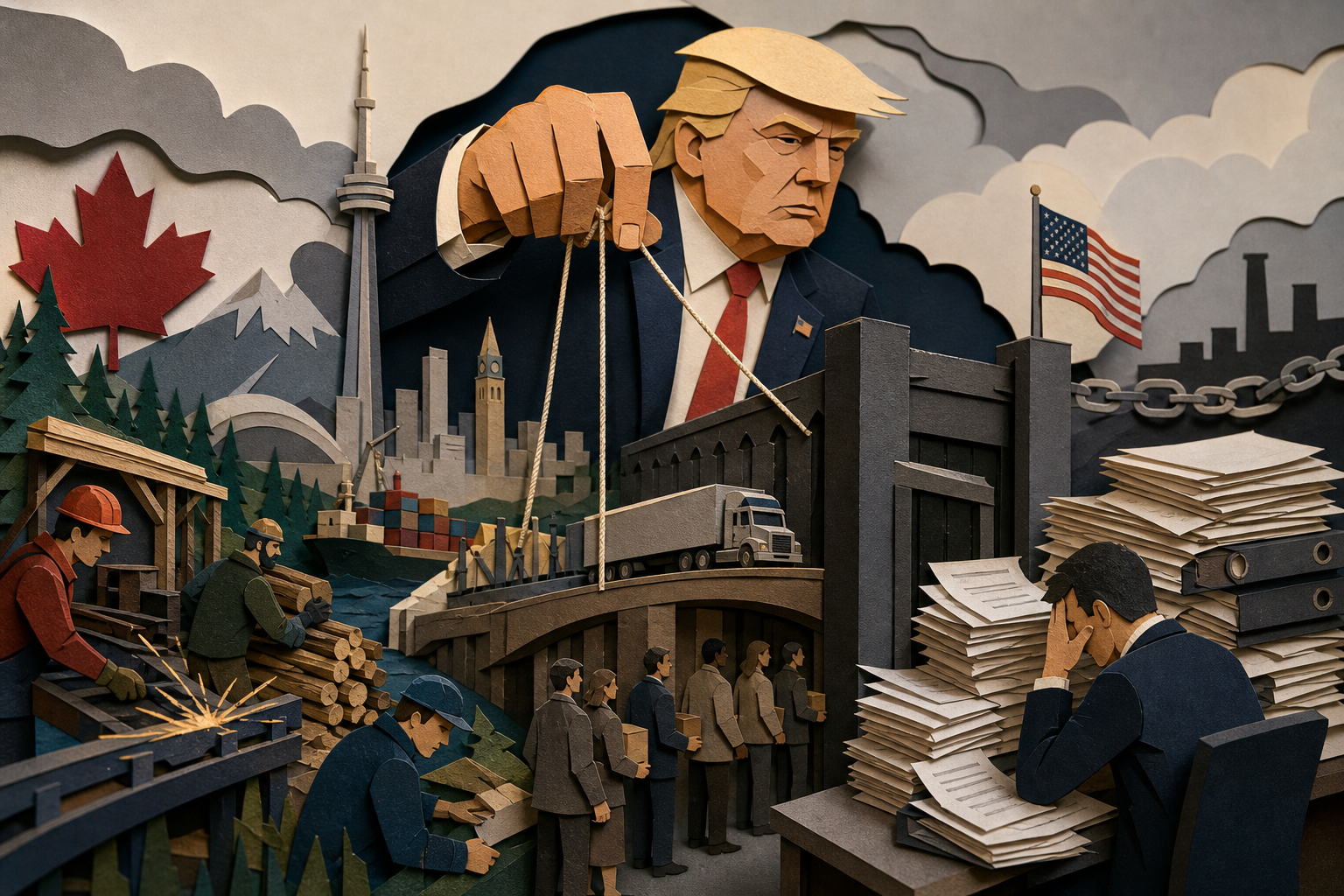
The Bank of Canada says we're not in a recession, but Canadians are living one anyway

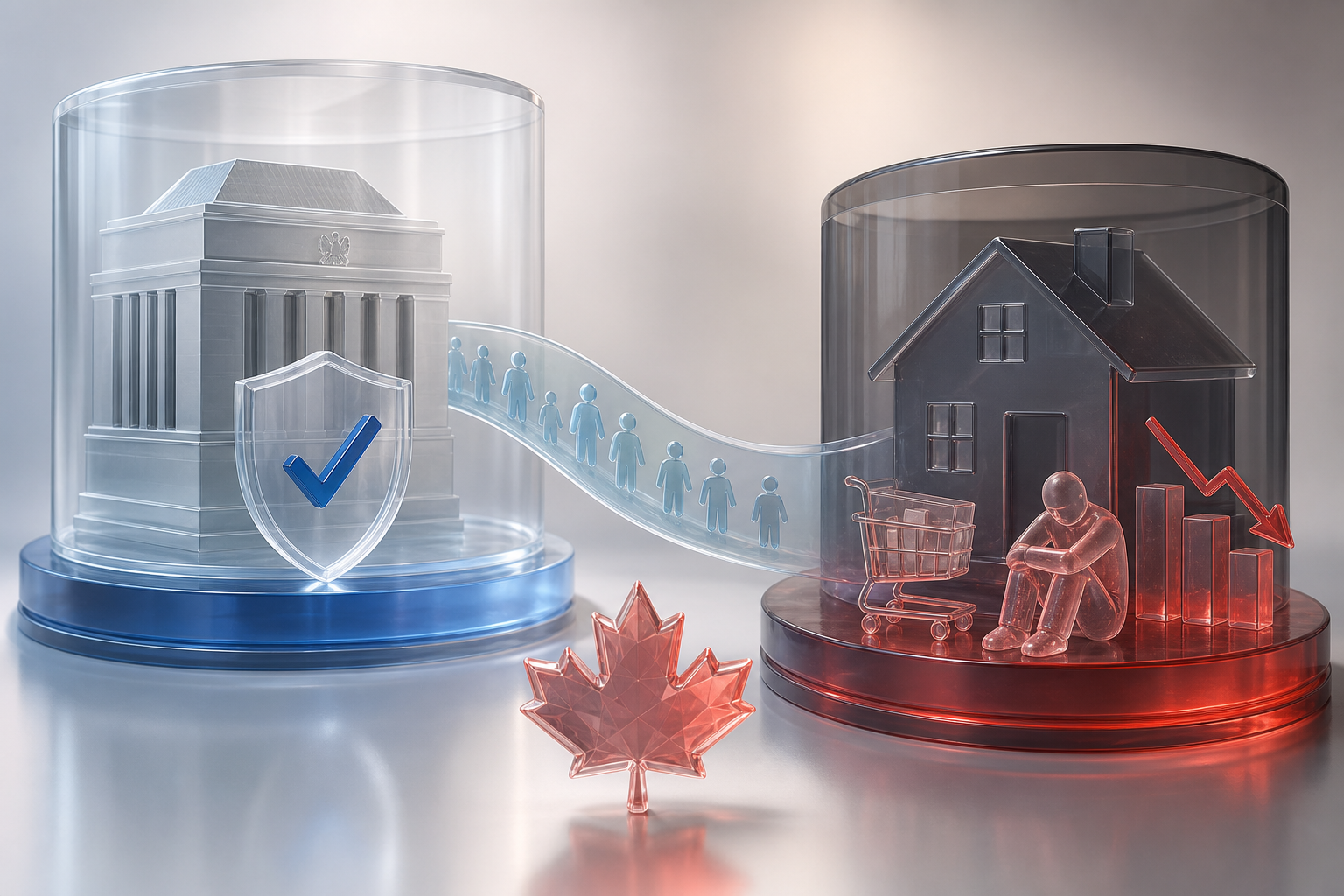
The Bank of Canada says we're not in a recession, but Canadians are living one anyway
The overnight rate sits at 4.75%. Unemployment hit 6.2% in May. Per capita GDP has been sliding for six consecutive quarters. But when the Bank of Canada met in June to set monetary policy, officials declined to use the word "recession" to describe what's happening. They called it "weak growth" instead.
The distinction matters, and not for the reasons the Bank thinks it does.
Officially, Canada isn't in a recession because we haven't logged two consecutive quarters of negative GDP growth, the textbook definition that gets cited in every undergraduate macro course. Aggregate GDP in Q1 2024 came in around 1.7% annualized, which is stagnant but technically positive. So the label doesn't fit. Case closed.
What the official definition misses
That definition works when population is stable. It breaks when population is growing at the fastest pace in generations. Canada added roughly 1.3 million people in 2023 through immigration and temporary residents. That inflow props up headline GDP just by expanding the denominator, more workers, more consumers, more activity. But the average Canadian isn't experiencing growth. They're experiencing the opposite.
Per capita GDP tells the sharper story. It's been negative since mid-2023. That means the economy is growing slower than the population, so the pie per person is shrinking. For the household trying to cover rent, gas, and groceries, that feels like a recession because it is one. The aggregate figure the Bank of Canada leans on is being held aloft by arrivals who haven't accumulated wealth yet and who are themselves competing for the same housing stock and entry-level jobs.
Why the Bank won't call it what it is
The refusal to use the recession label isn't semantic caution. It's expectation management. Declaring a recession changes behavior. Businesses delay hiring. Households pull back spending. Banks tighten credit. The psychology of a recession can deepen the condition itself, which is why central banks treat the word like a loaded gun.
But there's a cost to the avoidance. When officials describe labour market slack, fewer job openings, longer search times for workers, rising unemployment, without acknowledging that those conditions define recessionary pressure, they undermine their own credibility. The gap between what the Bank says and what people are living through widens. A 47-year-old in Brampton who's been looking for work for four months doesn't care that Q1 GDP technically cleared zero.
The slack the Bank wants
Part of what's happening is intentional. The Bank raised rates from 0.25% to 5% between March 2022 and July 2023 specifically to cool demand and create slack. Inflation was running at 8.1% in June 2022. Getting it back to the 2% target meant forcing households and businesses to spend less, hire less, borrow less. Slack is the mechanism. A looser labour market keeps wage growth from spiraling. Fewer job openings mean workers have less bargaining power.
Governor Tiff Macklem has called this a "soft landing," but the framing only works if you measure success as avoiding a headline recession. If you measure it as preserving household purchasing power or keeping unemployment low, the landing already happened and it wasn't soft.
The Bank's June rhetoric signals a shift in priority. Having brought inflation down to 2.9%, officials are now more worried about overtightening than undershooting. That's why they cut rates for the first time since 2020. But the caution around language remains. They'll cut slowly. They'll describe conditions as "weak" rather than recessionary. They'll emphasize that the labour market is "rebalancing" rather than deteriorating.
What rebalancing actually means
Rebalancing is what you call rising unemployment when you need it to happen but don't want to own it. The unemployment rate was 5% a year ago. It's 6.2% now. That's not a fluctuation. That's a trend, and trends don't reverse themselves without policy intervention or time. The question is how much slack the Bank is willing to tolerate before the political cost outweighs the inflation benefit.
For now, the answer seems to be: more than this.