Summer Rent Dips Won't Save Canadian Tenants From the Real Problem

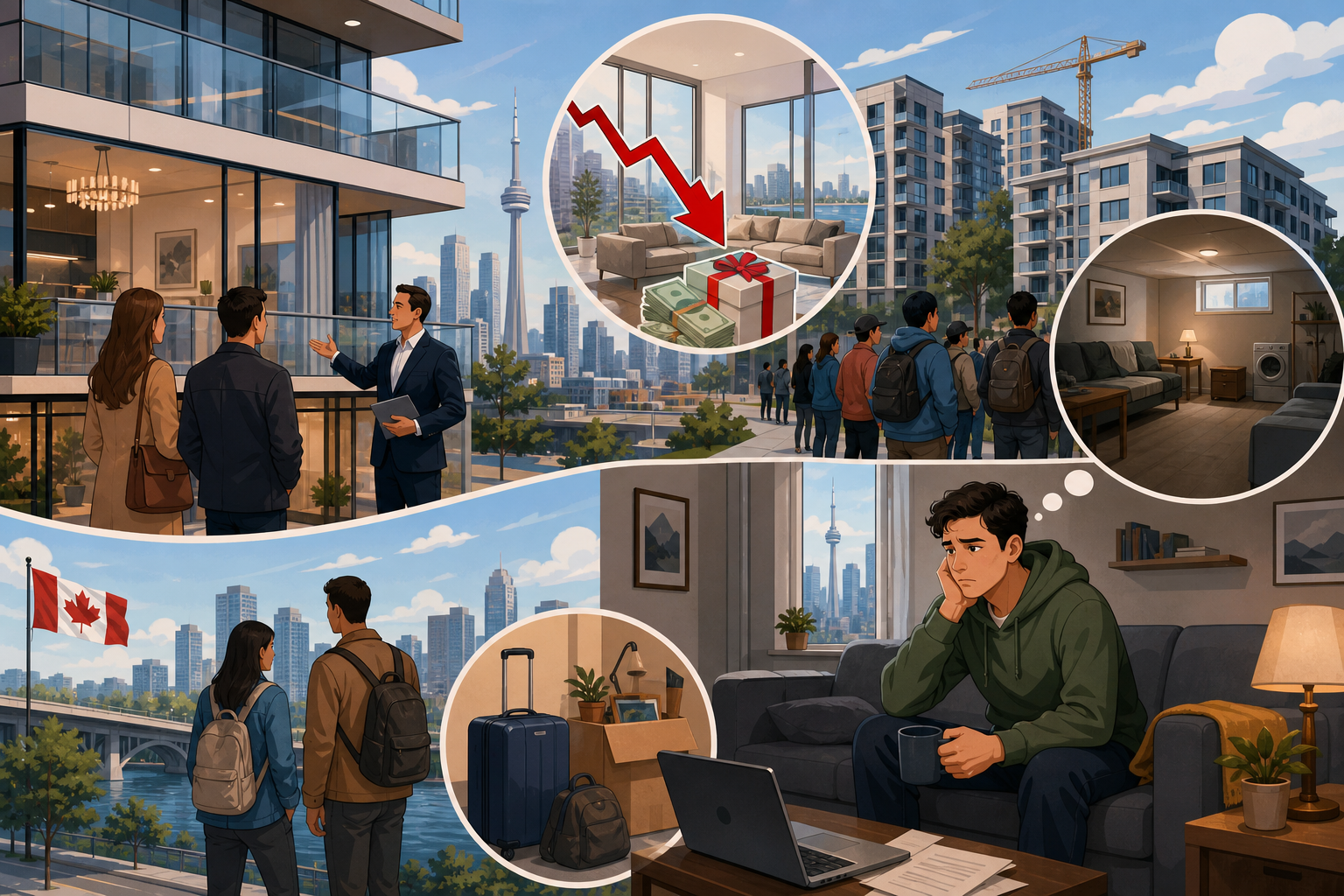
Average asking rents in Canada dropped roughly $100 year-over-year in May, the first time in three years that June hasn't brought the usual pre-summer price surge. Tenants celebrating early should read the fine print. That $100 decline, measured against a national average near $2,100, represents a 4.8% correction following 10-plus percent annual increases from 2022 through 2024. You're not getting relief. You're getting a brief pause in the compounding.
The seasonal rental bump, June through August used to be landlord territory, driven by academic cycles and peak relocation season, has flattened this year because of macroeconomic drag. Unemployment is hovering in the mid-6% range, household formation has stalled, and the federal cap on international student permits killed a major demand driver in cities like Ottawa and Waterloo. Purpose-built rental completions peaked in early 2025, adding supply that wasn't there two years ago. The result is a market that's cooled, not collapsed.
The affordability wall hasn't moved
What tenants face isn't a correcting market. It's a market that overshot so hard it finally hit the wage ceiling. A $2,100 average rent requires a gross household income of roughly $84,000 to meet the conventional 30% affordability threshold. That works in Calgary or parts of the Prairies. It doesn't work in Halifax, where the median household income sits closer to $70,000. The softness you're seeing is renters tapping out, not landlords offering charity.
The high end of the market, so-called luxury rentals, is where the correction has been sharpest. Property managers in Toronto and Ottawa are reintroducing incentives like "one month free" for the first time since 2021. But the entry tier, basement apartments and aging walk-ups, remains competitive because that's where everyone who got priced out is trying to land. When the top softens and the bottom stays tight, you haven't fixed affordability. You've just compressed the middle.
The mobility trap tightens
The data shows another dynamic that won't make headlines: tenants are staying put even when they hate where they live. Rents may be softer than last year, but they're still 30-40% higher than 2019 levels in most major markets. Moving at current rates, even discounted ones, means signing a new lease that locks in prices far above what legacy tenants are paying. The result is a rental market with very little churn. People tolerate substandard conditions, bad landlords, and poor locations because the cost of switching has become prohibitive.
This isn't a temporary psychology. It's a structural problem. When moving becomes irrational even at "soft" prices, the rental market stops functioning as a market. You're left with sticky misallocation: families in one-bedrooms, singles overpaying for two-bedrooms they took in 2022 and can't afford to leave, newcomers in illegal units because the legal ones are unaffordable even at a discount.
Supply relief has a short shelf life
The current softness reflects completions that broke ground in 2021 and 2022, when construction financing was cheaper and municipalities were under political pressure to approve more housing. Housing starts fell sharply in 2024 and 2025 as higher interest rates killed project economics. CMHC projects a supply crunch returning in 2027-2028 when today's anemic pipeline hits the market. The relief tenants are experiencing this summer is a gap between two waves of tightness, not a trend.
The broader issue isn't whether rents dip in June. It's that wages, even in strong markets like Edmonton or Calgary, haven't caught up to the base established during the 2022-2024 run-up. Rent-to-income ratios are still underwater. A market that goes from "catastrophic" to merely "unsustainable" hasn't solved anything. It's just given itself better optics for a few months.