SpaceX and OpenAI Liquidity Events Are Pushing Capital Into Asia's AI Supply Chain

SpaceX and OpenAI Liquidity Events Are Pushing Capital Into Asia's AI Supply Chain
The SpaceX tender offers in late 2025 freed up roughly $8 billion in secondary liquidity. OpenAI's internal rounds added another $3.5 billion. What happened next wasn't more funding for US AI startups. It was a scramble to find exposure in the physical layer—the companies that make the chips, transformers, and cooling systems that AI infrastructure requires. Most of those companies are in Asia.
This isn't about diversification. It's about finding a tradable proxy for non-public AI valuations. When OpenAI is worth $120 billion but you can't buy it, you buy the Taiwanese packaging firm that ships the logic boards its data centers run on. When SpaceX crosses $250 billion and remains private, you buy the South Korean power-management supplier shipping high-voltage equipment to Starlink ground stations. The Asian supply chain has become a liquid mirror for the AI giants that remain locked behind tender-offer minimums and accredited-investor gates.
Why the "Asian Proxy" Strategy Works
The logic is structural. US firms design the models and own the intellectual property. Asian firms manufacture the accelerators, assemble the server racks, and produce the specialized components that those models require to run at scale. TSMC and Samsung still dominate high-margin AI chip fabrication. The next tier—firms handling thermal management, advanced packaging, and power delivery—are concentrated in the Taiwan-Korea corridor and increasingly in Malaysia and Vietnam as the "China Plus One" strategy reshapes supply chains.
When secondary capital flows out of SpaceX and OpenAI, it's not patient capital waiting for the next private round. It's institutional money looking to redeploy fast. Buying publicly traded hardware firms in Hong Kong, Seoul, or Taipei offers immediate liquidity. More importantly, it offers correlation. The MSCI Asia Pacific Information Technology Index has tracked the direction of private AI valuations closely since 2023, even when absolute returns diverged. The basket moves when the underlying demand signal moves.
The Energy Bottleneck Drives the Next Wave
Power is now the binding constraint. A single AI training cluster can draw 50 megawatts—the output of a small natural gas plant. Scaling from hundreds of clusters to thousands requires grid upgrades that take years, not quarters. This has pushed investor focus from chipmakers to the suppliers of substations, transformers, and high-voltage switching gear. Many of those firms are Asian, and many were overlooked until recently.
One Vancouver-based pension fund started building positions in a Malaysian power-equipment manufacturer in early 2026 after realizing that US data center expansions would stall without the transformers this firm was shipping to Ohio and Oregon. The company's stock doubled in four months. That's not a hype cycle. That's supply meeting a physical bottleneck that software cannot route around.
Victoria and BC's Stake in the Asian Build-Out
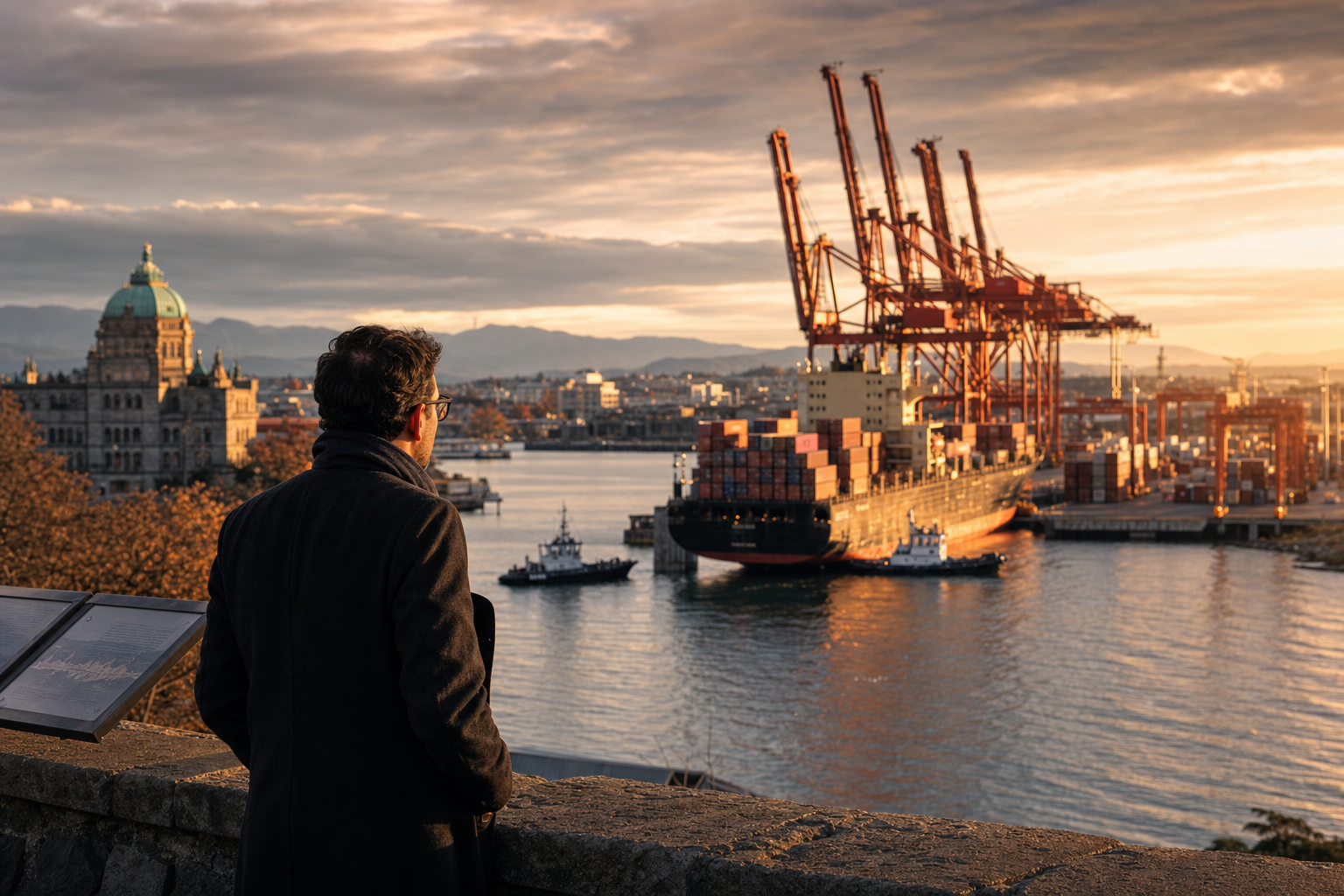
British Columbia's tech ecosystem—11,000+ companies, many in specialized software and ocean-tech—depends on the hardware advances coming out of the Asian supply chain. Victoria's remote-sensing firms, for instance, are integrating edge AI capabilities that rely on the same mobile processors being assembled in Vietnam for global logistics networks. When secondary liquidity from US AI giants accelerates the Asian hardware cycle, the knock-on effects reach Vancouver Island faster than most local operators realize.
BC pension funds, including BCI, already hold stakes in Asian infrastructure plays. The SpaceX and OpenAI windfalls have simply increased the urgency. Capital that was waiting on the sidelines is now moving into second-tier hubs—Malaysia for packaging, Vietnam for assembly—before valuations reflect the full demand picture.
Valuation Risk and the Taiwan Variable
This strategy has a fault line. If tensions in the Taiwan Strait escalate, the entire thesis collapses overnight. Semiconductor manufacturing cannot be rerouted to Arizona or Germany on a quarterly timeline. TSMC represents the single point of failure for the global AI hardware stack. Any disruption—sanctions, blockade, conflict—would erase the correlation that makes Asian proxies work.
The other risk is simpler: overheating. When $11 billion in secondary liquidity chases a finite set of tradable Asian hardware stocks, price-to-earnings ratios spike. Some firms now trade at 35x forward earnings based on demand projections that assume no delays, no geopolitical shocks, and flawless execution on multi-year infrastructure timelines. That's optimism, not analysis.
The capital is still flowing. Whether it finds the actual next-wave winners or just inflates the current leaders depends on how well investors distinguish between companies riding a narrative and companies shipping transformers to Ohio.