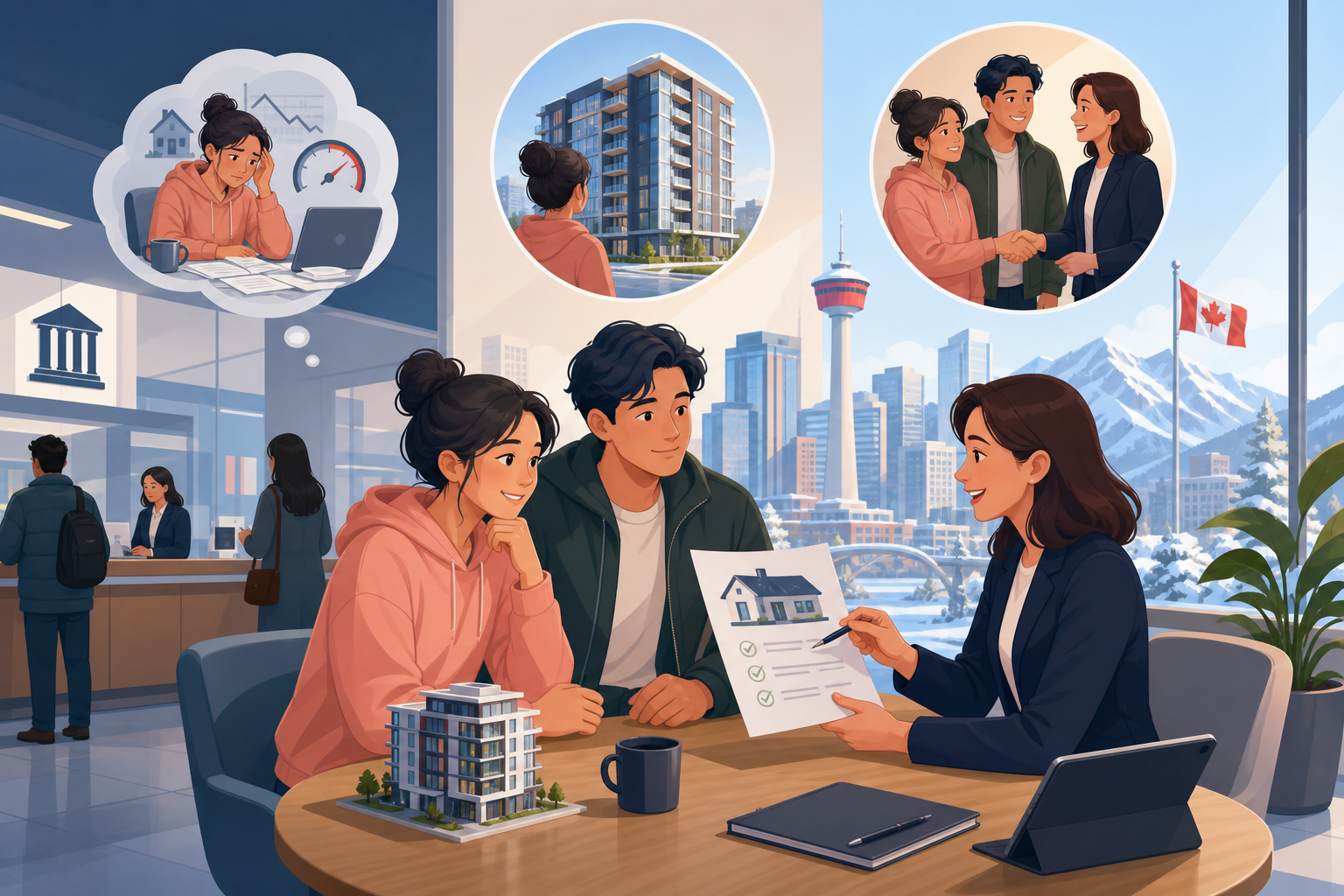
How Ontario First-Time Buyers Can Layer Four Tax Breaks Into a Single New-Build Purchase

You're closing on a Vaughan pre-construction condo in eight months, and you've already maxed your FHSA at $40,000. That money is spoken for. The question now is whether you're leaving another $30,000 on the table by not stacking the three other tax breaks built into the same purchase.
Most buyers know about one or two of these programs. Almost nobody runs all four simultaneously. Here's the exact sequence.
1. Max the FHSA first, then open a second one for your spouse
The First Home Savings Account lets you contribute $8,000 a year, up to a $40,000 lifetime cap. Contributions are tax-deductible. Withdrawals for a qualifying home purchase are tax-free. If you're buying jointly, your spouse or partner can open their own FHSA and contribute another $40,000. That's $80,000 in tax-sheltered capital between the two of you.
The account has a 15-year lifespan. If you don't buy, it rolls into your RRSP without affecting your existing contribution room. No penalty.
2. Layer in the RRSP Home Buyers' Plan for an additional $120,000
Each buyer can withdraw up to $60,000 from their RRSP under the Home Buyers' Plan, tax-free, for a down payment. For a couple, that's $120,000. Combined with two FHSAs, you're now looking at $200,000 in tax-advantaged withdrawal power.
The HBP is a loan to yourself. You have a two-year grace period, then you must repay the withdrawal into your RRSP over 15 years. Miss a year's repayment and the CRA treats it as taxable income. The FHSA has no repayment obligation. That's the critical difference.
3. Claim the Ontario Land Transfer Tax refund at closing
Ontario charges land transfer tax on every home purchase. First-time buyers get a refund of up to $4,000, which covers the tax on the first $368,000 of the purchase price. On a $600,000 condo, the LTT is roughly $8,475. The refund knocks it down to $4,475.
The refund is applied directly at closing through your lawyer. You don't get a cheque, you just pay less that day. Most buyers forget this exists until their lawyer mentions it in the final statement of adjustments.
4. Recover the HST through the New Housing Rebate
New construction in Ontario carries 13% HST. The federal government rebates part of it. Ontario rebates the 8% provincial portion on new homes used as a primary residence.
For a $600,000 new condo, the provincial HST is $48,000. The Ontario rebate covers up to $24,000 of that, depending on the builder's pricing structure and how the rebate is assigned. In most pre-construction deals, the builder applies the rebate upfront and reduces the advertised price accordingly. You never see the $24,000 because it's already baked in.
Where buyers lose money: some builders don't disclose that the rebate has been applied, so purchasers assume they're getting a deal when they're just getting what the rebate entitles them to. Read the Agreement of Purchase and Sale. If the rebate is assigned to the builder, the contract should state that clearly.
If the builder does not assign the rebate, you claim it yourself after closing via CRA Form GST190. Processing takes four to six months.
The closing cost offset
The LTT refund and HST rebate rarely increase your down payment. What they actually do is cover the costs everyone forgets: legal fees, title insurance, development charges passed through by the builder, and the first year's property tax adjustment. On a $600,000 purchase, closing costs run between $9,000 and $12,000. The $4,000 LTT refund and a portion of the HST rebate plug that gap.
The FHSA and HBP fund the down payment itself. The rebates keep you from writing another five-figure cheque on closing day.
Before you sign anything, confirm the builder has assigned the HST rebate in writing and ask your real estate lawyer to walk you through the LTT refund math for your specific purchase price. Most of these programs are automatic if you qualify. But automatic only works if someone remembers to file the paperwork.