Hegseth's Asia Pivot Isn't Diplomacy — It's a Downgrade of NATO's Strategic Value

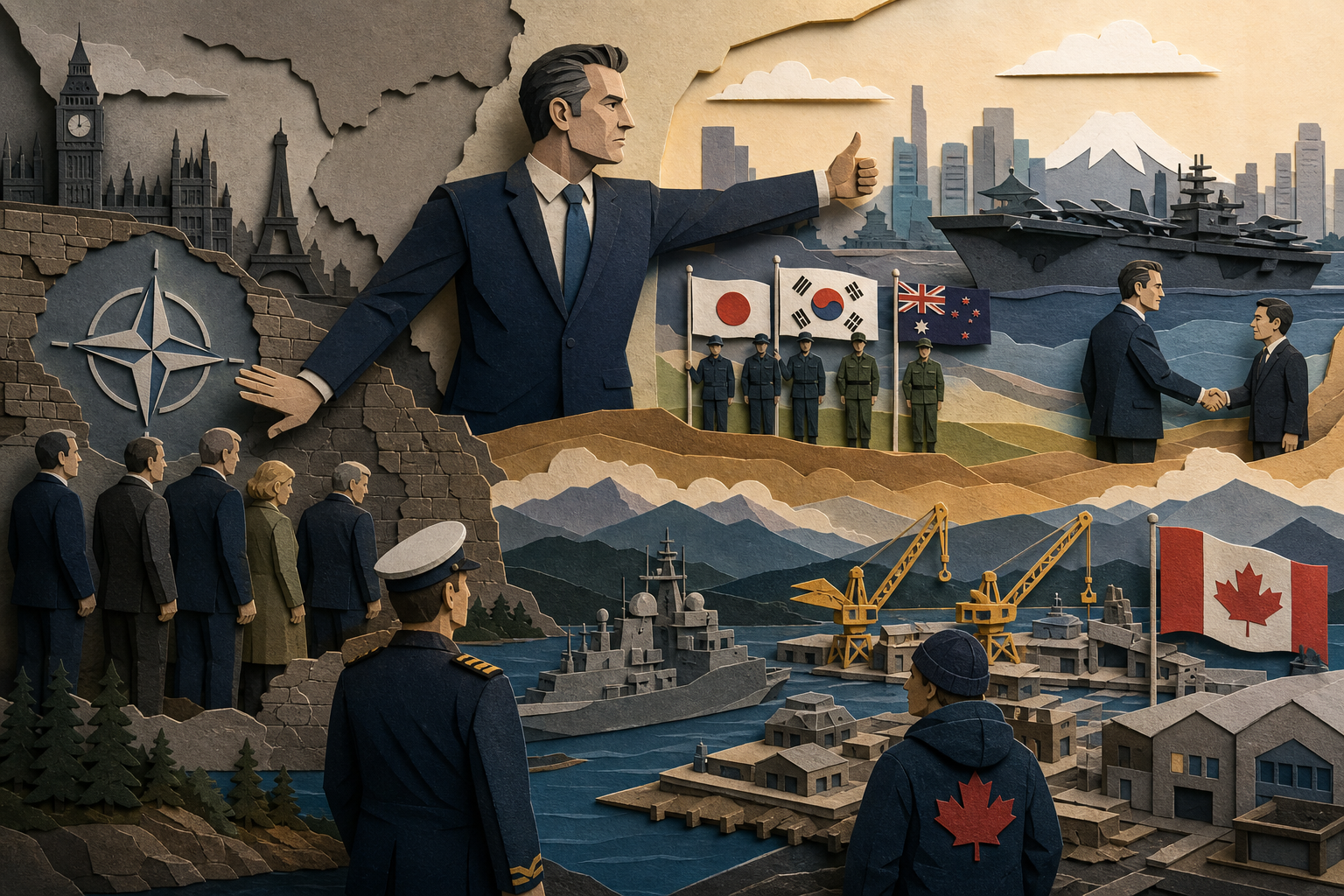
The Pentagon just told Europe it's no longer first-string. Defense Secretary Pete Hegseth's praise for Asian allies—Japan, South Korea, Australia—comes with a matching critique of NATO's continental core. The message is clear: invest or get sidelined. But framing this as a strategic "pivot" misreads what's actually happening. This isn't rebalancing. It's downgrading.
NATO's 2% GDP spending floor, set at the 2014 Wales Summit, was supposed to be a minimum. By 2025, roughly 23 of 32 members are expected to meet it. Canada won't. Current projections put Canadian defense spending at 1.76% of GDP by 2029-30, according to the Department of National Defence. Hegseth isn't praising the 23 who hit the target. He's leveraging the shortfall to justify treating the entire alliance as optional.
The contrast he's drawing is selective. Japan and South Korea don't just meet spending targets—they host 54,000 and 28,500 US personnel respectively. That's infrastructure the US doesn't pay for. South Korea funds roughly 40% of the cost of stationing American forces on its soil. Germany hosts 35,000 US troops and has been the logistics hub for every Middle East deployment since 2001. Hegseth's framing pretends these contributions don't exist because they don't show up in a GDP percentage.
The "stable" China line is doing different work. Calling US-China military relations stable while hyping the Indo-Pacific threat is rhetorical hedging. It signals that the US currently prefers economic competition over kinetic escalation, which contradicts the "inevitable confrontation" narrative used to justify the Asia focus in the first place. Stable ties with Beijing make the case for a full Pacific reorientation weaker, not stronger. If the threat is manageable, the urgency collapses.
For British Columbia, this matters concretely. CFB Esquimalt in Victoria is Canada's Pacific naval hub. If Ottawa increases defense spending to appease Washington, Esquimalt stands to gain—more infrastructure, more personnel, potentially expanded drydock capacity. The political pressure is real. The US has made clear that failure to meet NATO commitments jeopardizes access to American defense tech and intelligence-sharing arrangements Canada relies on. That's not alliance management. That's a protection racket with a GDP rider.
The deeper problem is that Hegseth is treating military alliances like subscription services. Pay your share or lose access. That logic works for streaming platforms. It fails for collective defense, which depends on trust that can't be rebuilt once broken. Public shaming of European partners signals to adversaries that the alliance is transactional, not mutual. Russia doesn't need to split NATO if the US does it first.
The strongest objection to this critique is that Europe has, in fact, free-ridden for decades. Fair. The post-Cold War assumption that the US would indefinitely subsidize European security was never sustainable. But the solution to burden-sharing imbalance isn't abandoning the structure. It's enforcing the terms. Hegseth isn't doing that. He's using the 2% gap as cover to dismantle commitments the US has strategic reasons to keep, regardless of what Berlin or Paris spend.
This pivot won't make the US safer. It will make alliances cheaper to maintain and easier to walk away from. That's a feature for an administration that views "forever commitments" as liabilities. The cost shows up later, when the next crisis hits and the network that used to respond automatically has been replaced by a spreadsheet of bilateral deals that only activate if the other side sees an angle.