Guyana's Oil Boom Just Got Bigger: Why Geopolitical Chaos Is a Windfall for the World's Fastest-Growing Economy

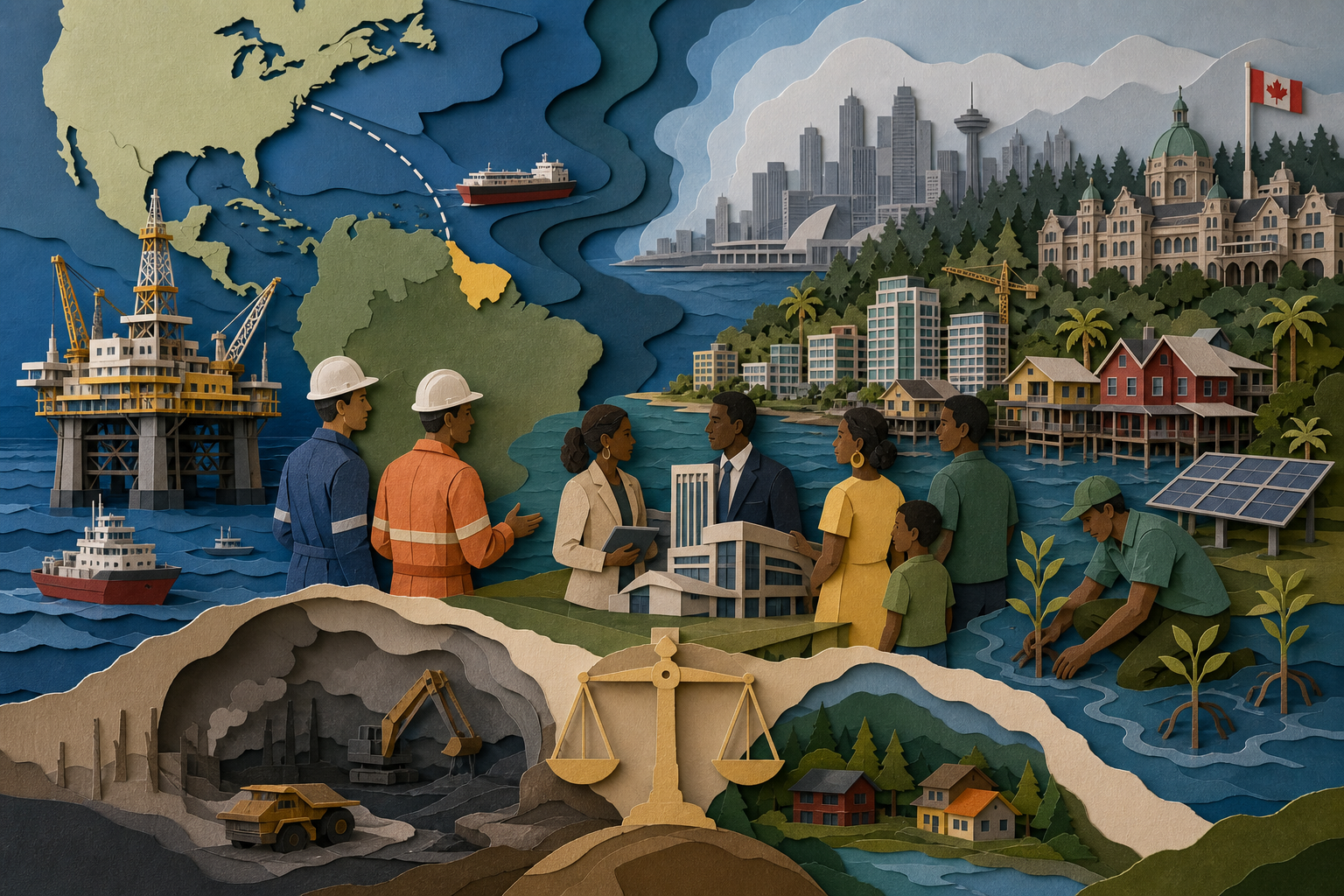
Guyana was already running the table before the missiles started flying. GDP growth in the double digits for three straight years. Production climbing past 600,000 barrels a day from offshore platforms that didn't exist a decade ago. Now, with Iran and Israel trading strikes and crude spiking toward $95, the smallest economy in South America just became one of the most important.
The math is simple. Guyana produces high-quality, low-breakeven sweet crude from the Stabroek Block, operated by an ExxonMobil-led consortium that includes Hess and CNOOC. Breakeven sits somewhere between $25 and $35 per barrel. At $90-plus Brent, every extra dollar is margin. When Middle Eastern supply looks shaky, buyers pay a premium for Atlantic basin crude that doesn't have to transit the Strait of Hormuz. Guyana delivers both: security and profit.
This is not a gradual windfall. Guyana is on track to hit 1.2 million barrels per day by 2027 or 2028, a production level that would have taken Alberta's oil sands three decades to reach. The speed matters because it compresses the entire Dutch Disease cycle into a handful of years. The guyanese dollar has already appreciated enough to make sugar and gold less competitive. The agriculture sector, which employed a third of the workforce in 2015, is shrinking as a share of GDP. The government's Natural Resource Fund, Guyana's sovereign wealth vehicle managed by the Bank of Guyana, held roughly $3.3 billion as of late 2025. That number will double before the next election cycle.
The Geopolitical Hedge No One Saw Coming
Western energy buyers spent the last two years hunting for non-OPEC, non-Russian supply that doesn't come with sanctions risk or choke-point geography. Guyana wasn't on the shortlist in 2020. It is now. The country's location—Atlantic coast, Georgetown port within range of U.S. Gulf Coast refiners—makes it a natural partner for North American energy security. When Washington talks about diversifying away from the Persian Gulf, it increasingly means diversifying toward places like Guyana.
The problem is that Venezuela sees the same map. The Essequibo region, which covers roughly two-thirds of Guyana's land area and sits directly above the offshore oil fields, has been disputed since the 19th century. Caracas claims it. Georgetown administers it. Higher oil prices raise the prize. In late 2023, Venezuela held a referendum endorsing annexation. Guyana responded by requesting an emergency session at the International Court of Justice. Nothing has escalated to force, but the incentive structure just shifted. A $50-per-barrel oil market is a legal dispute. A $95 market is something else.
The Norway Problem in Reverse
Economists studying resource-rich economies obsess over two models: Norway and Nigeria. Norway banked the wealth, kept government spending disciplined, and avoided currency appreciation that would kill other industries. Nigeria let oil revenues fund patronage, inflation, and corruption. Guyana's Natural Resource Fund was explicitly modeled on Norway's Government Pension Fund Global. The framework is there. Whether it holds under political pressure is the open question.
The 2026 National Budget allocates significant funding to a deep-water port in Berbice and a new bridge across the Corentyne River. The Gas-to-Energy project, designed to cut domestic electricity costs by 50%, is moving forward with ExxonMobil as the anchor tenant. These are infrastructure investments, not handouts. But Georgetown's inflation is already outpacing wage growth for workers outside the energy sector. The gap between headline GDP and household experience is widening. That gap is where populism grows.
Guyana's boom rests on two assumptions: global oil demand stays high, and the country can industrialize before the energy transition leaves it with stranded offshore platforms. The first assumption just got extended by Middle Eastern chaos. The second is harder.
For now, the windfall is real. Bigger than expected. Faster than planned.