Guyana's Oil Boom Just Got Bigger: How Geopolitical Crisis Turned Windfall Into Strategic Risk

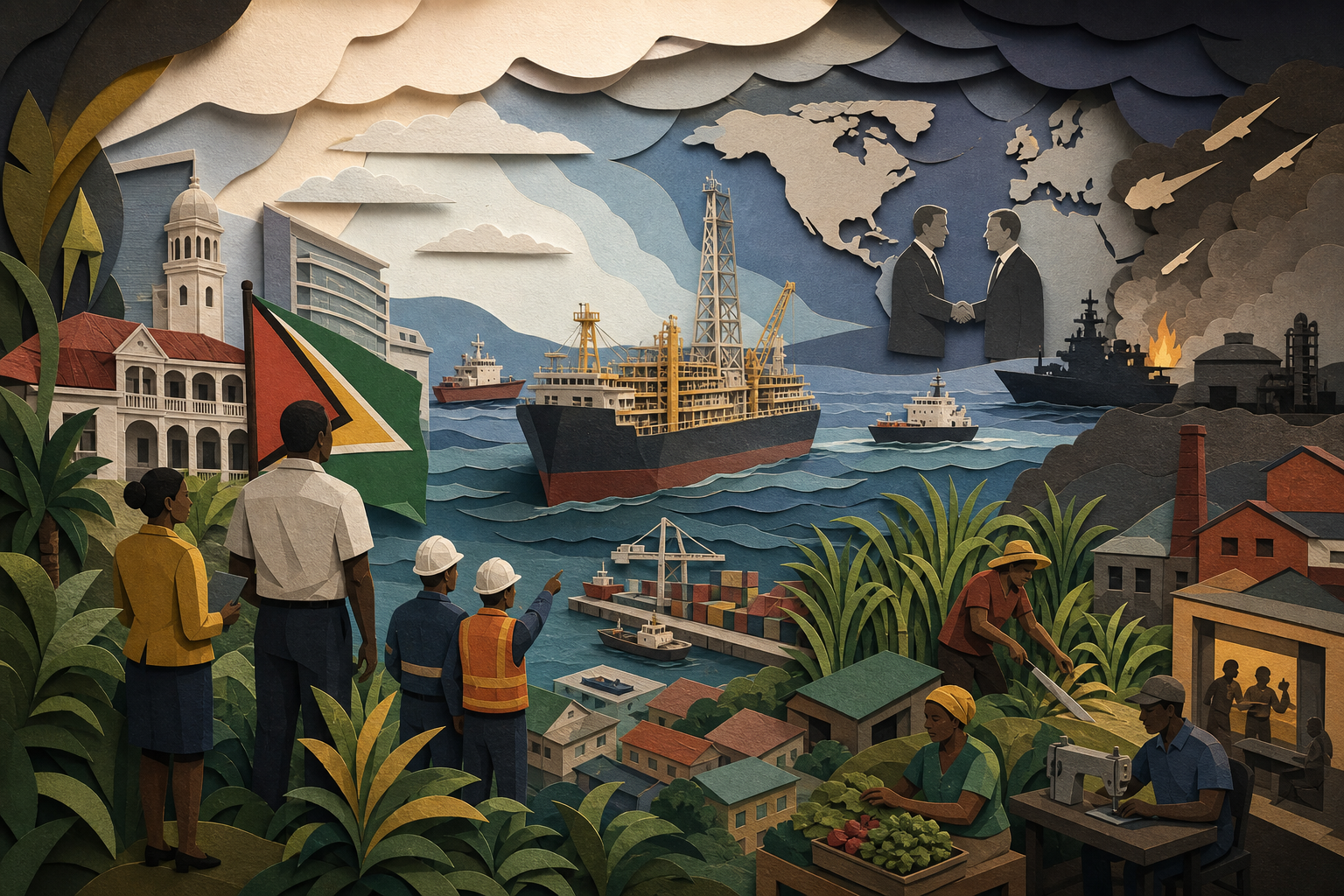
Guyana was already selling crude faster than anywhere else on earth. Then Iran started lobbing missiles at Tel Aviv, and suddenly Georgetown's problem changed from "how to manage wealth" to "how to manage wealth arriving six months earlier than projected."
The math is straightforward. Brent crude near $90 a barrel means ExxonMobil and its partners hit cost recovery faster on the Stabroek Block. Cost recovery matters because of how Guyana structured its Production Sharing Agreement in 2016. The government takes a 2% royalty upfront. After that, the consortium can claim up to 75% of monthly revenue to recover capital costs. Once that cap is hit, the split flips: Guyana gets 50% of profit oil. Higher prices compress the timeline to that flip. What was supposed to be a 2028 event for some of the newer FPSOs could land in late 2027 instead.
The Natural Resource Fund balance tells part of the story. As of mid-2025, the fund held roughly $3.2 billion USD, accumulated over four years of production. At current output—north of 645,000 barrels per day from the Liza Destiny, Liza Unity, and Prosperity hulls—every $10 bump in the Brent benchmark adds millions per month to government revenue. That compounds when you layer in the One Guyana FPSO coming online in 2026, which pushes total capacity past 800,000 bpd.
The Middle East Premium Nobody Planned For
Guyana doesn't border the Persian Gulf. It sits 7,000 miles from the Strait of Hormuz. But the oil market doesn't care about distance; it cares about perceived supply risk. When Israeli strikes hit Iranian refineries and Tehran threatens to close shipping lanes, the fear premium gets priced into every barrel, including the ones loading onto tankers off Georgetown. Guyana is now benefiting from a geopolitical crisis it has zero influence over and no exposure to.
The paradox is sharper when you consider infrastructure. The government allocated $600 million from the NRF in the 2025 budget to finish the Gas-to-Energy project, a dual-purpose facility designed to cut electricity costs by 50% and reduce reliance on diesel imports. That project assumes stable long-term revenue. The Iran premium accelerates the inflow but introduces volatility. Revenue lags matter here. Guyana doesn't get paid the day Brent spikes. It sells crude in cargoes, often on forward contracts negotiated weeks earlier. By the time cash clears into the NRF, the spot price might have moved 15% in either direction.
What Georgetown calls a "windfall" could just as easily be called timing risk dressed up as good fortune.
When Everyone Owns the Same Concentrated Bet
The bigger structural problem is what happens when one revenue source grows fast enough to hollow out everything else. Guyana's non-oil GDP growth has been decelerating relative to the headline figures. Agriculture, historically the second-largest employer, now competes for labor with oil contractors paying multiples of what a sugar estate offers. The housing market in Georgetown has inflated 40% since 2022. A two-bedroom apartment that rented for $800 USD now goes for $1,100. That's what happens when you inject billions into a 750,000-person economy in under five years.
The Dutch Disease risk isn't theoretical anymore. It's showing up in price lists at supermarkets and construction bids where local firms can't compete with foreign contractors flush with petrodollars. The NRF Act was amended in 2023 to allow larger annual withdrawals for infrastructure, ostensibly to "spread the wealth." In practice, it's accelerated spending in an economy without the technical labor or bureaucratic bandwidth to absorb it efficiently. The result: roads half-built, hospitals under-staffed, and procurement delays measured in quarters, not weeks.
Venezuela still claims the Essequibo. That claim flares every time Guyana signs a new FPSO contract. Higher oil prices don't make that threat disappear. They make it more expensive to ignore.