Fortuna Mining's 2025 Sustainability Report: What Changed and What Didn't

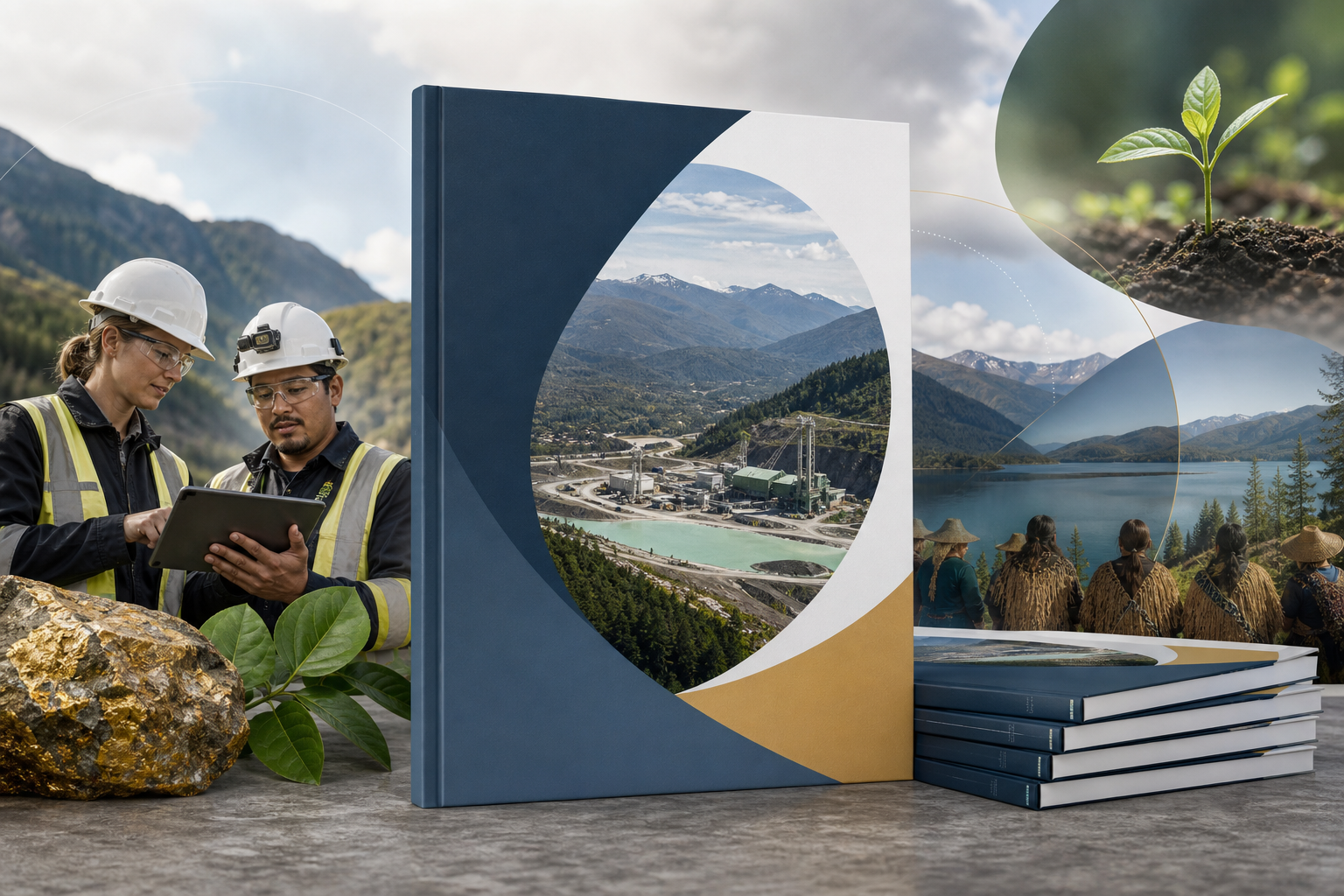
Fortuna Mining released its eighth sustainability report last week, and the most revealing thing about it isn't what the company is doing differently. It's what hasn't moved. The Vancouver-based miner operates five sites across Latin America and West Africa—Seguela in Côte d'Ivoire, Yaramoko in Burkina Faso, Lindero in Argentina, San Jose in Mexico, and Caylloma in Peru. That geographic spread is itself a sustainability strategy: diversification across jurisdictions reduces the risk that a single political shock shuts down operations. The 2025 report frames this explicitly as "jurisdictional resilience," which is an interesting way to talk about hedging against coups and resource nationalism. The company's safety record is clean. Zero fatalities across all sites in 2025. That number matters more in mining than in most industries, where a single incident can reverse years of operational trust with local communities and regulators. Fortuna also reports that 49% of management roles at mine sites are held by host-country nationals, up slightly from prior years. This is the kind of metric that sounds like box-checking until you understand what it actually signals: whether a company is building local institutional capacity or running an extractive outpost that ships everything—profit, expertise, decision-making authority—back to headquarters. What's unchanged is the core tension the report never quite resolves. Fortuna rebranded from "Fortuna Silver Mines" to "Fortuna Mining Corp." to reflect a shift toward gold production, particularly at Seguela. The problem is that gold carries a higher carbon footprint per ounce than silver, which complicates the emissions story the company is trying to tell. The report mentions efforts to flatten the emissions curve at Seguela through renewable energy integration, but the underlying production mix is working against that goal. You can optimize a dirty process, but you're still running the dirty process. The company recycles over 80% of the water it uses in mining operations. That's meaningful in a sector where tailings dams and water contamination are the liabilities that outlive the mine itself. But water metrics don't exist in isolation—they're entangled with the artisanal and small-scale mining (ASM) issue that the report barely touches. In Burkina Faso, artisanal miners working on or near Fortuna's sites create friction that no annual disclosure fully captures. Managing those relationships is part of the cost structure, and part of the social license, and part of the reason the "sustainability" framing sometimes feels like it's doing more work than the operations themselves. Fortuna paid $120 million in taxes and royalties to host governments in 2025, and invested over $5 million directly in community programs. Those numbers position the company as a fiscal anchor in regions where government revenue is volatile. That positioning is deliberate. Mining firms operating in West Africa or remote Latin America aren't just extracting resources—they're providing infrastructure, employment, and tax base in places where all three are scarce. The argument Fortuna is making, without saying it plainly, is that their presence is net-stabilizing even when the extraction itself is finite. The report aligns with GRI, SASB, and TCFD frameworks, which means Fortuna is spending real money on compliance infrastructure that smaller peers skip. For an intermediate producer, that overhead cuts into margins. But it also positions the company for institutional capital that won't touch miners without standardized ESG disclosure. The calculus isn't moral. It's structural. What the report doesn't do is pretend the contradictions resolve cleanly. You can't be a gold miner decoupling growth from carbon. You can manage the slope, but not the direction.