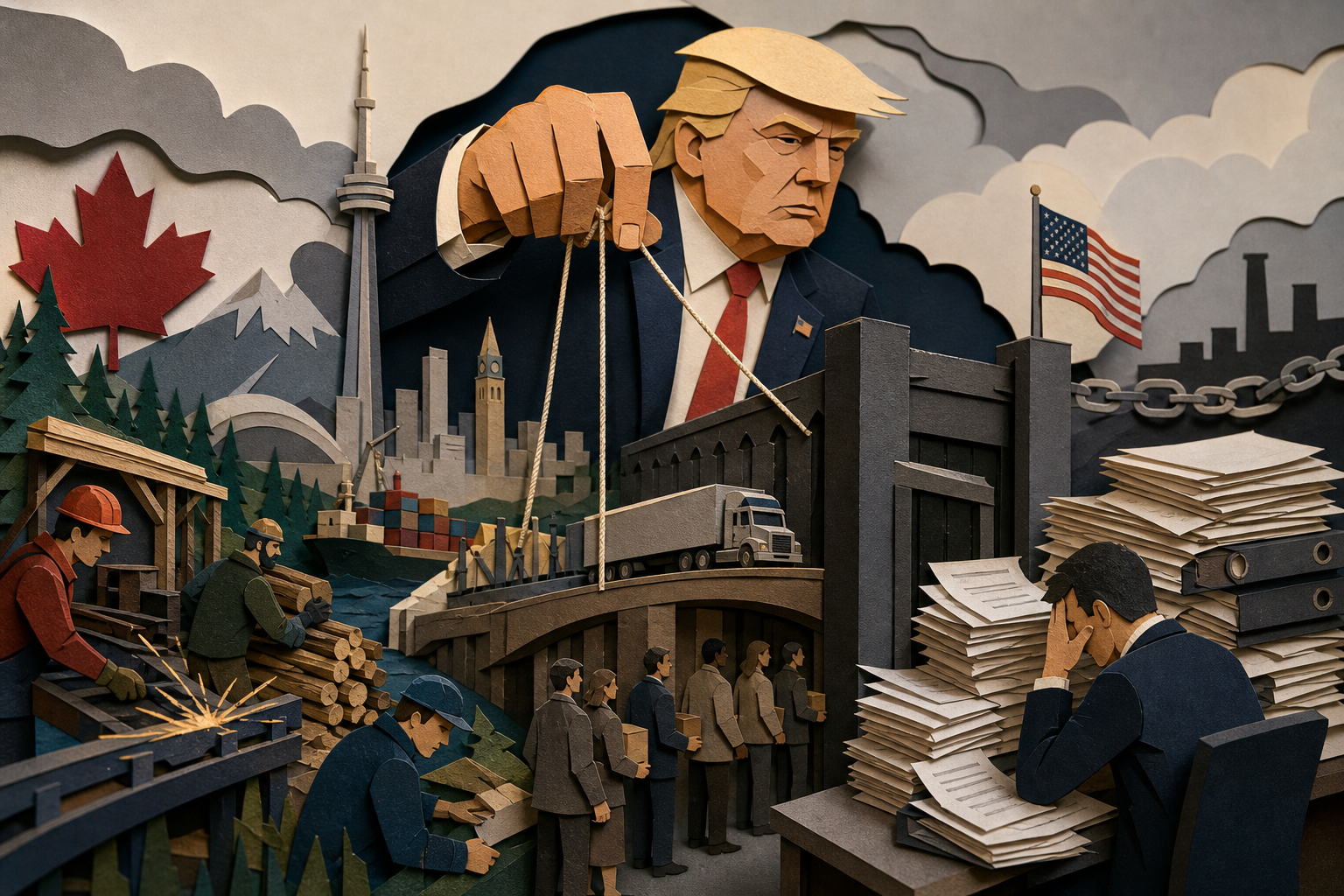
Commodity slump drags TSX while AI volatility tells a different story south of the border

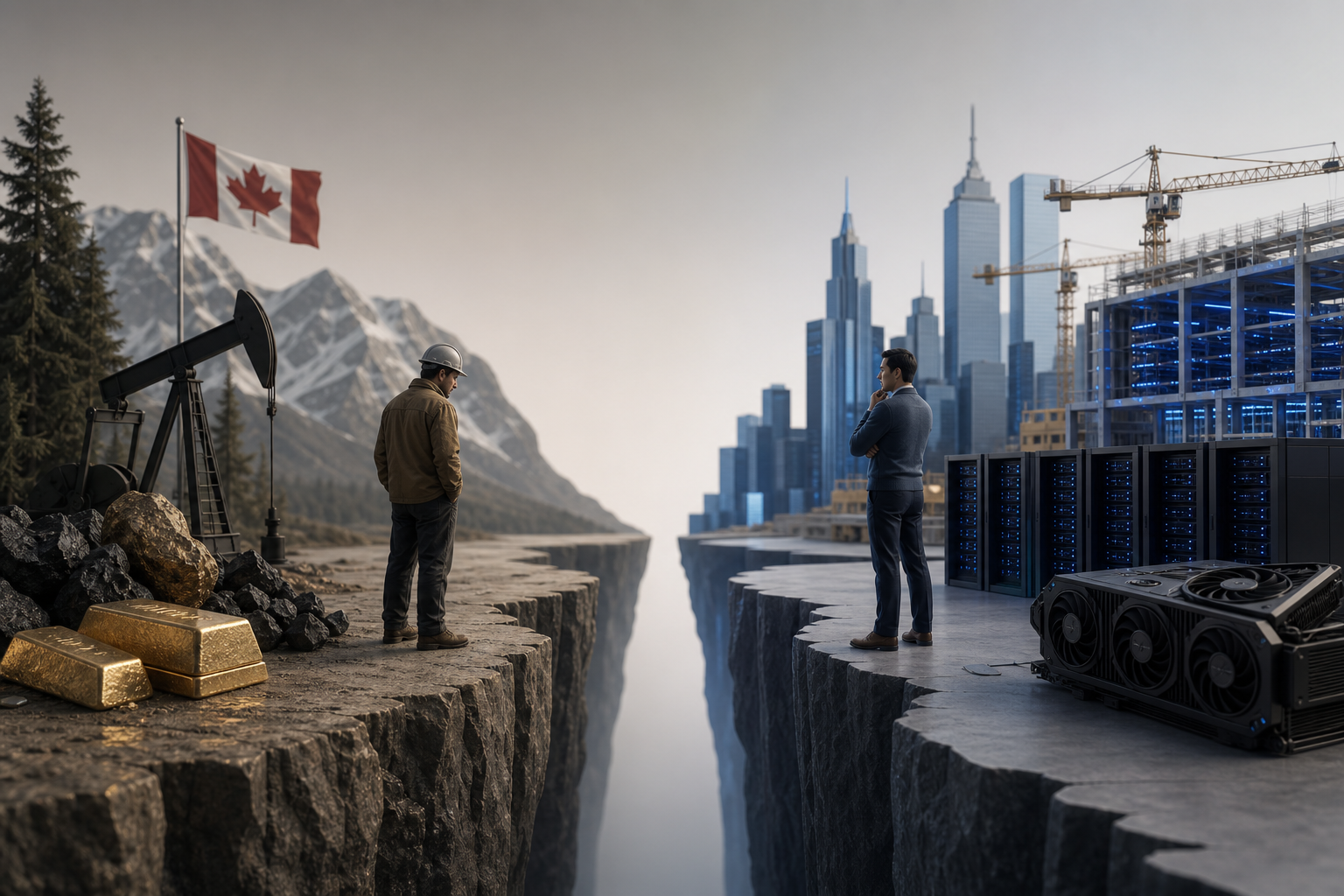
Gold touched $2,847 per ounce last Tuesday before sliding 4% by Friday's close. That single-week swing captures the pressure facing the S&P/TSX Composite, where materials and energy together still command roughly 30% of index weighting. When commodities retreat, Canadian equities feel it immediately, not as a distant headwind but as a structural anchor pulling valuations lower while U.S. markets wrestle with an entirely different set of forces.
The divergence is not subtle. Wall Street's current volatility lives in the semiconductor and cloud infrastructure names, where daily moves of 3% or more have become routine in Q2 2026. The swings are not about economic fundamentals in the traditional sense. They are about capital expenditure. Big Tech has poured billions into AI chips and data centers, and institutional investors are now asking a blunt question: when does the spending translate into bottom-line revenue? The answer is unclear, and that uncertainty is driving the roller coaster.
Meanwhile, the TSX is dealing with something older and simpler. Global demand for oil and industrial metals has softened. Geopolitical premiums have kept crude from collapsing entirely, but the floor is fragile. Copper and nickel, both critical to the green energy transition Canada supplies, are caught between long-term structural demand and short-term economic cooling. The result is a narrow trading range that leaves resource-heavy portfolios with little room to outperform.
Why the two markets are solving different problems
The Fed has shifted the conversation. Traders are pricing in a potential rate hike by late 2026, an unusual move this far into an expansion. The reasoning: persistent inflation in services and shelter, combined with a labor market that refuses to cool in ways the central bank expected. If that hike materializes, it would represent a bet that the economy is in a "no landing" scenario, where growth remains strong enough to sustain higher borrowing costs without tipping into recession.
That scenario is manageable for companies with pricing power and sticky margins. It is less manageable for commodity producers, who are price takers in global markets. When the Bank of Canada holds steady or cuts while the Fed raises, the loonie weakens. Imported inflation rises. Canadian households, already carrying elevated debt loads, face higher costs on goods they cannot avoid. The dynamic compounds itself.
Energy and materials stocks on the TSX do offer one advantage: they are not priced for perfection. Price-to-earnings ratios sit well below the multiples attached to U.S. technology names. For value investors comfortable with volatility, that gap is an entry point. The question is whether "cheap" becomes "cheaper" if commodity prices slide further.
The capex reality Wall Street is pricing in
The AI infrastructure buildout is real. Data centers are consuming physical resources at a scale most retail investors underestimate. But the spending required to maintain that infrastructure is also real, and the returns are deferred. Software-as-a-service companies integrating AI into existing workflows are showing steadier growth. Hardware plays, the chip manufacturers and server suppliers, are where the swings concentrate, because the market is trying to price future demand based on current capital commitments that may or may not generate proportional revenue.
Canada is insulated from that particular volatility by composition. Old Economy stocks, banks, railways, pipelines, dominate domestic portfolios. They move with interest rates and GDP, not with semiconductor order backlogs. That insulation has limits. If the Fed raises and the BoC does not, the currency effect alone could erode returns for Canadian equity holders looking south.
The TSX is not broken. It is doing what it was built to do: reflect the price of things pulled from the ground or moved through pipes. Wall Street is pricing the future of computation. Both are volatile. But only one is being dragged down by falling commodity futures, and only one is swinging on capex bets that may take years to resolve.