Canadian Retail Sales Signal a Spending Pattern Shift Beyond Gasoline

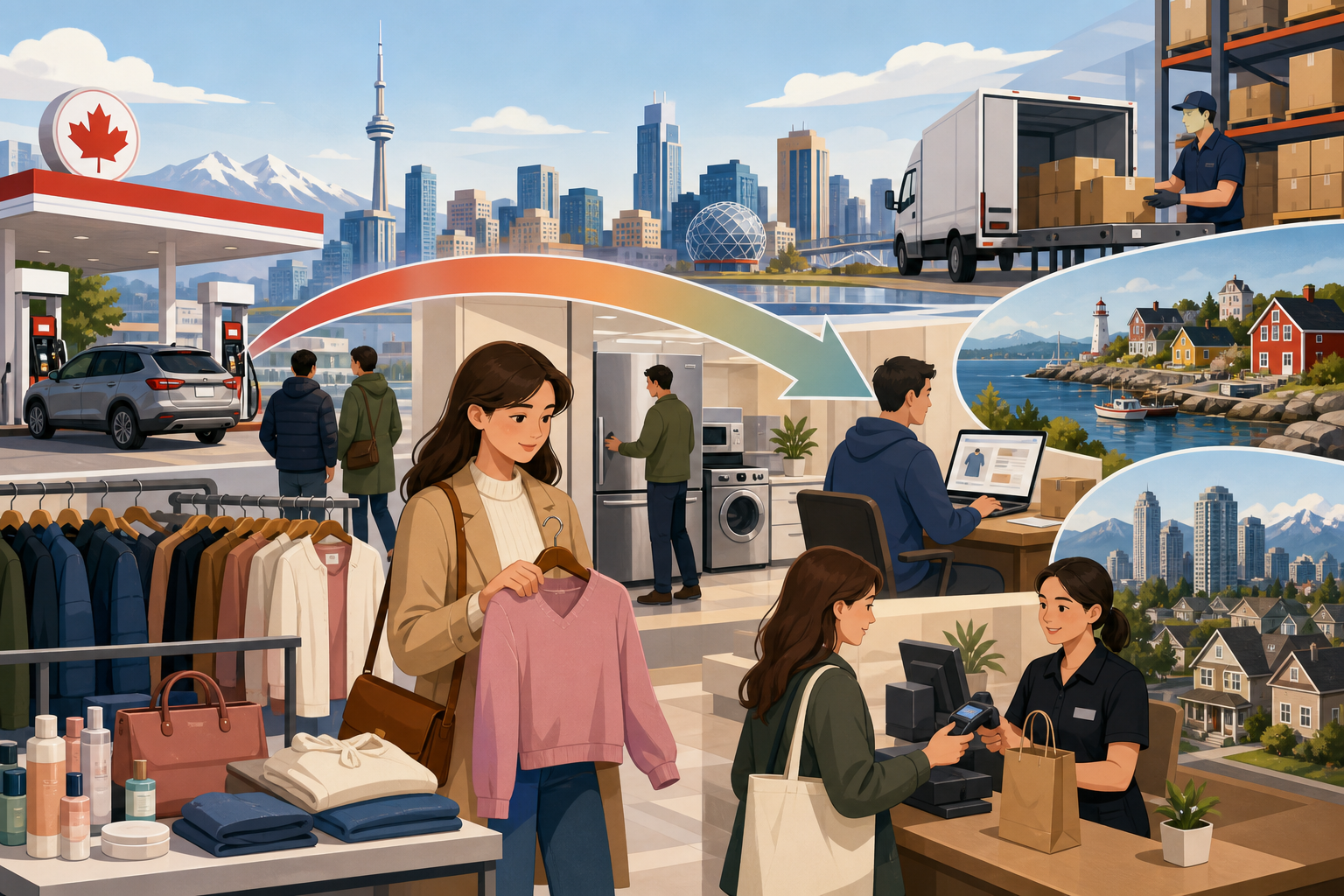
Statistics Canada's preliminary estimate for June pegs retail trade growth at 0.4%, but the number alone misses the structural shift underneath it. For the first time in nearly a year, the increase comes from purchases spread across categories rather than from volatile pump prices masking stagnation everywhere else.
The prior months looked healthier on paper than they felt in practice. When gasoline prices climb, total retail sales figures rise automatically, more dollars flowing through gas stations inflate the aggregate number even when households are buying fewer non-essential goods. Retailers selling apparel, electronics, and home furnishings saw flat or declining unit volumes through early 2026 despite headline growth. The June data reverses that pattern. Roughly half of retail subsectors posted gains, suggesting the recovery has started to broaden beyond necessity categories.
What changed between March and June
The shift traces back to two structural adjustments that finally converged. Real wage growth began outpacing inflation in several provinces by late 2025, creating a small buffer for discretionary spending that hadn't existed since 2021. Meanwhile, the Bank of Canada held its overnight rate stable near 4.75% through the first half of 2026, eliminating the uncertainty that had kept consumers in wait-and-see mode during the prior tightening cycle.
That stability matters more than the rate level itself. A predictable borrowing environment lets households plan larger purchases, replacing appliances, upgrading furniture, refreshing wardrobes, without worrying the financing terms will deteriorate before delivery. The return of small indulgences also showed up in personal care and smaller household goods, classic "lipstick index" categories that signal cautious optimism rather than full confidence.
The debt ceiling still applies
June's broadening doesn't erase the constraint that will define Canadian retail for the next 18 months: mortgage renewals. A 38-year-old in Oakville who locked in a five-year fixed rate at 1.89% in early 2021 is renewing this year into something closer to 5.2%. That difference redirects $800 to $1,200 per month away from discretionary spending and into interest payments, depending on the outstanding balance. Statistics Canada estimates that hundreds of thousands of homeowners face similar recalibrations through 2027.
This creates a bifurcated retail environment. Older, mortgage-free households are driving growth in travel, dining, and premium goods. Younger mortgage-holders and renters are concentrating spend at discount retailers and avoiding big-ticket financed purchases like vehicles or major renovations. The aggregate 0.4% growth hides that divergence. Per capita spending remains flat or slightly negative once population growth is factored in, which means total retail is rising because there are more people, not because the average person is spending more.
Why inventories matter now
Retailers finally cleared the bullwhip-effect overstocking that plagued them since late 2022. For two years, store shelves carried merchandise ordered during supply-chain chaos, when demand forecasts assumed continued stimulus-era spending. Those forecasts were wrong. Inventory sat. Margins compressed under clearance pricing. By mid-2026, stock levels normalized, and June's growth suggests retailers are now ordering for actual demand rather than clearing old commitments.
That realignment means the sales growth is coming from goods people want at prices they're willing to pay, not from aggressive discounting to move dead stock. Thin but stable margins beat the previous model of high top-line revenue driven by markdowns that destroyed profitability.
The June figure won't spark celebration in boardrooms, 0.4% is modest, and the debt service ceiling caps how much higher it can go. But it represents the first month in nearly a year where growth came from something other than expensive gasoline or population arithmetic. The spending is broadening. It's just broadening slowly.