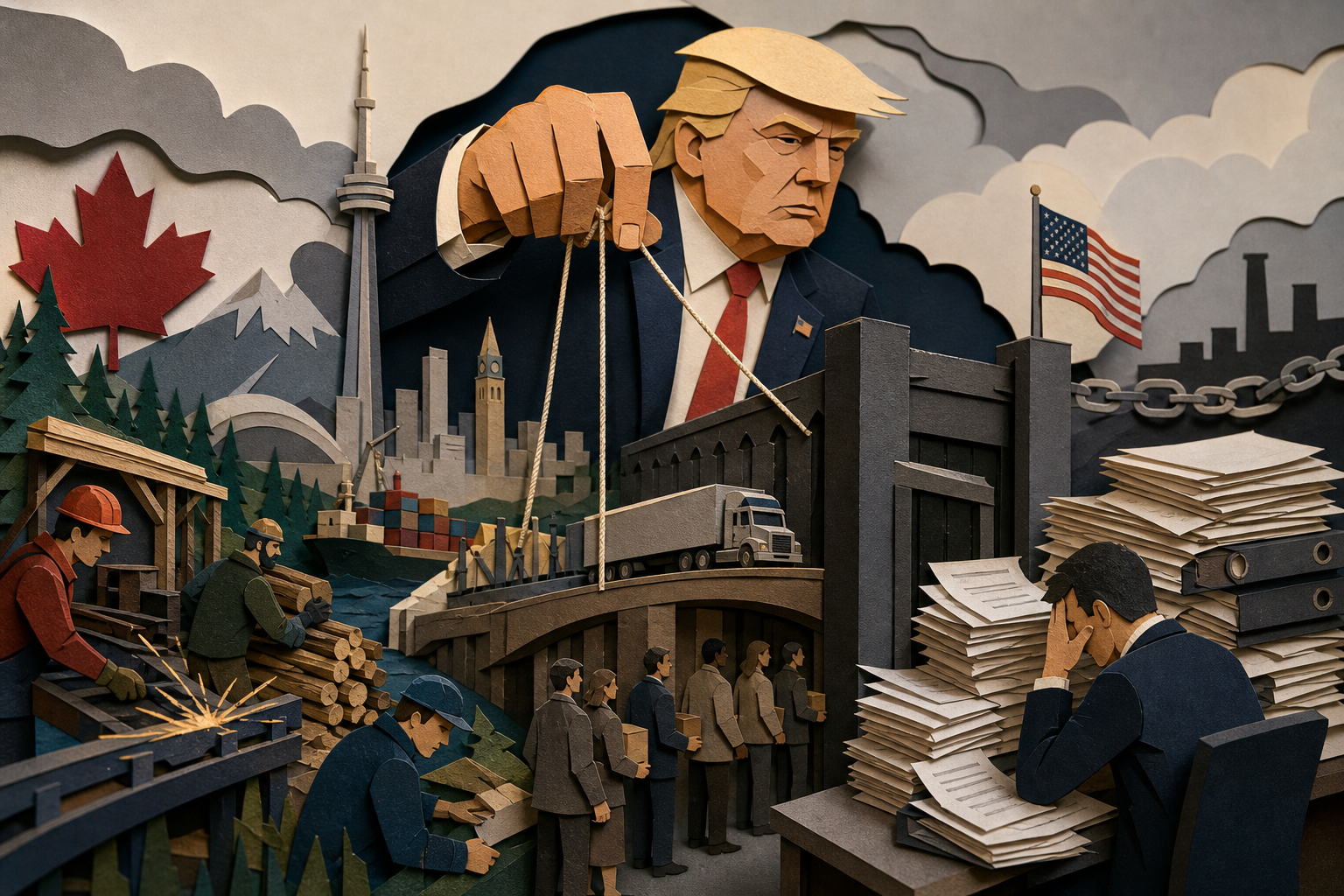
Canada's Economy Flatlines While Tim Hortons Cuts Foreign Workers — What Three Unrelated Stories Reveal About the Same Pressure

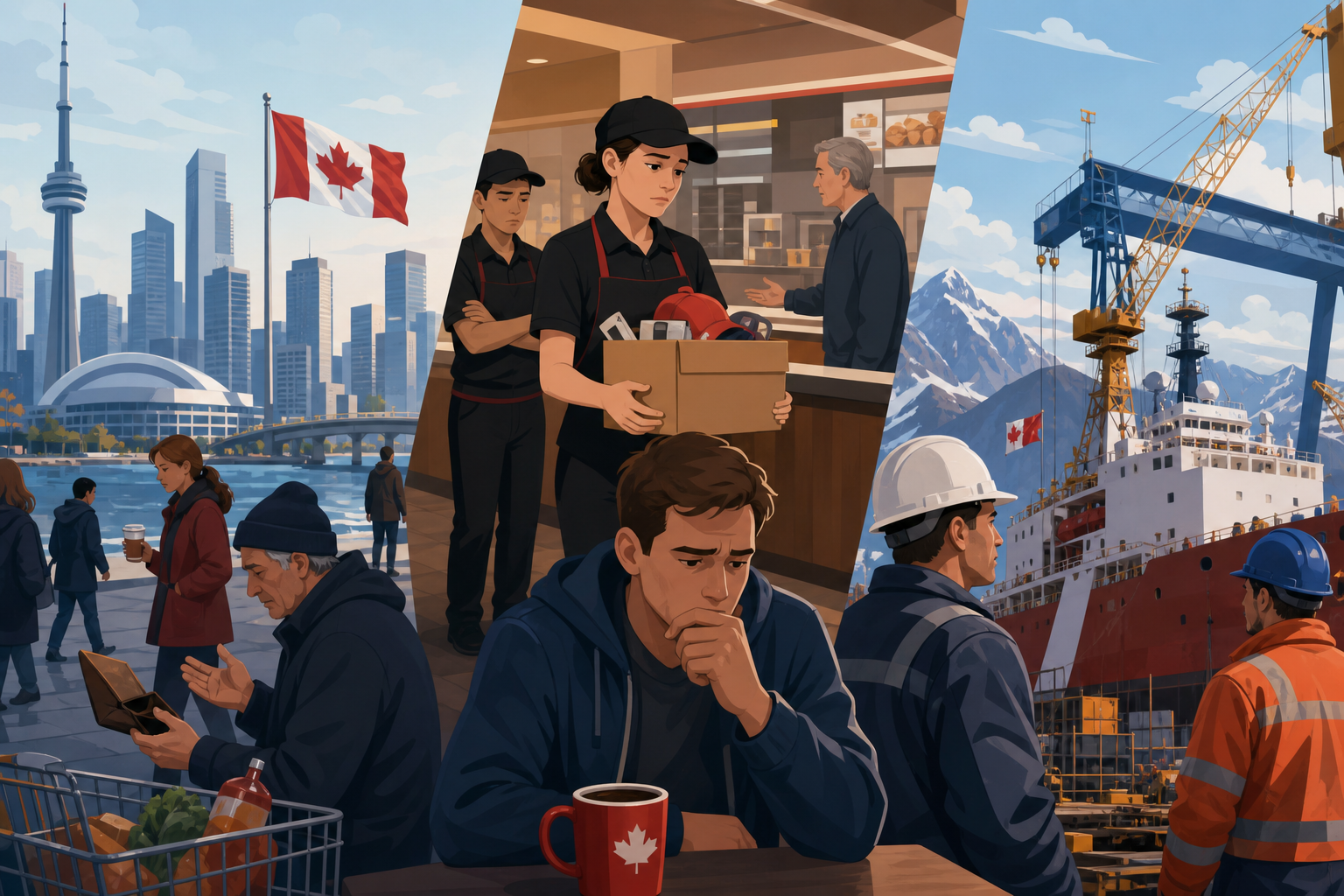
Canada grew by 0.4% in the first quarter of this year. The Bank of Canada had forecast 1.7%. That gap is not a rounding error. It's a stall.
Tim Hortons, the brand that spent decades positioning itself as the corporate embodiment of working-class Canada, announced it will sharply reduce its reliance on the Temporary Foreign Worker program. Not because labor got cheaper. Because the political cost of using TFWs became higher than the operational cost of finding another solution.
Meanwhile, the Davie shipyard in Quebec — once the industry's problem child, shut out of federal contracts — is now central to Canada's Arctic icebreaker procurement. The same National Shipbuilding Strategy that treated Davie as toxic a decade ago now depends on it.
Three stories. One pressure.
The economy that grew but didn't
A 0.4% annualized growth rate means the economy is technically expanding, but on a per-capita basis it's shrinking. The average Canadian is poorer than they were three months ago. Household debt-servicing costs are eating disposable income. Consumer spending is flat. Business investment is hesitant. The topline number hides what's happening at the individual level: people are managing, not growing.
Statistics Canada's GDP figures tell you the economy added something. They don't tell you whether anyone felt it. The Bank of Canada is now monitoring this gap closely. Cut rates too soon and inflation reignites. Wait too long and you cement a lost decade for a generation of workers who entered the labor market post-2008, watched housing prices double, and are now watching their real incomes erode.
The economic stall matters because it reveals the binding constraint. Growth isn't limited by ideas or technology. It's limited by the fact that households are levered to mortgages they can't refinance without pain, in an economy where adding capacity through immigration has started to produce political blowback instead of public support.
When your brand is the policy problem
Tim Hortons didn't retreat from the TFW program because it found a better HR strategy. It retreated because operating 4,000 locations under a model that depends on suppressed wages became a reputational problem the parent company couldn't carry. Restaurant Brands International runs Burger King and Popeyes the same way, but those brands aren't woven into national identity. Tim Hortons is.
Federal policy is tightening. The program that was quietly expanded during the post-pandemic labor shortage is now being publicly blamed for youth unemployment and housing pressure. The company that built its image on double-doubles and access is now the face of a labor model Canadians have decided they don't want to defend.
Urban Tim Hortons locations will file approximately zero new TFW applications for front-of-house roles under the new restrictions. That's not a number the company chose. That's the number the policy left available.
Sovereignty as industrial policy
Davie was the shipyard Ottawa didn't want to deal with. Poor financials, management turnover, political baggage. Then the ice started melting faster than the models predicted. Arctic summers could be ice-free by 2040. Suddenly Canada needs icebreakers, and the shipyards that were supposed to deliver them — Vancouver and Halifax — are behind schedule and over budget.
Davie is now building polar icebreakers, not because it became a better operator overnight, but because the government ran out of alternatives and the geopolitical pressure to secure Arctic routes became impossible to ignore. National security became the forcing function that industrial policy couldn't be on its own.
What links a shipyard contract to a coffee chain's staffing model to a GDP miss is this: the old levers don't pull anymore. Immigration was supposed to relieve labor shortages without wage pressure. It worked until housing costs and public opinion turned. Cheap debt was supposed to fuel consumption and investment. It worked until households maxed out. Procurement strategies were supposed to reward the safe bets. They worked until the safe bets couldn't deliver and the national interest required a different answer.
The economy is responding to different constraints now. What worked in 2019 doesn't work in 2026, not because the theory changed, but because the room to maneuver disappeared.