Asian AI Supply Chain Plays Draw Capital as SpaceX, OpenAI Liquidity Reshapes Investor Calculus

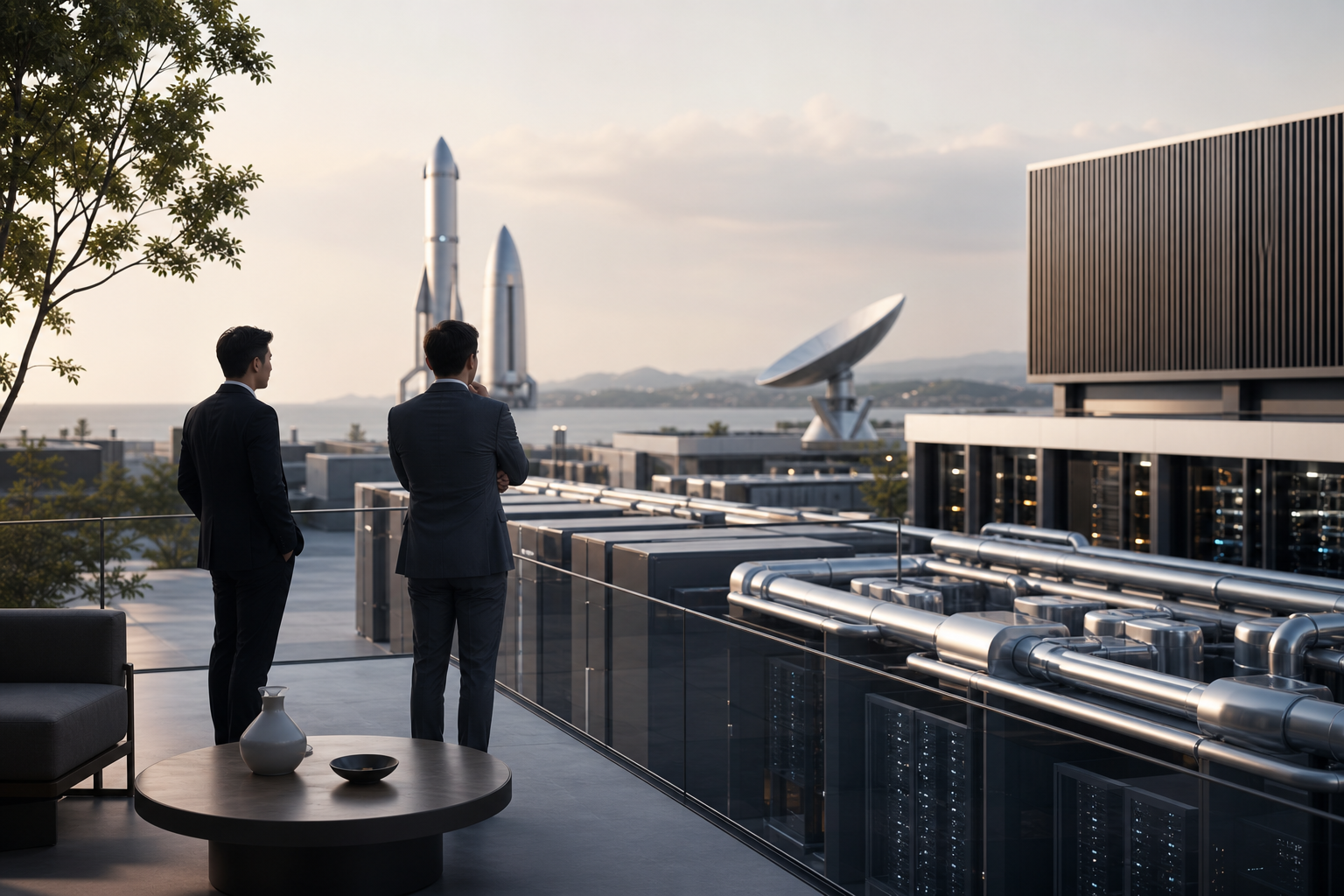
The SpaceX tender offer that valued the company near $210 billion created something unexpected: a reservoir of liquid capital hunting for the next exposure point in the AI stack. Early investors who sold secondary shares aren't rotating into more US software. They're buying Asian semiconductor manufacturers, Taiwanese foundries, and data center infrastructure plays in Malaysia. The logic is structural, not geographic nostalgia.
Why the Capital Flows East
When venture-backed giants execute secondary offerings at scale—OpenAI's $86 billion tender in 2024, SpaceX's ongoing employee liquidity programs—the proceeds don't sit idle. Limited partners who received distributions are under pressure to redeploy. The obvious targets would be the next generation of US AI model companies, but those valuations have compressed or become inaccessible to all but the earliest stage funds. What remains liquid, and what trades at a discount to the growth it represents, is the physical layer: the firms that fabricate chips, package memory, and cool the servers.
TSMC is the clearest example. The Taiwanese foundry manufactures nearly every advanced AI accelerator, including Nvidia's H100 and the custom silicon designed by Google, Amazon, and emerging startups. It trades at roughly 22 times forward earnings—a premium to the broader market, but a discount to Nvidia's 35x. For an investor who just liquidated SpaceX equity at nosebleed valuations, TSMC offers the same exposure to compute demand at half the multiple. The tradeoff is obvious: you give up the margin expansion of the software layer in exchange for manufacturing scale that cannot be easily replicated. There are exactly two fabs in the world capable of producing 3-nanometer chips in volume. TSMC controls both.
The High Bandwidth Memory Arbitrage
SK Hynix, the South Korean memory giant, posted revenue growth of 78% year-over-year in its most recent quarter. Nearly all of that came from High Bandwidth Memory, the stacked DRAM architecture required to feed data to AI processors fast enough to keep them from idling. Analysts project the HBM market will grow at 60% to 80% annually through 2026, but SK Hynix trades at 12x earnings. The gap between the growth rate and the multiple exists because the market assumes commoditization risk—Samsung and Micron are scaling HBM production, and margin compression is expected by late 2026.
The investors moving capital from OpenAI secondaries into SK Hynix are making a different bet. They believe that two years of oligopoly pricing is enough to justify entry, even if margins normalize afterward. The alternative is paying 40x for a US AI infrastructure software company that could be undercut by open-source models in the same timeframe. The hardware bet isn't safer. It's just differently risky, and it's cheaper.
The Third Wave: Power and Cooling
The less obvious play is the infrastructure behind the infrastructure. Data centers running AI workloads consume 3 to 5 times the power per rack compared to traditional cloud servers. Liquid cooling, once a niche solution for supercomputers, is now standard for any facility deploying Nvidia H100 clusters at scale. Companies like Vertiv and Schneider Electric have Asian manufacturing operations and supply chains built to serve this demand, but a newer cohort of regionally focused firms—data center REITs in Southeast Asia, power transformation specialists in Taiwan—are capturing the overflow as Tier 1 cities run out of grid capacity.
Malaysia's data center market, for example, is projected to add 400 megawatts of capacity by 2026, much of it purpose-built for AI training. The growth isn't driven by domestic demand. It's driven by hyperscalers and AI labs looking for jurisdictions with cheap power, political stability, and fiber connectivity to existing hubs. Investors who caught the OpenAI liquidity wave are moving early-stage allocations into these markets, betting that infrastructure follows compute, and compute is moving faster than real estate can typically respond.
The pattern is simple. SpaceX and OpenAI created liquidity. That liquidity is chasing the highest-beta exposure to AI demand that isn't priced like a winner-take-all narrative. Right now, that's Asia.