A Finished Toronto Condo Just Entered Receivership, Why Completion No Longer Protects Developers

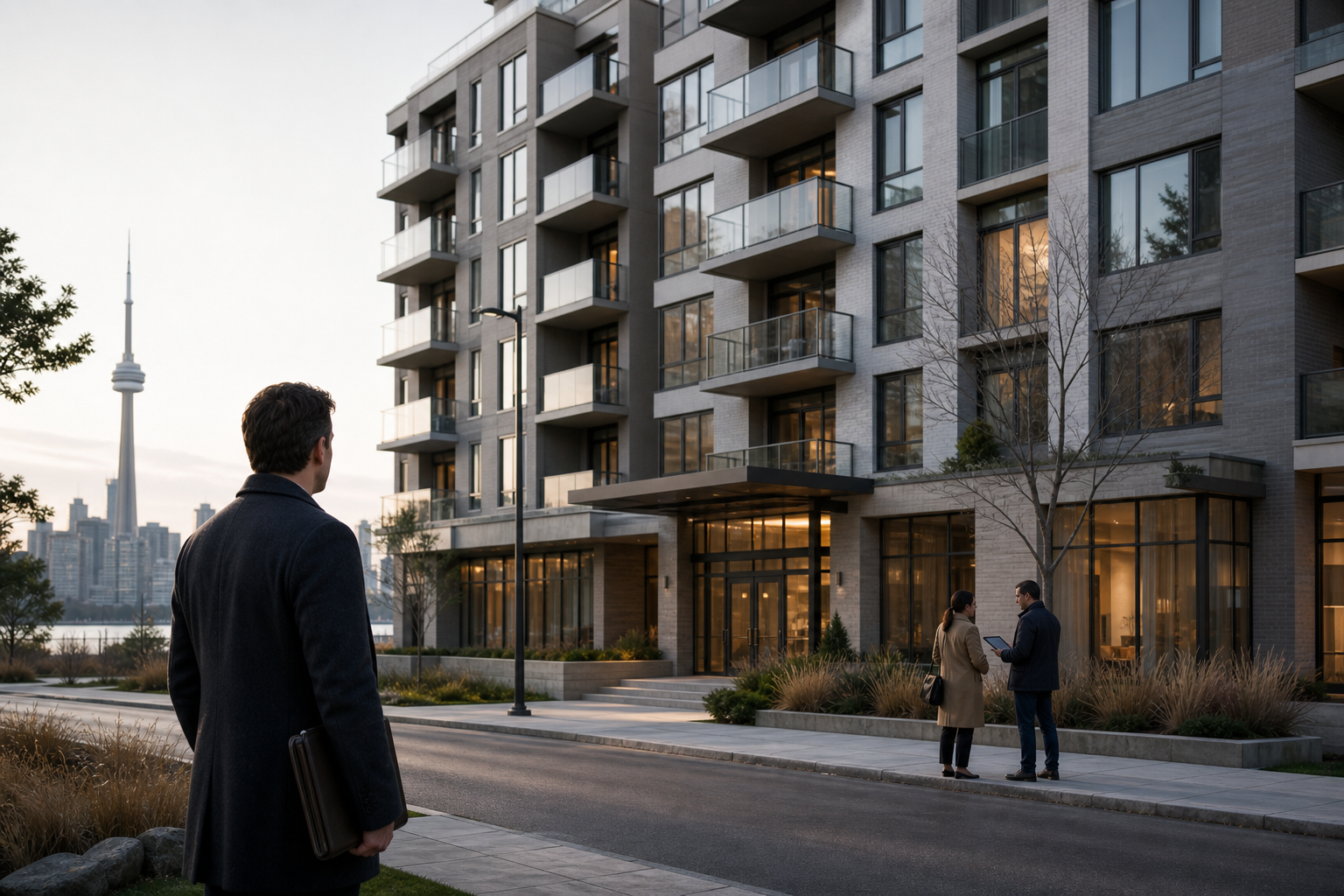
The Manderley sits at 1478 Kingston Road in Birch Cliff, two blocks from the Toronto Hunt Club, eleven storeys tall, 121 units, finished. Residents live there now. KSV Restructuring Inc., the court-appointed receiver, manages what's left to sell.
The building didn't collapse mid-construction. The framing didn't stop halfway. There's no hole in the ground ringed by creditor liens. Nova Ridge Development Partners built the thing, got it to occupancy, delivered keys to buyers who moved in, and still couldn't make it work. The failure happened after completion, which used to be the safe zone.
Why Finishing Doesn't Clear the Debt
A developer borrows at construction-loan rates to build. Those loans carry higher interest, shorter terms, and the expectation that the developer will refinance into permanent debt or pay down the balance as units close. The Manderley launched sales in the early 2020s, when rates were near historic lows and buyers could qualify for mortgages at 1.8%. By 2024, when the building finished, the Bank of Canada's policy rate sat between 4.5% and 5%. Buyers who had signed agreements three years earlier couldn't get financing for the amount they'd committed to. The appraisal came in lower than the contract price. They walked.
When buyers walk, the developer holds unsold inventory and the construction lender holds a loan that was supposed to have been repaid by now. Nova Ridge couldn't cover the gap. The court appointed KSV. The process has a name now because it's happened enough times to need one.
The arithmetic is straightforward. If 15% of your buyers can't close because the appraisal gap is $80,000 and their mortgage approval won't cover it, you're holding 18 units in a 121-unit building with no revenue and a construction loan accruing interest daily. You can drop the price to move them, but that price cut has to be steep enough to clear both the appraisal gap and the fact that resale units in the same neighbourhood are now competing with your unsold inventory. The margin disappears.
What Receivership Looks like in a Lived-In Building
The mechanics of a receivership are designed for half-built projects. The receiver takes control, finishes the work, and sells the units to pay creditors. But The Manderley is already finished and already occupied. The receiver isn't managing construction. They're managing a functioning condominium corporation where some owners have closed, some are in limbo, and the remaining units need to be sold while the building operates day to day.
Tarion warranty claims still get filed. Mechanical deficiencies still need addressing. Snow removal still happens. Except the entity responsible for all of this isn't the developer who built it. It's a restructuring firm whose job is liquidation, not long-term asset stewardship.
Owners who closed early, before the financing environment tightened, now live in a building where the remaining inventory is controlled by a court appointee with no incentive to hold out for better pricing. Market-clearing price is whatever moves the units fastest. If that's 12% below the original list, the receiver moves forward. The comparable sales data for the building gets marked by that discount. Every owner's unit value reflects it.
The Concentration Risk No One Prices In
Birch Cliff isn't a tertiary market. It's an established neighbourhood with transit access, proximity to the lake, and a reputation for holding value. If a finished building in this pocket can't survive the closing process, the signal is that location alone no longer insulates a project from the liquidity gap between construction debt and final closing.
The deeper fragility is that this pattern, launching sales in a low-rate environment, delivering in a high-rate one, describes a significant portion of the GTA's 2021-2023 pre-construction pipeline. Those projects are completing now. The buyers signed agreements when five-year fixed mortgages were under 2%. They're trying to close now, when the same mortgage runs over 5%. The ones who can't cover the difference aren't failing because they were reckless. They're failing because the math changed while the building was going up.
Receivership was once a symptom of construction failure. Now it's a symptom of financing misalignment. The building gets finished. The developer still loses.