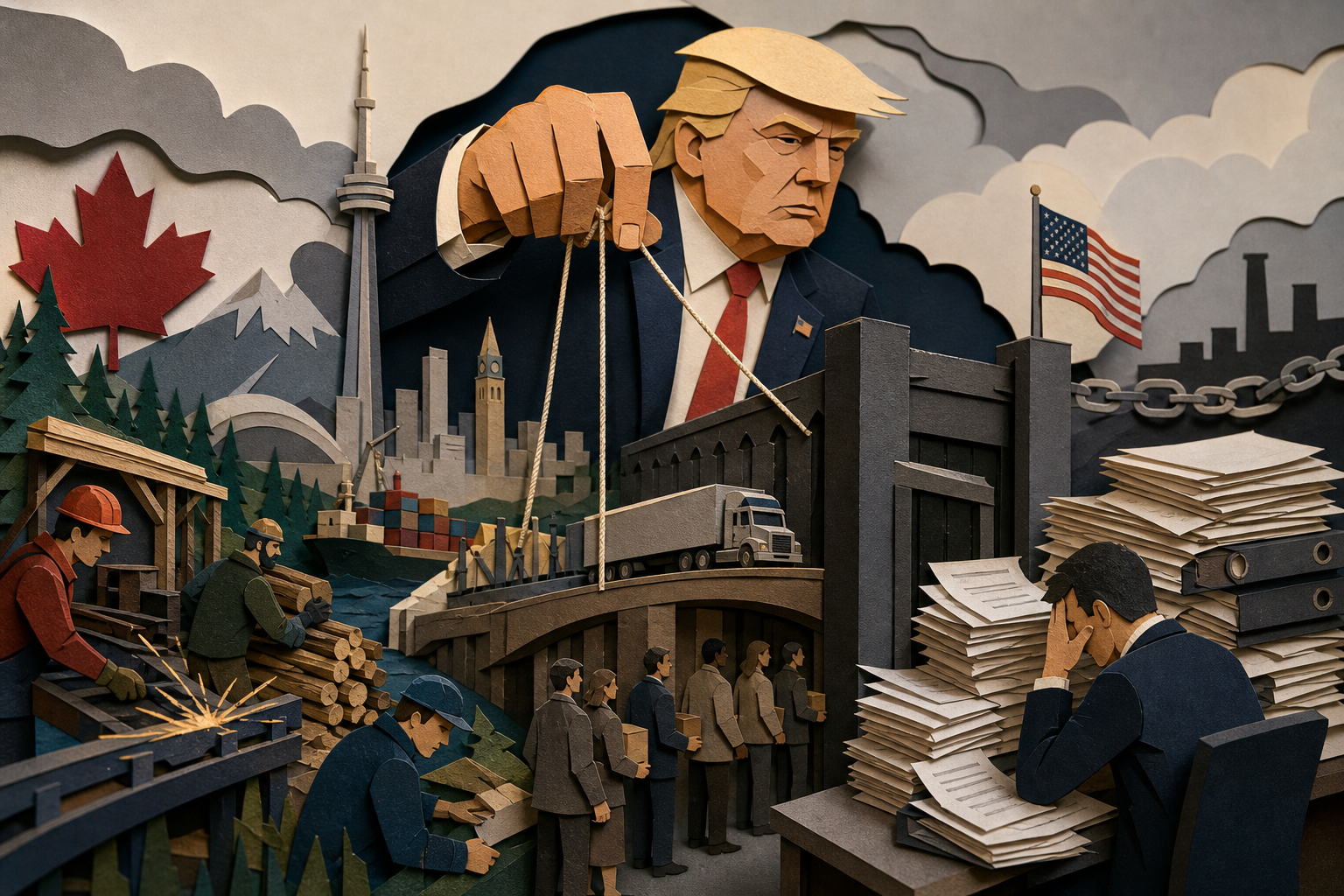
7 Financial Moves to Make Before August 19 When US Tariffs Hit Your Wallet


A 50% tariff on Canadian exports to the U.S. kicks in 30 days from now. That's not a headline to scroll past. If you're carrying variable debt, holding USD exposure, or shopping cross-border, the next four weeks matter. Here's what to lock down before August 19.
1. Lock your variable-rate mortgage or line of credit now.
The Bank of Canada's overnight rate sits at a manageable level today. That changes when inflation spikes. A 50% tariff on Canadian goods crossing south, $900 billion in annual trade, acts as a consumption tax that raises prices on both sides of the border. The Bank typically responds to inflationary shocks by holding or raising rates. If you're on a variable mortgage or HELOC, call your lender this week. Fixed-rate conversions take 5 to 10 business days to process. After August 19, you're playing catch-up.
2. Stockpile anything you import from the U.S. that you'll need in the next six months.
Winter produce, car parts, certain electronics, prescription drugs not covered by provincial plans, all get more expensive the day the tariff lands. Canada typically retaliates dollar-for-dollar on U.S. imports within weeks (see the 2018 steel and aluminum dispute). That means U.S. goods sold in Canada will carry both the original price increase and the retaliatory tariff. Buy the winter tires now. Refill prescriptions early if your plan allows. Stock the freezer. Retail prices lag a bit as stores burn through pre-tariff inventory, but the clock is short.
3. Move Canadian-dollar cash into a high-interest savings account, not USD.
When trade uncertainty hits, the loonie typically softens against the greenback. That makes USD look attractive. It isn't, unless you're spending in the U.S. soon. A weaker CAD makes your Canadian purchasing power worse, but it also makes Canadian exports cheaper to the rest of the world, not just the U.S. The domestic economy adjusts. What you actually need is liquidity in the currency you spend. Park emergency savings in a Canadian high-interest account at 4% to 5% (EQ Bank, Tangerine, Simplii all offer this). Convert to USD only if you have a specific near-term use: tuition, travel, a cross-border purchase you've already committed to.
4. Review your portfolio's exposure to export-heavy sectors.
Energy, autos, steel, aluminum, softwood lumber, these are the traditional tariff targets, and 75% of Canadian exports in these categories go south. If your non-registered or TFSA portfolio is overweight in Canadian energy or materials, you're holding concentrated downside risk. Rotate some exposure into domestic defensives: utilities (Fortis, Emera), telecoms (BCE, Telus), or non-North American equities. You're not market-timing. You're reducing single-country trade risk in a portfolio that already leans Canadian.
5. Delay major cross-border purchases until the exemption list is published.
U.S. "blanket" tariffs always end up with exemptions. Companies that rely on Canadian raw materials file for exclusions. The exclusion list usually drops 10 to 20 days after the tariff takes effect, not before. If you're planning a big purchase, RV, boat, industrial equipment, that crosses the border in parts or assembly, wait. The sticker price on day one of the tariff is not the price four weeks later after exemptions and carve-outs get published.
6. Pre-pay property tax or large municipal bills due in September or October.
A weakened loonie and rising domestic costs hit municipal budgets hard. Property tax reassessments and utility rate increases often follow trade shocks by 60 to 90 days. If your city allows prepayment without penalty, pay your fall property tax installment now at today's rate. Same for water, waste, or other large municipal fees. You're betting on a 3% to 7% increase by Q4. Historically, that bet wins.
7. Check your credit card's foreign transaction fee and switch if it's above 2.5%.
Cross-border retail spending drops when tariffs land, but online U.S. purchases don't. Canadians buy from Amazon.com, not .ca, when the selection is better. If your card charges 3.5% on foreign transactions (most big-bank cards do), you're paying an extra layer on goods that are already about to get more expensive. The Home Trust Preferred Visa and the Brim Financial cards charge 0%. The Rogers World Elite is 1.5%. Switch before your next online order.
The move most people skip is #1, and it's the one with the largest monthly dollar consequence.