7 Asian Chipmakers and Component Suppliers Set to Capture SpaceX and OpenAI Overflow Capital
7 Asian Chipmakers and Component Suppliers Set to Capture SpaceX and OpenAI Overflow Capital
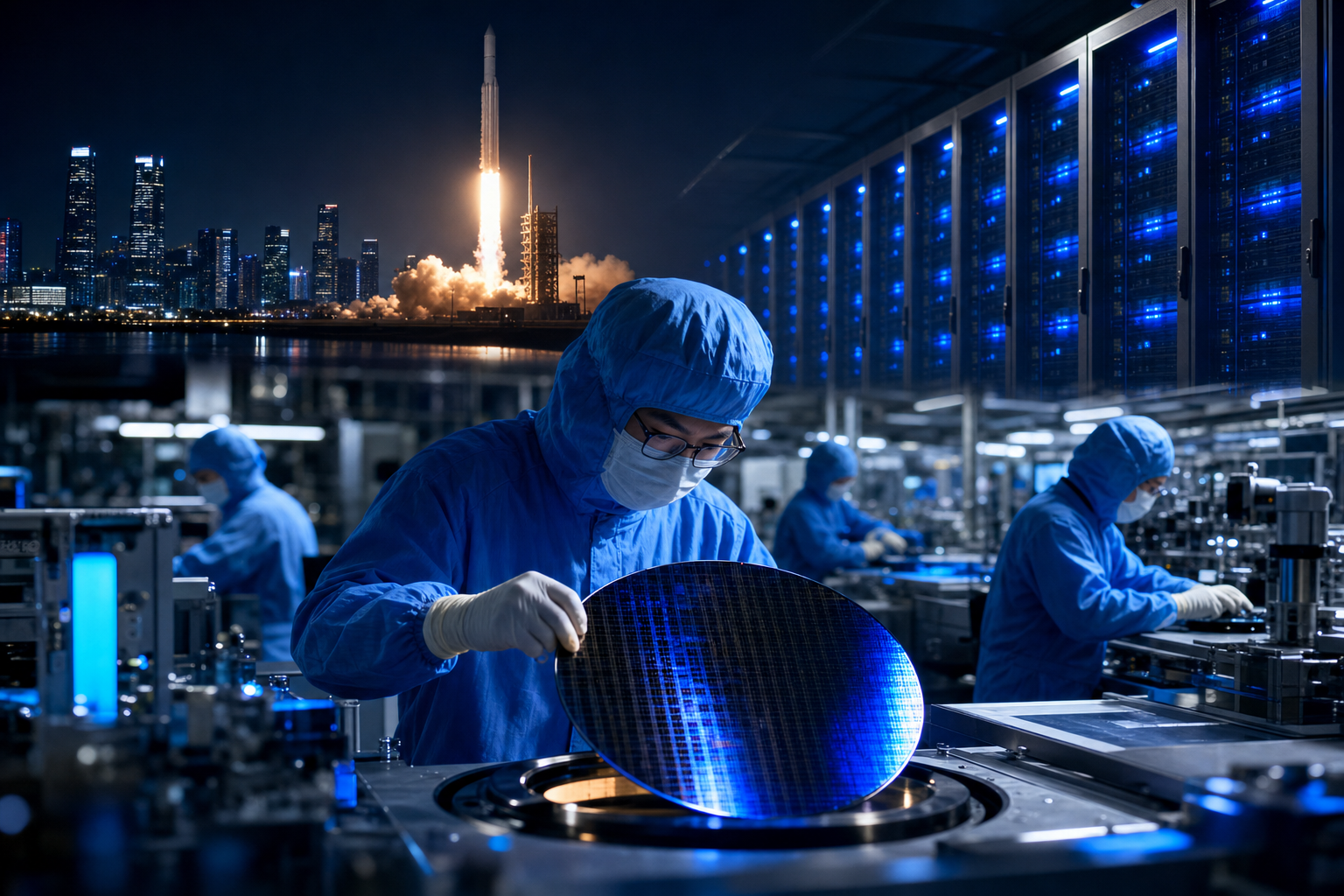
Early backers of SpaceX and OpenAI are cashing out through secondary share sales at valuations of $210 billion and $157 billion respectively. The windfall isn't leaving tech. It's rotating into the Asian manufacturing layer that makes AI scaling physically possible.
This isn't new money chasing new ideas. It's recycled Silicon Valley gains lowering the cost basis on the picks-and-shovels bet. The logic: no matter which US software company wins the LLM race, the chips still come from the East.
Why the luxury memory tier matters now
The constraint in AI has moved from "Can the model think?" to "Can we build enough high-bandwidth memory to house it?" That shift makes South Korea and Taiwan the gateway, not a hedge.
SK Hynix controls roughly 50% of the global HBM3E market as of early 2025, the memory type required for Nvidia's H100 and H200 GPUs. Samsung is second but has struggled with yield rates on HBM4, which uses through-silicon vias that stack chips vertically. SK Hynix shipped production HBM4 samples in Q4 2024. The gap matters because AI training clusters from Microsoft, Meta, and Google are pre-ordering 2026 capacity now. Investors who made 15x on OpenAI preferred shares are moving into SK Hynix at a P/E near 18, still below its 2021 peak.
Micron Technology isn't Asian, but its DRAM fabs in Taiwan and Singapore position it as the third leg. Micron's HBM3E ramp targets mid-2025 volume production. The company's 1-beta node uses extreme ultraviolet lithography, which requires tooling only ASML can supply and chemicals only a handful of Japanese firms can deliver at scale.
The tooling monopoly behind the foundry
Tokyo Electron is the second-largest semiconductor equipment maker globally after Applied Materials, with 95% of revenue from outside Japan. The company makes the etching and deposition tools required for sub-3nm nodes. TSMC's Arizona fab uses Tokyo Electron's Tactras platform for gate-all-around transistor formation. A 2025 windfall bet on Tokyo Electron is a bet that every new AI fab—whether in Taiwan, Arizona, or Germany—needs the same tooling, and there are only two vendors who can deliver it.
ASML (Netherlands) holds the EUV monopoly, but Japan's Lasertec is the only company that makes the inspection equipment to verify EUV-printed wafers at the angstrom level. Lasertec's ACTIS platform caught defects in TSMC's 2nm test runs that older inspection couldn't see. As of Q1 2025, Lasertec's backlog is 18 months and growing.
Beyond Taiwan: Malaysia and the test/assembly layer
Chips don't ship from the foundry. They ship from assembly and test facilities, and Malaysia dominates that tier.
Inari Amertron is the largest Malaysian semiconductor player by revenue, running facilities that do RF module assembly for Apple, automotive LiDAR packaging, and increasingly, AI accelerator final assembly. The company's Kulim plant expanded capacity by 40% in 2024 to handle Nvidia's CoWoS (chip-on-wafer-on-substrate) packaging overflow when TSMC's own CoWoS lines hit ceiling.
Unisem is smaller but positioned in the test slot. AI chips require burn-in testing at temperature and voltage extremes that consumer chips don't. Unisem's Chengdu and Ipoh facilities handle that final gate. The Malaysia test tier isn't glamorous, but it's the actual reason a data center can turn on.
The Japan sovereign wildcard
SoftBank's $100 billion US infrastructure pledge included domestic AI hardware. Rapidus, a Japanese government-backed foundry consortium targeting 2nm by 2027, is the long bet. Rapidus has IBM's gate-all-around IP and backing from Toyota, Sony, and NTT. If it works, Japan re-enters the logic foundry game for the first time since the 1980s. If it doesn't, the 8 trillion yen committed evaporates.
The counter-case is geopolitical. Any Taiwan Strait escalation wipes the TSMC premium overnight. US CHIPS Act funding is pulling some capacity back onshore, which narrows the window. But for now, the SpaceX secondary sellers are betting that even a re-shored future still sources etching tools from Tokyo and tests chips in Penang.