6 summer insurance gaps that could cost you thousands in July

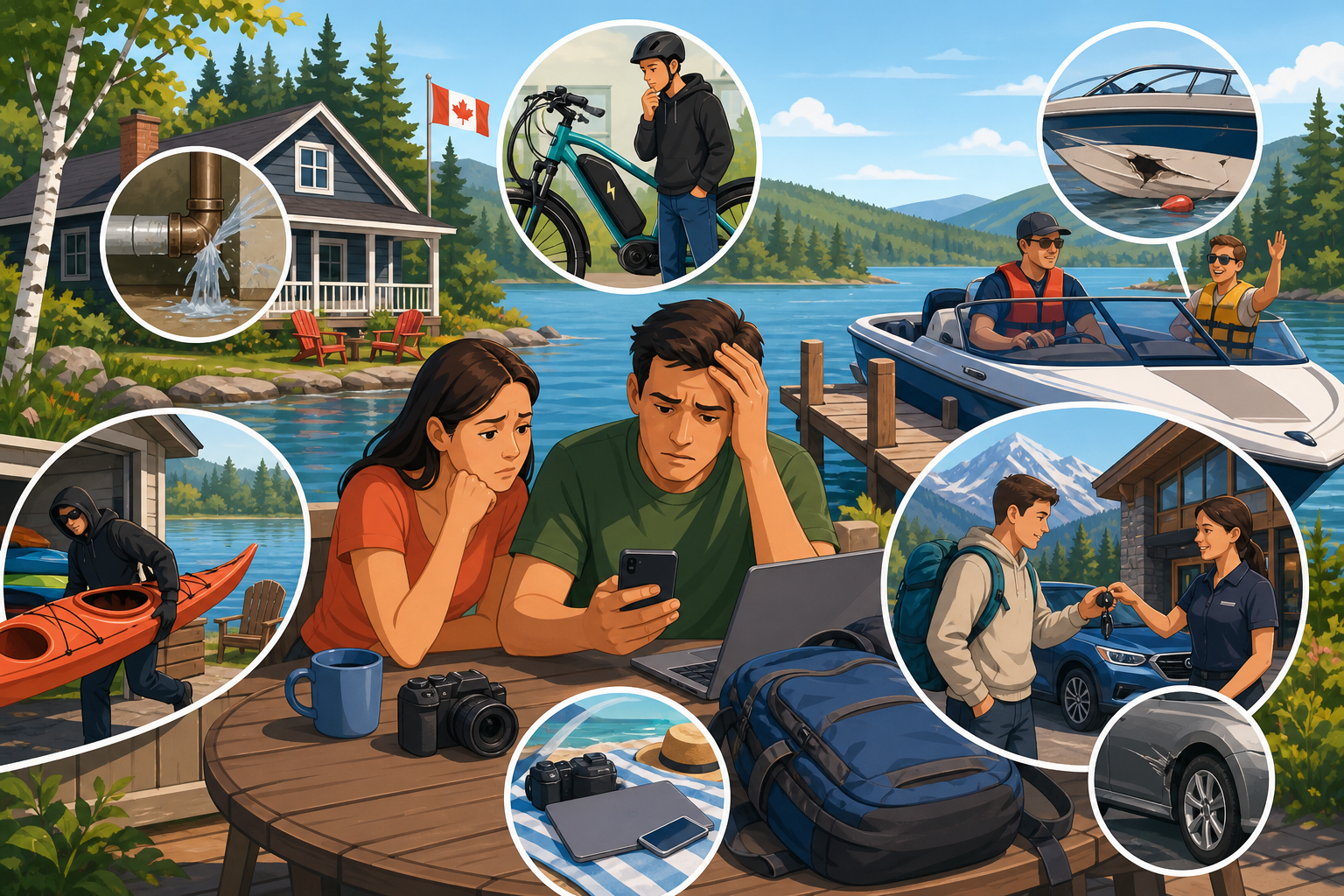
Your home policy won't pay for the Airbnb guest who steals your kayaks, and your car insurance doesn't automatically follow you to the rental counter in Banff. Most Canadians find this out mid-claim, which is the expensive way to learn.
Here are six coverage holes that open in summer, when you're most likely to hit them.
1. Check your cottage for the 30-day vacancy rule before you leave for the season
Most insurers consider a property "vacant" if left unoccupied for 30 consecutive days. Leave your Muskoka cottage from mid-May to the first week of July and come back to a pipe-burst claim denial. The policy language says "regular inspection" or "vacancy permit." Set a calendar reminder for every 28 days and document each visit with dated photos. If you can't visit, get a vacancy permit in writing before you go. This costs $50-$150 depending on the insurer and eliminates the trap.
2. Add overland flood coverage if you own seasonal property near water
Standard cottage policies in Canada exclude coverage for freshwater flooding from heavy rain or snowmelt. This is an optional rider, not a default feature. The Insurance Bureau of Canada reports that roughly 50% of homeowners mistakenly believe flood coverage is included in their base policy. A single June rainstorm in cottage country can flood a basement with six inches of runoff, which is a $12,000-$25,000 loss if you don't have the endorsement. The rider costs $300-$800 annually depending on flood-zone designation. Call before the first long weekend.
3. Confirm your boat is actually insured before you launch it
Home insurance covers canoes and kayaks. It does not cover motorized watercraft over a certain horsepower threshold, which varies by insurer but is typically 10-25 HP. A 90 HP fishing boat left tied to your dock is uninsured under a standard policy. You need a separate marine policy. Worse: if you loan the boat to a friend and they injure someone, you are liable as the owner even if the friend was operating it. Vicarious liability on the water is strict. Verify your marine policy includes liability coverage of at least $2 million, which is now the recommended floor in Canada given rising injury settlements.
4. Get an OPCF 27 or SEF 27 endorsement before you rent a car
Your auto policy's liability coverage does not automatically extend to a rental car. The OPCF 27 in Ontario (or SEF 27 in Alberta) is a named endorsement that ports your existing collision, comprehensive, and liability coverage to any rental vehicle you drive. It costs $20-$40 per year and eliminates the need to buy the rental counter's $35-per-day Collision Damage Waiver. Most credit cards cover physical damage to the rental car itself but provide zero third-party liability coverage, meaning you're exposed if you hit another vehicle. Verify the endorsement is active on your policy before you pick up the keys.
5. Notify your insurer if you're renting your cottage on Airbnb, even for one week
Standard homeowners policies exclude coverage for commercial activities. Rent your cottage for a single week and you've voided theft, vandalism, and liability coverage for that stay. If the guest falls off your dock and sues, the insurer denies the claim. Some carriers now offer a "limited host" endorsement for occasional rentals, defined as 14 days or fewer per year, which costs $150-$400 depending on property value. If you're renting more frequently, you need a full short-term rental policy, which runs $800-$2,500 annually.
6. Verify whether your e-bike is covered under home or auto insurance
High-speed e-bikes with motors over 500 watts fall into a grey zone. Standard home insurance covers bicycles. Standard auto insurance covers motor vehicles. E-bikes that exceed provincial power limits may be excluded from both. In Ontario, an e-bike over 500W legally requires a license plate, which means it's a motor vehicle. If stolen from your garage, your home insurer may deny the claim because it's motorized. If you crash it and injure someone, your auto insurer may deny because you never declared it. Call both insurers and ask specifically about wattage limits before you assume coverage exists.
Most people skip #4 and pay $200-$400 in unnecessary rental waivers over a two-week trip.