Europe's Air Defense Can't Stop a $50,000 Drone. That's the Real Crisis.

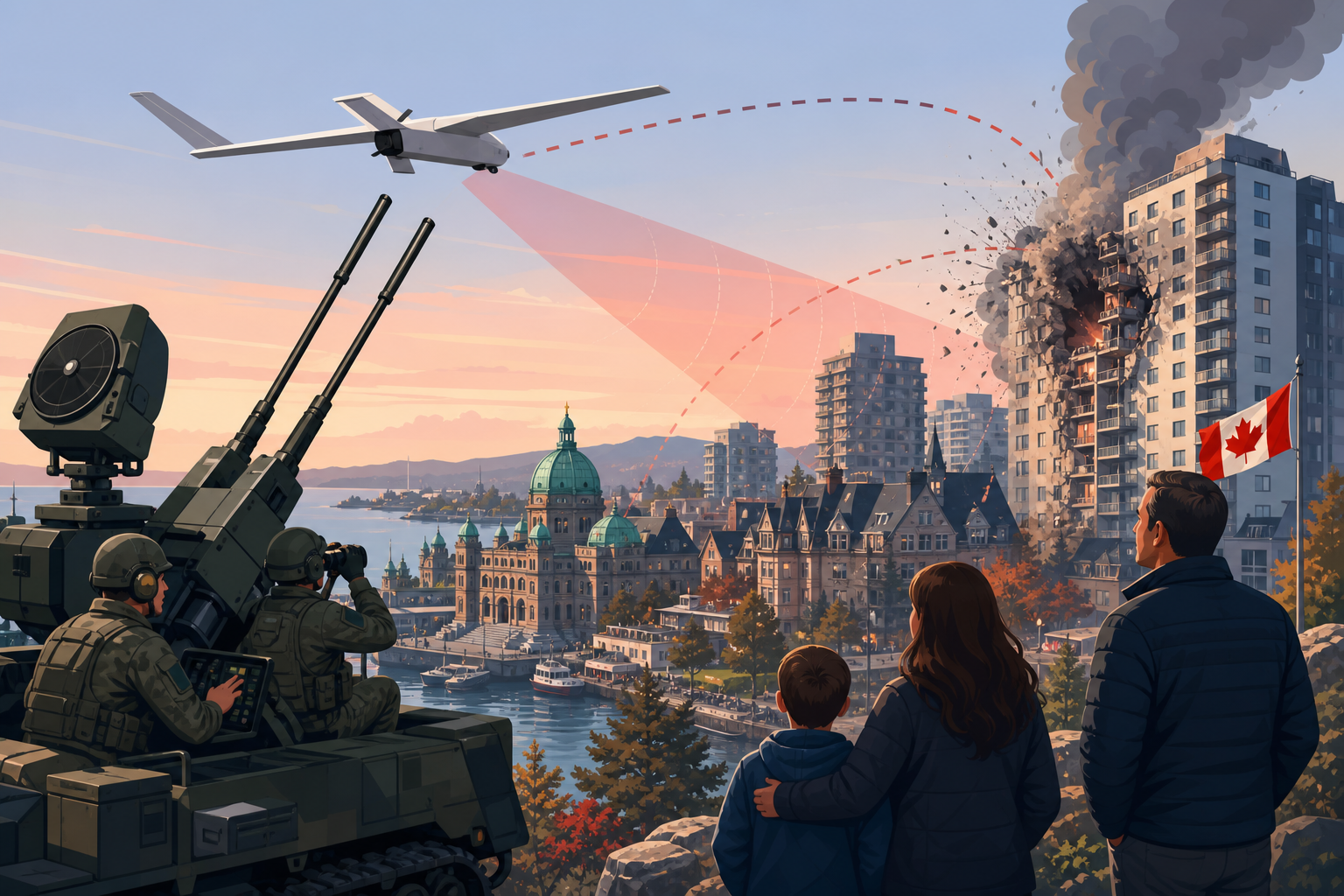
A Russian drone just crashed into a Romanian apartment building. Romania is a NATO member. The drone crossed an international border, traveled over civilian airspace, and hit a residential structure. No one shot it down. That's the crisis, and it isn't about one drone. It's about the gap between what European air defense was built to stop and what it's actually facing. The systems guarding European skies were designed for Cold War threats: ballistic missiles, fighter jets, strategic bombers. High-altitude platforms moving fast, costing tens of millions of dollars, flown by trained crews. The entire defense architecture assumes an adversary who values the platform as much as the target. That adversary doesn't exist anymore. The Black Sea conflict has proven that a $50,000 plastic drone, flown by a twenty-year-old with a laptop, can achieve strategic effects at a cost European defenses were never built to counter. A Russian Geran-2 drone costs around $20,000 to $50,000 to produce. The interceptor missiles used by European nations—systems like Patriot or IRIS-T—cost between $500,000 and $2 million per shot. Fire two missiles at one drone (standard practice for redundancy) and you've just spent $2 million to stop a $30,000 threat. Now multiply that across thousands of potential sorties. The math doesn't close. It's cost-asymmetry warfare, and Europe is on the wrong side of the ledger. Ukraine has ramped production to over one million FPV drones in a single year. European defense ministries are still debating procurement timelines for next-generation platforms that won't arrive until 2027. The production cycle gap is measured in orders of magnitude. While Europe plans, adversaries iterate. The Romanian incident exposes a second failure: NATO's peacetime Rules of Engagement were written for a world where airspace violations were rare and intentional. Current ROE often prevent kinetic intercept over civilian areas unless direct threat is confirmed—confirmed, meaning you wait until the drone's intent is clear. By then it's too late. The distinction between a reconnaissance drone mapping infrastructure and a kamikaze drone targeting a substation is invisible on radar until terminal phase. European air defense is paralyzed by a doctrine that treats every unidentified aerial object as potentially innocent until proven hostile, a luxury Ukraine abandoned in 2022. Electronic warfare is the usual answer people reach for. Jam the signal. But jamming over Bucharest or Warsaw disrupts civilian GPS, emergency services, and commercial aviation. The electromagnetic spillover makes kinetic intercept (shooting the thing down with a gun) often safer than electronic interference in dense population zones. Yet most European nations mothballed their short-range anti-aircraft artillery decades ago, betting the future on missile-only solutions that cost too much per engagement. Canada is watching this closely. CFB Esquimalt in Victoria has become a testbed for Counter-Unmanned Aerial Systems (C-UAS) research, in part because the Royal Canadian Navy knows what the Black Sea has already proven: shipboard drone defense is now a core requirement, not a niche capability. British Columbia's aerospace sector, traditionally focused on civilian remote sensing, is being pulled into the defense supply chain as the demand for sovereign (non-Chinese) drone technology becomes a national security priority under the "Our North, Strong and Free" policy framework. The real vulnerability isn't technological. It's conceptual. Europe built an air defense network optimized for high-value platforms and rare incursions. It now faces low-cost swarms and continuous atmospheric probing. The front line is no longer a trench. It's every postal code within drone range of a hostile border. Until that reframes procurement, the crashes will keep coming.