Canada's ITPS Orders 12 Leonardo M-346 Trainers in $350-Million Push for Combat Pilot Capacity

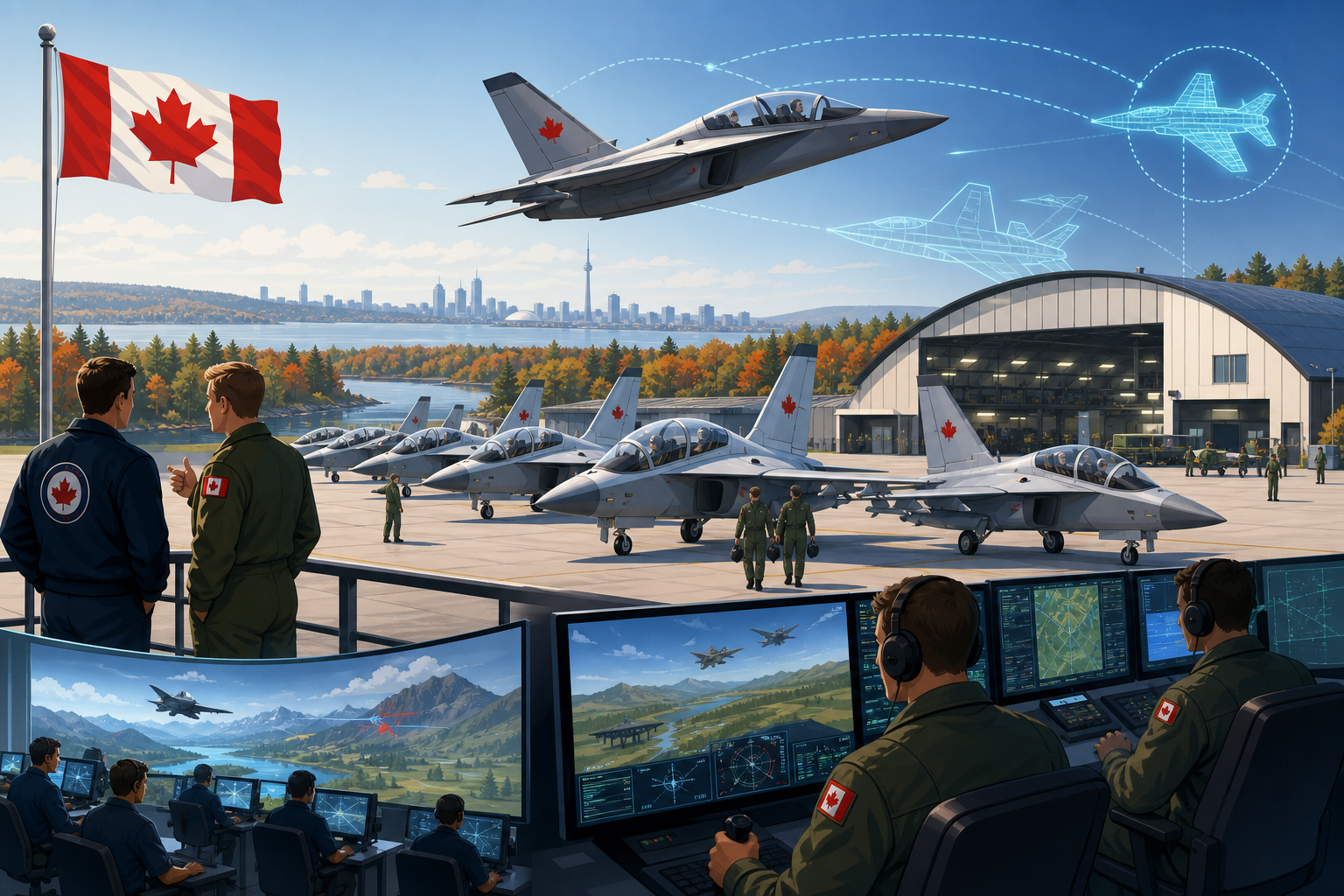
A private flight school in London, Ontario, just placed an order that would make most air forces jealous. International Test Pilot School Canada is buying twelve Leonardo M-346 advanced trainers in a deal worth more than US$350 million. The jets aren't for tourists logging hours. They're for combat pilots from NATO and allied nations who need to bridge the gap between basic instruction and the cockpit of an F-35.
This isn't government procurement. It's a private company responding to what the military calls a "capacity problem" but what's really a structural shortage. The world's air forces are running short of qualified fighter pilots at exactly the moment they're transitioning to fifth-generation aircraft that require more sophisticated training than anything before them. ITPS saw the gap and decided to fill it themselves, bypassing the usual government-to-government sales model entirely.
Why Private Training Now Handles What Militaries Used To
Training a combat pilot used to happen entirely inside the military system. You joined, you flew what the air force had, and by the time you reached an operational squadron, you'd logged hundreds of hours in progressively faster jets. That model worked when air forces had surplus capacity and training aircraft were cheap to operate. Neither is true anymore.
The Royal Canadian Air Force has been short several hundred pilots and technicians in recent years. NATO partners face similar deficits. At the same time, the jets those pilots eventually fly—CF-18s, F-35s, Typhoons—cost between $20,000 and $40,000 per flight hour. Running those aircraft for basic maneuver training is financial waste. The solution has been to push the middle stage of pilot development—what's called Lead-In Fighter Training—out to contractors who operate cheaper platforms that mimic the high-G environment of combat without the hourly burn rate.
The M-346 is built for exactly this. It replicates the flight characteristics of front-line fighters and includes an Integrated Training System that lets a pilot in the air dogfight against computer-generated threats. That's not a simulator. It's live flight against virtual opponents, bridging what used to be two separate training phases. Operating cost per hour is less than half what a frontline fighter demands, which matters when you're logging 200 hours per student before they ever touch the real thing.
London as a Training Hub for Foreign Air Forces
ITPS operates out of London International Airport, which gives it something European or American contractors can't offer: uncongested airspace. Training supersonic maneuvers or complex intercept profiles requires room. Canada has it. Europe doesn't. The result is that air forces from allied nations can send pilots to Ontario for advanced tactical instruction without competing for range time or dealing with civilian air traffic conflicts that plague training operations elsewhere.
Canada's position as a relatively neutral NATO member also helps. Some nations prefer not to send pilots to the United States for political or operational security reasons. A Canadian contractor avoids those frictions while still operating under federal export controls and Controlled Goods regulations. The training happens under oversight, but the flag on the building isn't American.
What $350 Million Buys in Institutional Knowledge
Twelve aircraft is not a token purchase. It's a fleet capable of running continuous training cycles for multiple foreign clients simultaneously. ITPS already trains test pilots, which is a niche market with maybe half a dozen credible providers globally. Adding a full squadron of lead-in trainers makes them one of the few private organizations anywhere capable of taking a mid-career military pilot and preparing them for fifth-generation fighters without touching a government flight line.
The risk is sustainment. Leonardo is based in Italy. Parts, technical support, and avionics updates all flow from Europe. If supply chains tighten or geopolitical conditions shift, a grounded fleet in Ontario becomes expensive infrastructure with no output. The contract presumably includes long-term support agreements, but those agreements depend on a European defense contractor maintaining reliable transatlantic logistics for a Canadian private client. That dependency is the trade-off for the capability.
Combat pilot training is now a market, not a service. ITPS just bet $350 million that the market has room for a Canadian player.