Canada Picks Saab's Airborne Radar Over Boeing and Lockheed
The choice Washington didn't expect
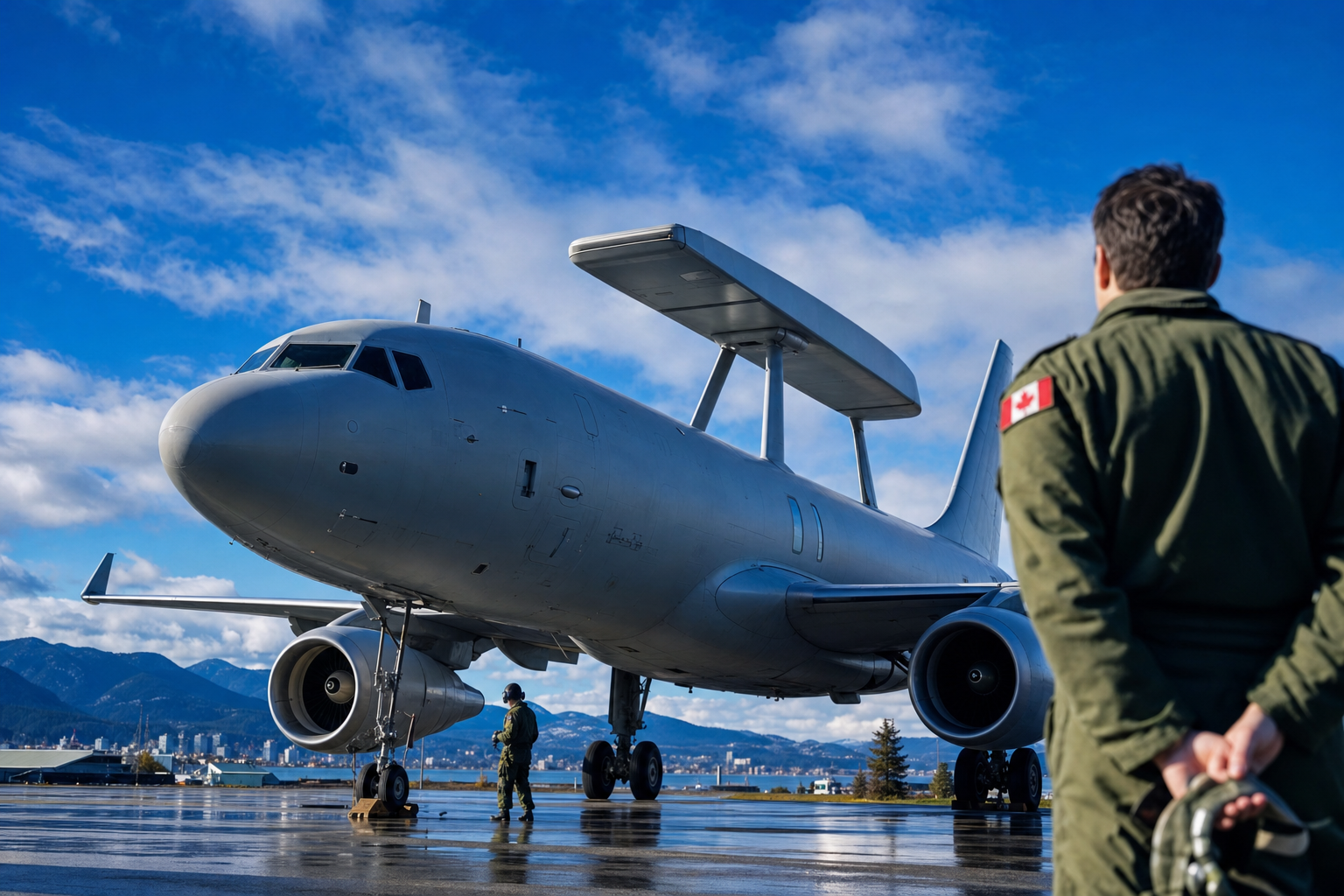
Canada just gave a $5.4 billion radar contract to Sweden. Not to Boeing. Not to Lockheed Martin. To Saab, a company most Canadians couldn't name if pressed, for the GlobalEye airborne early-warning system that will replace the aging CP-140 Aurora fleet. The decision matters less for what it buys than for what it signals about procurement priorities that have quietly shifted under pressure from both the budget and the electoral map.
The Aurora replacement has been in the works since 2019. The aircraft Canada operates now date to the 1980s. They scan ocean approaches, track submarines, coordinate search-and-rescue. Standard mid-Cold War kit, pushed decades past its intended service life because replacing military platforms in Canada moves at the speed of consensus, which is to say glacially. The GlobalEye will do the same job from a newer airframe—a modified Bombardier Global 6500 business jet fitted with Saab's Erieye ER active electronically scanned array radar.
Boeing pitched a version of the P-8 Poseidon, the platform the U.S. Navy and several allies already operate. Lockheed offered something built around its own sensor suite. Both proposals leaned on interoperability arguments: if you want to work with NORAD and NATO seamlessly, buy what they're already flying.
Canada picked the one that wasn't American.
Why Sweden won
The official line is capability and cost. Defence Minister Bill Blair said the GlobalEye "best met Canada's requirements." That's the line ministers give when the real reasons sit three layers down in the evaluation matrix. The GlobalEye is a capable platform—Australia looked at it seriously before going with Boeing—but capability wasn't the tiebreaker here.
Two things mattered more. First, Saab committed to substantial industrial offsets in Canada, including final assembly work that will happen domestically. Industrial benefits have been part of every major Canadian defence contract for decades, but under this government they've become a gating factor rather than a nice-to-have. A contract this size that sends most of the work to Seattle or Fort Worth is a hard sell in a minority Parliament where every Ontario and Quebec manufacturing seat counts.
Second, the procurement happened against the backdrop of active trade friction with the United States. Trump's tariff threats during his first term hit Canadian steel and aluminum. His second term, which began in January, has revived talk of across-the-board levies. Trudeau promised in the last campaign to reduce Canada's reliance on American defence suppliers, a pledge that sounded more like posturing than policy at the time. Picking Saab makes that pledge look like an actual position.
The interoperability question
The risk everyone will politely not mention in public is that Canada just bought a radar platform none of its closest allies operate at scale. Data-sharing between a Saab system and the American-dominated sensor networks that underpin NORAD isn't impossible—the Swedes build to NATO standards—but it's one more integration problem to solve, one more firmware update to coordinate, one more edge case when the shooting starts.
That trade-off gets made because the political cost of buying American in 2025 exceeds the operational cost of integrating Swedish. A decade ago those weights sat the other way around.
Canada's defence budget is under stress. Personnel costs are climbing. The CF-18 replacement alone will eat $19 billion. Shipbuilding is a perpetual overrun. Something had to give, and what gave was the assumption that buying from the Americans was the default.
Sweden builds good kit. The GlobalEye will work. But this wasn't a decision about radar. It was a decision about who Canada is willing to depend on, and under what terms.