Buyers Now Pay Premium for Air Quality. Sellers Should Notice.
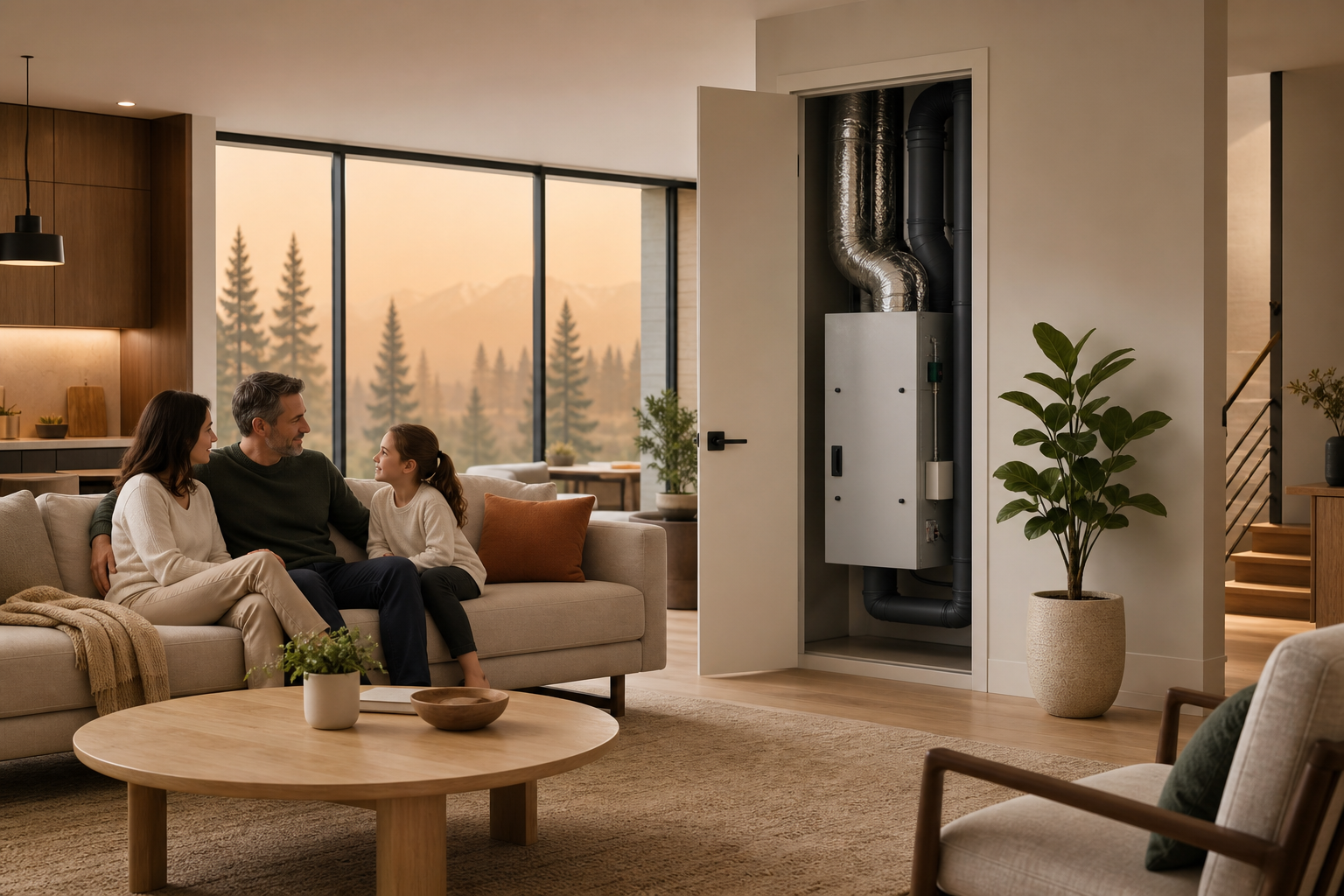
Wildfire smoke rolled into Calgary last summer for 11 straight days. The AQI hit 260. Schools closed, hospitals filled, and anyone with a decent air purifier posted about it online. Within two weeks, every unit at Home Depot was gone. Six months later, homes with whole-house HEPA systems started selling for 5% over ask.
That gap—between a $300 panic purchase and a $12,000 integrated ventilation system—is where the healthy home premium now lives.
The Shift From Feature to Requirement
A MERV-13 filter costs $40. Most buyers have never heard of it. But roughly 4.6 million Canadians live with asthma, and a meaningful share of them now treat advanced air filtration the way previous generations treated a second bathroom. Not nice to have. Necessary.
The Zoocasa 2026 trends report puts a number on this: 60% of surveyed buyers now rank health and wellness features in their top three priorities. That percentage includes first-time buyers in Winnipeg and retirees downsizing in Burlington. The demographic spread is wide, which is what makes the shift structural rather than cyclical.
What changed is not that people suddenly care about air quality. What changed is that air quality became visible. Affordable indoor monitors—AirVisual, Awair, even basic CO₂ sensors—turned "something feels off" into a dashboard with numbers. When buyers can see PM2.5 readings in real time, the conversation stops being theoretical. A seller who upgraded the HVAC two years ago now has data to show it worked.
What Actually Commands the Premium
Granite countertops photograph well. A Heat Recovery Ventilator does not. The HRV sits in the basement, pulls stale air out, pushes fresh air in, and recovers 85% of the thermal energy in the process. It is invisible to anyone who does not know what they are looking at, which is most buyers. But the ones who do know are willing to pay.
The premium varies. In Vancouver and Toronto, homes with certified low-VOC finishes, radon mitigation systems, and whole-house air purification have commanded an estimated 3% to 7% over comparable non-upgraded properties. That estimate comes from real estate professionals tracking closed sales, not from academic studies, so the range is wide and the methodology is loose. But the direction is clear.
The radon factor deserves its own attention. Health Canada estimates 7% of Canadian homes have high radon levels. Radon is odorless, invisible, and the second leading cause of lung cancer after smoking. It migrates up from soil through foundation cracks. Mitigation is straightforward—a fan and a venting system—but most sellers do not install one until a buyer's inspection flags the problem. The ones who install it proactively are signaling something buyers now recognize: they maintained the parts you cannot see.
The Invisible Renovation Problem
A $10,000 kitchen backsplash announces itself the moment someone walks in. A $10,000 whole-home humidification and filtration system does not. This creates a pricing problem for sellers who invested in the latter. The buyer has to already know what to look for, or the seller has to teach them during the showing, which is a harder conversation than pointing at marble.
One solution is the environmental inspection. Buyers in Calgary, Edmonton, and parts of the GTA are now hiring specialists to test for mold, VOCs, and electromagnetic fields alongside the traditional home inspector. When those reports come back clean—or better, when they show active mitigation systems already in place—the house moves from "acceptable" to "protected."
This is where the gap widens. Lower-income buyers face the choice between a home they can afford and a home that will not aggravate their child's asthma. That is not a luxury decision. It is a health inequality being priced into the market.
Sellers who treat air quality as decorative are leaving money on the table. The buyers who will pay the premium are already in the market. They just need to know the system exists.