Buyers Now Pay Premium for Air Quality Over Granite Countertops

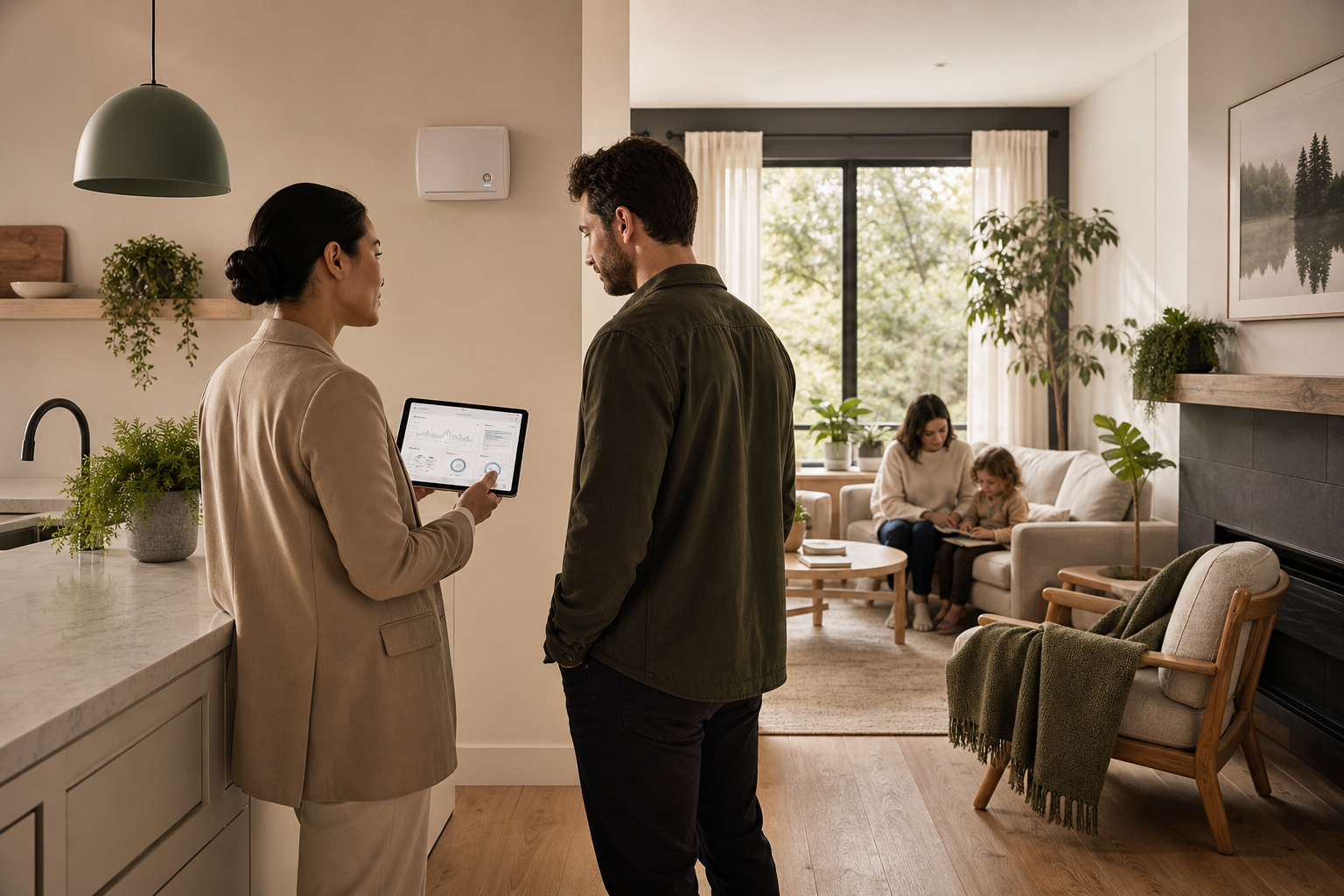
A 2,200-square-foot semi-detached in East York listed for $1.1 million in November. The kitchen had builder-grade laminate counters. The primary bath had a fiberglass tub from 2008. What it did have: a documented whole-home HEPA filtration system tied to the HVAC, radon mitigation with a below-threshold test result dated two months prior, and an HRV that had been serviced quarterly since installation. It sold for $1,147,000 in eight days. The granite kitchen three streets over—new Cambria counters, undermount sinks, the works—sat for nineteen days and closed under ask.
That's not an anomaly anymore.
The shift nobody named until it showed up in the comps
Roughly 4.6 million Canadians live with asthma. One in five households reports at least one member with a significant respiratory allergy. Wildfire smoke has become a recurring seasonal condition in BC, Alberta, and Ontario—not a crisis, a calendar entry. The pandemic didn't create the demand for healthier indoor air. It just made the demand impossible to ignore.
Buyers used to tour a home and check for granite, hardwood, stainless appliances. Now they ask about MERV ratings. They want to see the maintenance log for the ventilation system. They ask if the home has been radon-tested and whether the reading was above Health Canada's 200 Bq/m³ guideline. A reading over that threshold doesn't kill the deal outright, but it does trigger a holdback or a price adjustment to fund mitigation. The "health audit" is becoming as routine as the home inspection.
The America at Home Study—longitudinal, US-based but widely cited by Canadian brokerages—found that 60% of buyers are willing to pay more for homes that demonstrably improve physical health. In competitive Toronto and Vancouver submarkets, that premium is landing between $8,000 and $15,000 for integrated air purification and advanced water filtration. It's not decorative. It's a line item.
The problem is you can't see it
Granite countertops do visual work during a showing. A whole-home air purification system does not. The value is invisible, which creates a marketing problem. Sellers are responding by treating IAQ upgrades the way they used to treat energy efficiency: with documentation. Some listings now include real-time sensor data—CO2 levels, humidity percentages, PM2.5 counts—captured over weeks and presented as proof of performance. It's not enough to say the system exists. Buyers want to see the air quality it produces, timestamped.
That shift mirrors the energy-efficiency playbook. EnerGuide ratings saved money on utilities, which made the value calculable. "Healthy home" upgrades save time and well-being, which is harder to quantify but emotionally sharper, especially for parents. Stagers are leaning into this. More showings now include biophilic design cues—natural light maximized, low-VOC finishes, visible indoor greenery—to signal "health" before the buyer consciously registers it.
The retrofit gap is widening
Older homes without documented ventilation upgrades or IAQ retrofits are starting to show a measurable price gap against comparable properties that have made those investments. "Sick building syndrome" isn't just a commercial real estate term anymore. Mold remediation, poor ventilation, and high humidity are residential deal-killers in a way they weren't five years ago.
But there's a counterpoint worth naming. Sophisticated healthy-home systems—HRVs, multi-stage filtration, radon mitigation—require consistent maintenance. A buyer might be willing to pay the premium, but only if they understand the upkeep isn't specialized or expensive. A $12,000 system that needs a $600 annual service contract and filter replacements every four months changes the value calculus. Some sellers are inflating asking prices with single-room air purifiers and "anti-microbial" cabinet coatings that do almost nothing at a whole-home level. Wellness washing is real, and buyers are starting to ask harder questions.
The other tension: as these features become standard, they raise the entry-level price of housing. The demographics most at risk for environmental health issues are the ones least able to afford the premium. That's not a market failure. But it is a distributional problem the industry isn't talking about yet.