A Russian Drone Hit Romania and Exposed Europe's Undefended Airspace

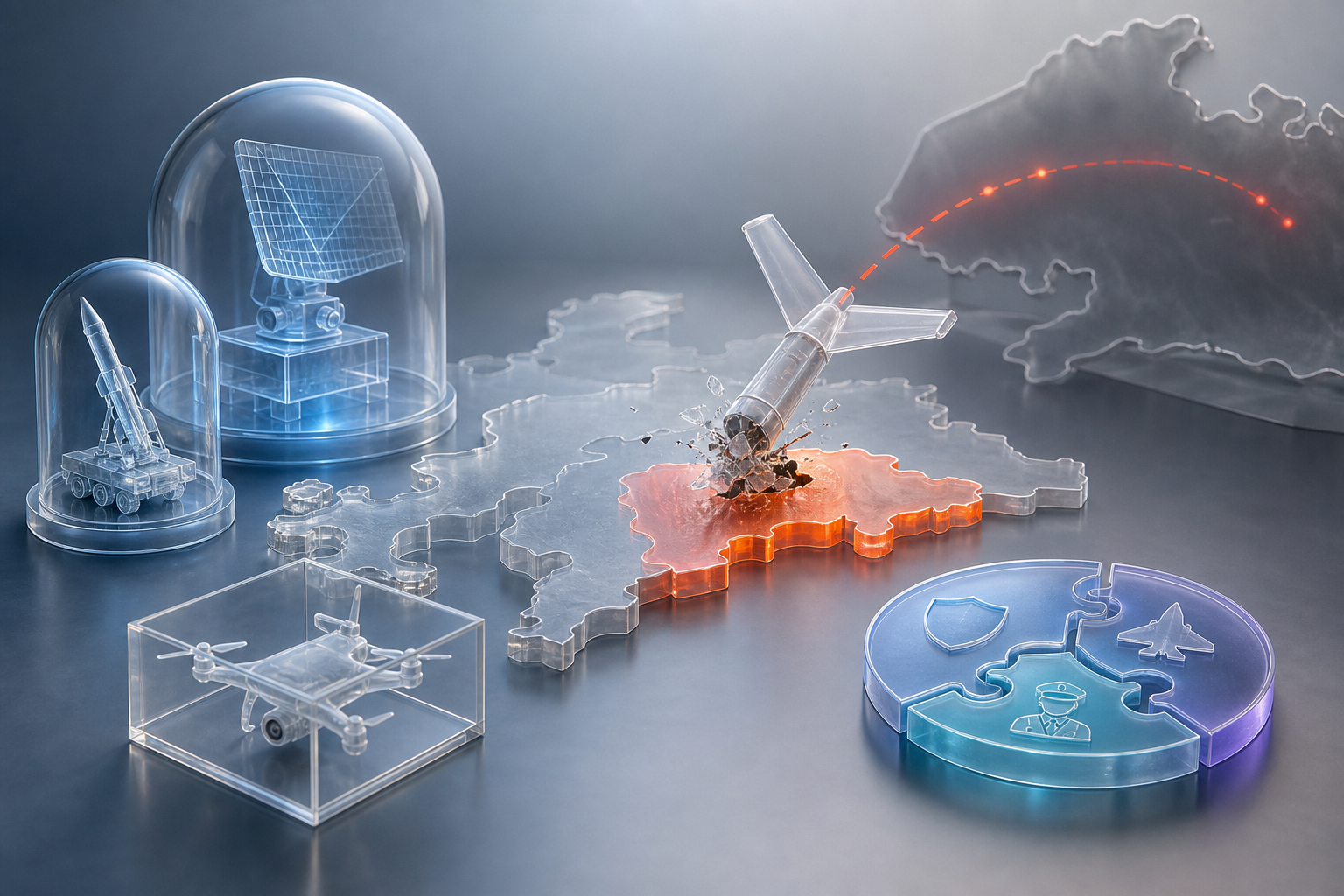
A Russian drone crashed into a Romanian apartment building in May 2026. No one died. The debris fell near the kitchen of a residential unit in Constanța, a port city 60 kilometers from the Ukrainian border. Romania is a NATO member. The drone was Russian. And yet the response from Brussels and Bucharest was not Article 5 or military escalation. It was confusion about jurisdiction.
The incident was not an anomaly. It was the third documented spillover in eight months. Polish farmers have found wreckage in fields. Moldovan authorities have tracked low-altitude incursions near Chișinău. The pattern is consistent: drones crossing NATO airspace, not as acts of war, but as debris from a war next door. Europe has no coherent protocol for what to do when that happens.
The Financial Logic Is Backwards
The problem is not detection. NATO radars can see most of what crosses the border. The problem is the cost structure of stopping it.
A Shahed-type loitering munition costs roughly $50,000 to build. Intercepting it with an IRIS-T or Patriot missile costs $2 million to $4 million, according to 2025 European procurement figures. The math is simple: Europe is spending 40 to 80 times the cost of the threat to neutralize it. Russia, by contrast, is not trying to win air superiority. It is trying to impose an attrition rate that bankrupts the defender.
This is not hypothetical bleeding. Poland announced in early 2026 that it had exhausted 18% of its stockpiled interceptors in six months, most of them fired at targets that turned out to be decoys or debris. The resupply lead time for those systems is 2 to 5 years. The production bottleneck is not money. It is factory capacity, which cannot be spun up on short notice.
The economic asymmetry extends deeper. Many of the components in recovered Russian drones—GPS modules, camera sensors, flight controllers—are commercially available. The same parts sit on hobby store shelves in Victoria, Ottawa, and Winnipeg. A military-grade loitering munition is, structurally, a consumer quadcopter running custom firmware and carrying a warhead. The barrier to entry for building one is gone.
Who Shoots It Down?
The Romanian incident forced a question no one had formally answered: who has authority to destroy a drone over civilian airspace?
In traditional air defense, the chain of command runs through the Air Force. A manned aircraft crosses the border, fighters scramble, rules of engagement apply. But a small drone over a residential neighborhood does not fit that model. Is it a military target? A police matter? A border security issue? Romania's defense ministry initially deferred to local authorities. Local authorities deferred back.
The gap is jurisdictional, not technical. NATO operates under protocols designed for Cold War-era threats: bombers, missiles, identifiable combatants. A $50,000 drone built from off-the-shelf parts and launched from contested territory does not map cleanly to those frameworks. Shooting it down risks debris falling on the people you are trying to protect. Not shooting it down risks the warhead detonating on impact.
Canada faces a parallel version of this problem. The Department of National Defence's 2024 "Our North, Strong and Free" policy update names Counter-Uncrewed Aerial Systems as a priority, but the focus remains on threats to naval assets and critical infrastructure. The urban scenario—a drone over residential Edmonton or Halifax—has no clear owner.
What Fills the Gap
Europe is now buying systems designed specifically for small drones: directed energy weapons, net-capture launchers, short-range jammers. The problem is that modern loitering munitions are moving toward terminal autonomy. Once the drone is within visual range of its target, it no longer needs GPS or radio commands. It uses onboard vision, which cannot be jammed.
The result is a technological leapfrog with no clear winner. Every countermeasure produces an adaptation. Meanwhile, the actual structure of European airspace defense remains unchanged: optimized for high-value threats, priced out of stopping cheap ones, and legally unprepared for the residential incursion.
Romania patched the apartment wall. The drone's origin was never formally attributed. No one was held accountable. And the next one is already in the air.