7 Balcony Upgrades That Won't Get You a Condo Board Warning Letter

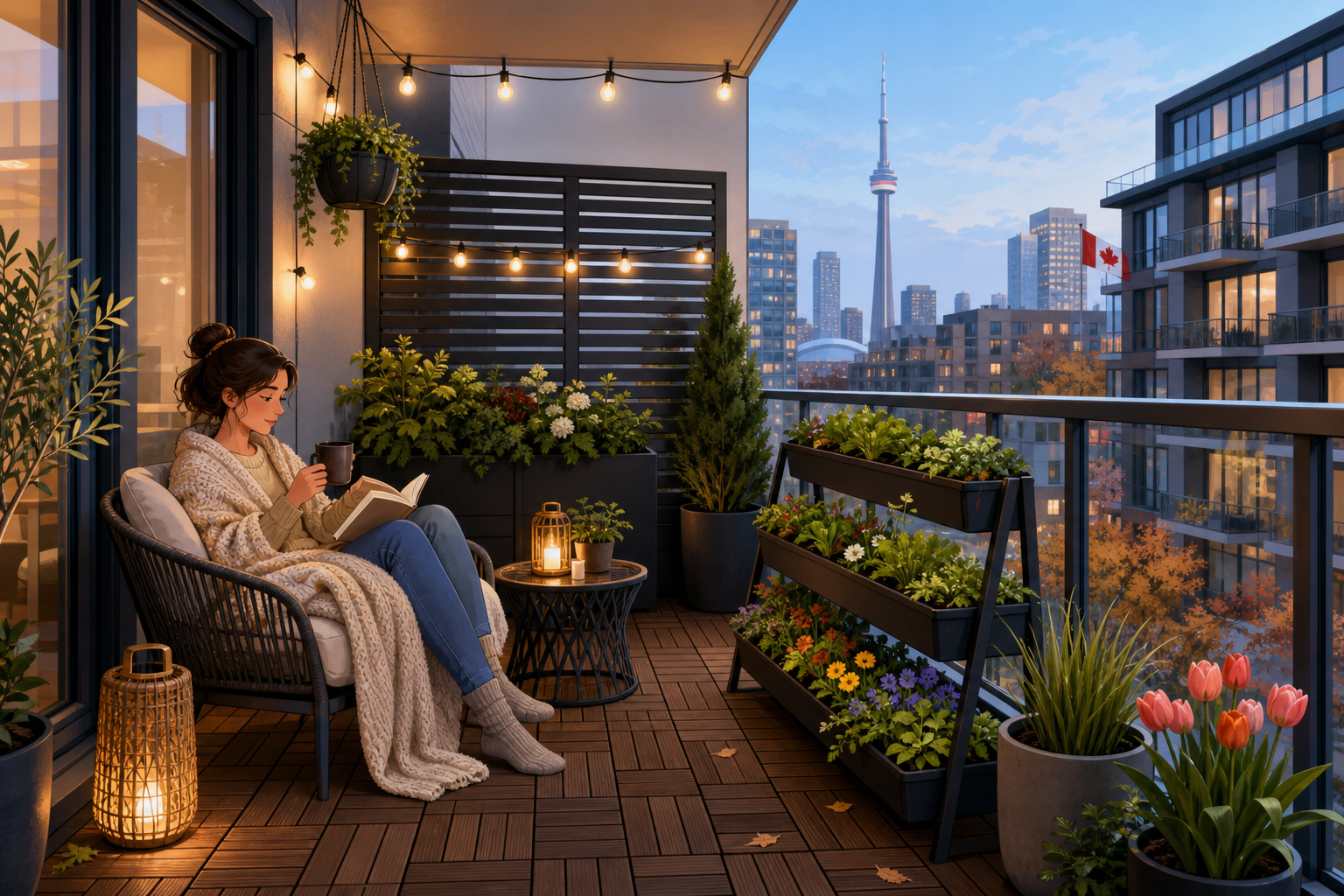
Most balcony violations happen within the first six months of ownership. You buy a condo, inherit 80 square feet of concrete, and start making it livable. Three weeks later you get a letter from the property manager citing Section 7.4(b) of the bylaws you never read.
The frustrating part is that balconies are legally common elements in most provinces, even though you're the only one using yours. That means the corporation controls what you can do. But you can still turn a concrete slab into actual living space without triggering enforcement. These seven upgrades stay inside the lines.
The Floor Determines Everything Else
Use interlocking deck tiles with rubber or composite bases, not adhesive products. Snap-together tiles sit on top of your existing concrete without drilling, gluing, or modifying the surface. They're compliant because they're reversible. IKEA's RUNNEN series and similar products from Home Depot run $2-4 per square foot. The rubber base also solves drainage, tiles sit slightly elevated so water flows underneath to the scuppers instead of pooling.
Avoid artificial turf unless it's specifically designed for balconies with perforated backing. Cheap turf traps moisture against the slab, which leads to mold and salt damage in freeze-thaw cycles. Some boards now fine owners for slab damage caused by non-permeable coverings, and restoration costs start at $1,500.
Lighting That Doesn't Need An Electrician
Run low-voltage LED strip lighting off a weatherproof battery pack or solar panel, not hardwired fixtures. Hardwired modifications require board approval and a licensed electrician. Battery-powered systems don't. Philips Hue outdoor strips and similar products clip to railings or run along the floor perimeter without screws. Total cost is $60-150 depending on length.
This matters more than it seems. During the five months when your balcony is too cold to use, good lighting makes it worth looking at from inside. At Toronto's current price per square foot, 50 square feet of balcony represents roughly $25,000 of your purchase price. Making it visually useful year-round is a return on dormant equity.
Furniture That Stays Put
Buy weighted or stackable pieces designed for rooftop use, not lawn furniture. Standard patio chairs become projectiles in high-rise wind conditions. The Venturi effect between tall buildings accelerates wind speed, a 15 km/h breeze at ground level hits 40+ km/h at the 20th floor. Condo boards in Calgary and Toronto have started issuing warnings for unsecured furniture after incidents where items cleared railings.
Weighted resin or powder-coated steel works. Look for pieces that nest or fold flat for winter storage. If you're stacking chairs off-season, do it against the building wall, not near the railing.
Planters That Don't Fall
Use floor-based tiered planters, never over-railing hooks. Most bylaws explicitly ban anything that hangs outside the railing line. The liability issue is obvious. Floor planters stay compliant and give you more growing volume anyway.
For vertical gardening without drilling, tension rods wedged between floor and ceiling (or railing posts) let you hang pots without permanent mounts. Just check your balcony's live load capacity first. Older balconies were designed for roughly 10 pounds per square foot beyond occupant weight. A large ceramic planter full of wet soil can hit 40-60 pounds.
The better move for privacy is tall ornamental grasses like Calamagrostis in floor planters. They screen sightlines without triggering uniformity clauses the way privacy screens or lattice usually do.
The Grill Question
If you're grilling, use a 1-pound disposable propane canister model, not a 20-pound tank or charcoal. Most municipal fire codes in Vancouver, Toronto, and Montreal ban charcoal outright on balconies. Propane restrictions vary by building, some allow small canisters, most ban full-size tanks. Electric grills aren't automatically safe either. Some boards prohibit them due to smoke complaints or because outdoor outlets aren't rated for sustained high draw.
Before you buy anything, check your building's specific fire safety addendum. It's usually in the status certificate under Schedule C.
Keep The Sightline Clean
Stick to neutral tones for large items if your bylaws include a uniformity clause. About 60% of newer condos restrict the exterior color of furniture, umbrellas, and storage boxes to maintain a consistent building face. The enforcement is real, boards issue compliance orders for bright red chairs or non-matching cushions.
If your bylaws don't specify, you're clear. But check first. The rules are in the declaration, not the rules and regulations document most people skim.
When Winter Comes
Treat your balcony as a viewing room from November to March, not dead space. Weatherproof string lights, an outdoor rug that can freeze, and a single piece of winter-rated furniture (teak or all-weather wicker) keep the space visually active when you're looking out through the glass. That's the frame most Canadians actually experience their balconies in: from inside, during five months of cold.
The balcony that works in January is the one you designed for the view from your couch.